

 Travel Essentials
 Travel Essentials

Explore the planet's greatest animal migrations, including Africa's wildebeest spectacle, butterfly odysseys, and resilient species recoveries amid conservation challenges.
 Travel Essentials
Animal migrations represent some of nature’s most extraordinary displays of survival and adaptation. These mass movements, driven by the search for food, water, breeding grounds, and safer habitats, involve millions of creatures traversing vast distances annually. From the thunderous hoofbeats of wildebeest across African plains to the delicate wings of butterflies fluttering thousands of miles, these journeys sustain ecosystems and captivate observers worldwide.
Migrations are not random wanderings but precisely timed responses to environmental cues like rainfall, seasonal grass growth, and temperature shifts. In terrestrial ecosystems, herbivores lead the charge, followed by predators in a delicate balance of the food chain. Marine and aerial migrations add further layers of complexity, with species navigating oceans or skies using innate compasses tuned to Earth’s magnetic fields or celestial navigation.
These events highlight biodiversity’s interdependence. Grazing sequences, for instance, regenerate landscapes: taller grasses are first consumed by pioneering species, allowing shorter, nutrient-rich plants to emerge for followers. This process maintains soil health and prevents overgrazing, demonstrating migration’s role in ecological stability.
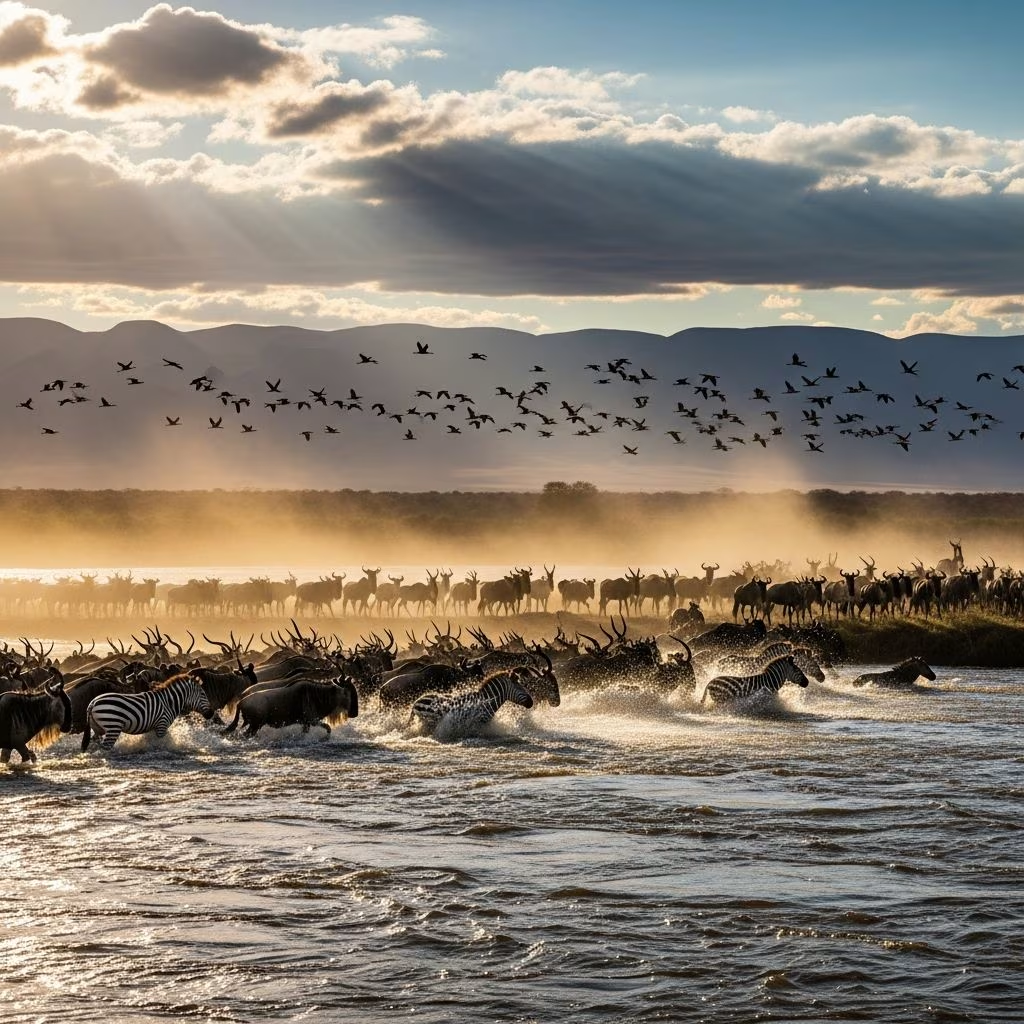
The Serengeti-Mara migration stands as the planet’s largest terrestrial mammal movement, involving over 1.2 million wildebeest, 300,000 zebras, and countless gazelles, topi, and eland. This circular odyssey spans 800-1,000 kilometers yearly, visible even from space due to herd densities reaching 1,000 animals per square kilometer.
The journey commences in Tanzania’s southern Serengeti near the Ngorongoro Conservation Area during the calving season (January-March). Here, up to 8,000 calves are born daily on predator-vulnerable short-grass plains, where visibility aids survival. As southern plains dry in April-May, herds shift northwest, grazing voraciously.
Zebras pioneer, stripping coarse tall grasses; wildebeest devour mid-length regrowth; gazelles finish tender remnants. Rain patterns—now erratic due to climate shifts—primarily guide this instinctual path, possibly aided by sensing distant thunderstorms.
Beneath the waves, humpback whales embark on migrations rivaling land spectacles in scale. These giants travel up to 8,000 kilometers round-trip from polar feeding grounds to tropical breeding waters. Southern Hemisphere populations move from Antarctic krill-rich zones to warm calving bays off South America, Hawaii, or the Caribbean.
Northern humpbacks mirror this: Alaskan/Bering Sea feeders head to Mexico, Hawaii, or Central America. Calves, born tail-first underwater, bond with mothers during the return, surfacing for breaths amid threats like ship strikes and entanglements. Songs echoing across basins coordinate these paths, evolving culturally across populations.
Conservation rebounds have boosted numbers from near-extinction lows (post-whaling) to over 80,000 globally, thanks to international bans and protected corridors. Yet, climate-altered krill distributions challenge future routes.
| Migration Phase | Distance | Purpose | Challenges |
|---|---|---|---|
| Feeding to Breeding | 4,000-5,000 km | Calving in warm waters | Bycatch, noise pollution |
| Breeding to Feeding | 4,000-5,000 km | High-calorie foraging | Shifting prey, vessels |
Monarch butterflies execute one of biology’s most improbable feats: a multigenerational pilgrimage from North American summers to Mexican overwintering sanctuaries. Billions depart Canada and the U.S. in fall, covering 4,500 kilometers. No single butterfly completes the round trip; descendants return using genetic memory and solar cues.
Clustering in oyamel fir groves at 3,000 meters, they endure winter in suspended animation, wings folded. Spring sees survivors breed northward, offspring continuing until summer breeders repopulate origins. Milkweed dependency ties their fate to habitat restoration amid pesticides and development.
Populations have plummeted 80% since the 1990s, but initiatives like U.S. farm bills promoting milkweed and Mexican reserve protections offer hope. These fragile migrants underscore connectivity’s fragility.
Not all migrations faced extinction; some rebound spectacularly. Saiga antelopes, steppe nomads of Central Asia, traverse Kazakhstan’s vast plains between winter deserts and summer calving wetlands. Once numbering millions, poaching for horns and a 2015 disease die-off reduced them to 39,000. Bans, patrols, and habitat safeguards lifted counts to over 1.3 million by 2023.
Black-faced spoonbills, Asia’s rare waders, migrate from breeding marshes in Russia/DPRK to winters in Taiwan, Hong Kong, and Australia. Down to 300 in the 1980s from wetland drainage, targeted reserves and flyway protections grew numbers to 6,000+. These successes prove proactive intervention’s power.
Humanity’s footprint endangers these spectacles. Habitat fragmentation from farms, roads, and cities severs corridors. Climate change warps rain, blooms, and prey timing. Overexploitation—poaching, bycatch—culls numbers. Pollution and invasives compound woes.
In the Serengeti, fences and expanding agriculture pinch routes; whales dodge shipping lanes; butterflies lose milkweed. Yet, transboundary parks, migration maps via satellite collars, and global pacts like CMS foster safeguards.
Witnessing demands ethical tourism. In Serengeti-Mara, choose camps minimizing off-road driving; time visits to calving (Feb-Mar) or crossings (Jul-Oct). Whale watches maintain distances; butterfly sanctuaries support locals. Revenue funds anti-poaching.
Technology enhances: Apps track herds via GPS; drones reveal unseen drama without disturbance. Sustainable lodges prioritize low-impact ops, blending adventure with conservation.
The Serengeti-Mara wildebeest migration, with 1.2 million animals covering 800-1,000 km annually.
To access fresh grazing, water, breeding sites, and evade harsh weather, following rain and resources.
February-March for calving; July-October for river crossings.
Yes, unpredictable rains disrupt timings and routes, impacting survival.
Support protected areas, choose eco-tourism, advocate for habitat corridors.
