

 Travel Essentials
 Travel Essentials

Explore the critical role of ice class ratings in Antarctica cruises, enabling access to remote sites, landings, and optimal seasonal travel for unforgettable polar experiences.
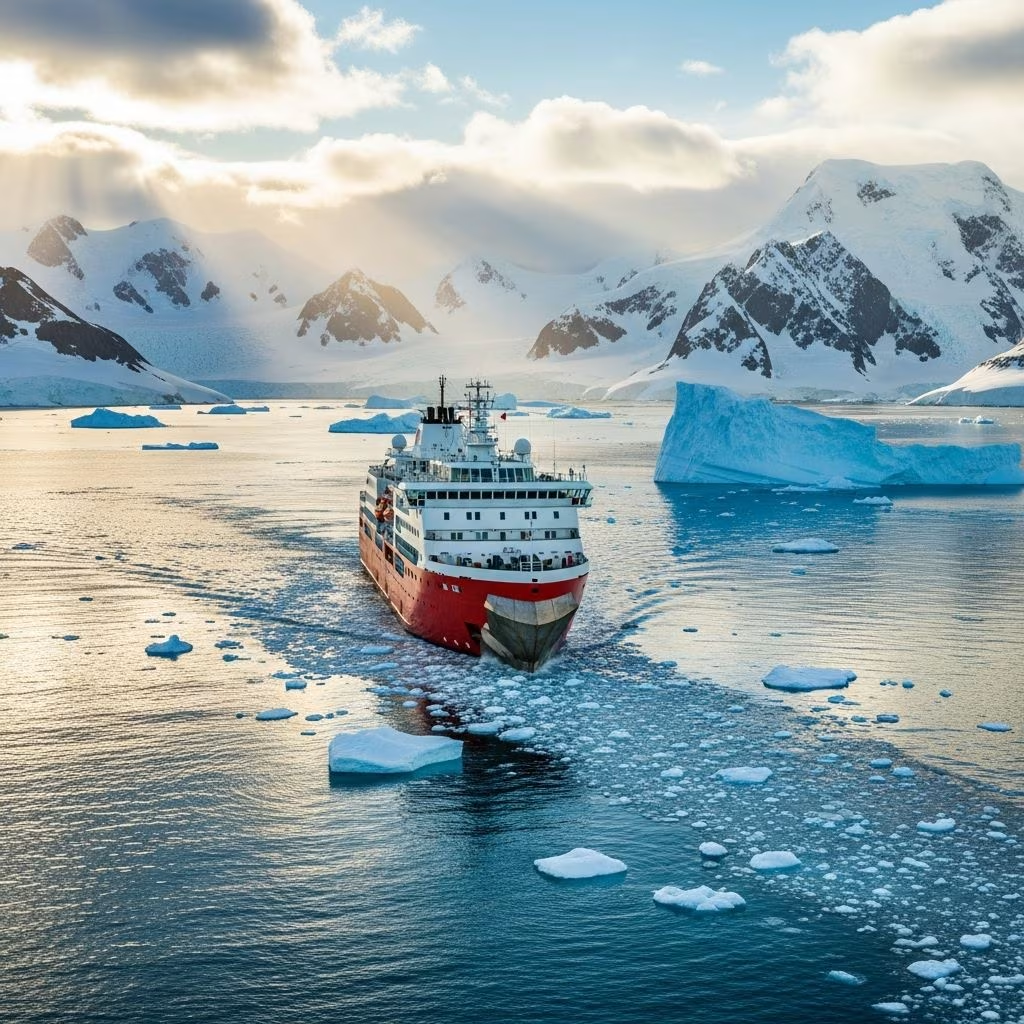 Travel Essentials
Navigating the frozen waters of Antarctica demands vessels built for the challenge. Ice class ratings, formally known as Polar Class (PC) designations, define a ship’s ability to safely operate amid icebergs, brash ice, and seasonal pack ice. These classifications ensure not just survival but enhanced exploration opportunities in one of Earth’s most remote regions.
Polar Class ratings range from PC1, the strongest for year-round multi-year ice operations, to PC7, suitable for thin first-year ice during summer. Established by the International Association of Classification Societies (IACS), these standards evaluate hull strength, propulsion power, and structural integrity against ice pressures.
Most Antarctica-bound expedition ships fall into PC5-PC7, perfectly matched to the Antarctic Peninsula’s typical conditions where heavy icebreaking is unnecessary and environmentally discouraged.
A higher ice class (lower PC number) expands access to remote bays and channels blocked by seasonal ice. During peak summer (November to March), PC6-PC7 ships navigate effortlessly as sea ice recedes. However, in early spring (October) or late fall (April), PC5 vessels push further, accessing emperor penguin colonies or untouched fjords.
| Polar Class | Ice Capability | Best Season Use | Antarctica Advantage |
|---|---|---|---|
| PC5 | Medium first-year ice year-round | Extended (Oct-Mar) | Early/late season access below Antarctic Circle |
| PC6 | 1m thick first-year ice, summer | Peak (Nov-Feb) | Snow Hill penguins, Greenland coasts |
| PC7 | Thin first-year ice, open water | High summer only | Peninsula basics, minimal ice |
Ships like those with PC6 ratings maintain speeds of about four knots through 1-meter ice, monitored via satellite imagery for safe passage.
Antarctic tourism adheres to strict International Association of Antarctica Tour Operators (IAATO) rules. Ships under 140 passengers allow full-group landings, maximizing time ashore at penguin rookeries and research stations. Larger vessels (>500 passengers) lack ice class entirely and are restricted to scenic cruising without disembarkation.
Small, ice-strengthened ships minimize environmental impact, reducing overcrowding at sensitive sites. They offer Zodiac outings for glacier calving views and kayaking amid ice floes, experiences impossible on mega-cruisers.
Antarctica’s ice varies dramatically. Spring sees breaking pack ice, requiring cautious navigation. Summer melts it back, opening vast areas. Fall rebuilds it, shortening windows. Captains use real-time satellite data, trained spotters, and reduced speeds in dense fields to ensure safety.
PC6 ships excel here: strong enough for occasional brash ice but nimble for quick route adjustments. Icebreaking is rare, reserved for emergencies to protect krill-feeding grounds and seal habitats.
Ice class pairs with operational protocols. Even PC1 ships risk damage at high speeds in ice; safety hinges on captain expertise and bridge vigilance. Expedition vessels feature reinforced bows, powerful engines, and double hulls. Passenger safety gear includes immersion suits for polar plunges or Zodiac mishaps.
Modern fleets showcase PC diversity:
Lower classes suffice for 90% of itineraries, avoiding overkill costs passed to passengers.
IAATO discourages unnecessary icebreaking to preserve ecosystems. Ships route around pack ice, favoring open leads. Small PC6-PC7 vessels leave lighter footprints, supporting sustainable tourism amid climate-driven ice decline.
Match ship rating to goals: Budget Peninsula trips need PC7; adventurous souls seek PC5+ for fringes. Prioritize small ships (<140 pax) for landings over ice prowess alone. Research operators’ PC via IACS or fleet specs.
Benefits cascade: more landings, flexible seasons, intimate wildlife encounters—from gentoo penguins to humpback whale breaches.
PC6-PC7 ships suit most, offering Peninsula access during peak summer without premium costs.
No—ice-strengthened expedition ships suffice; true icebreakers are overkill and eco-discouraged.
Indirectly via itinerary access, but small ship size (<140 pax) is key for IAATO landings.
Yes, PC5 extends to October/March for unique ice scenery and wildlife.
They operate sans ice class for scenic views but no landings, per regulations.
