

 Travel Essentials
 Travel Essentials

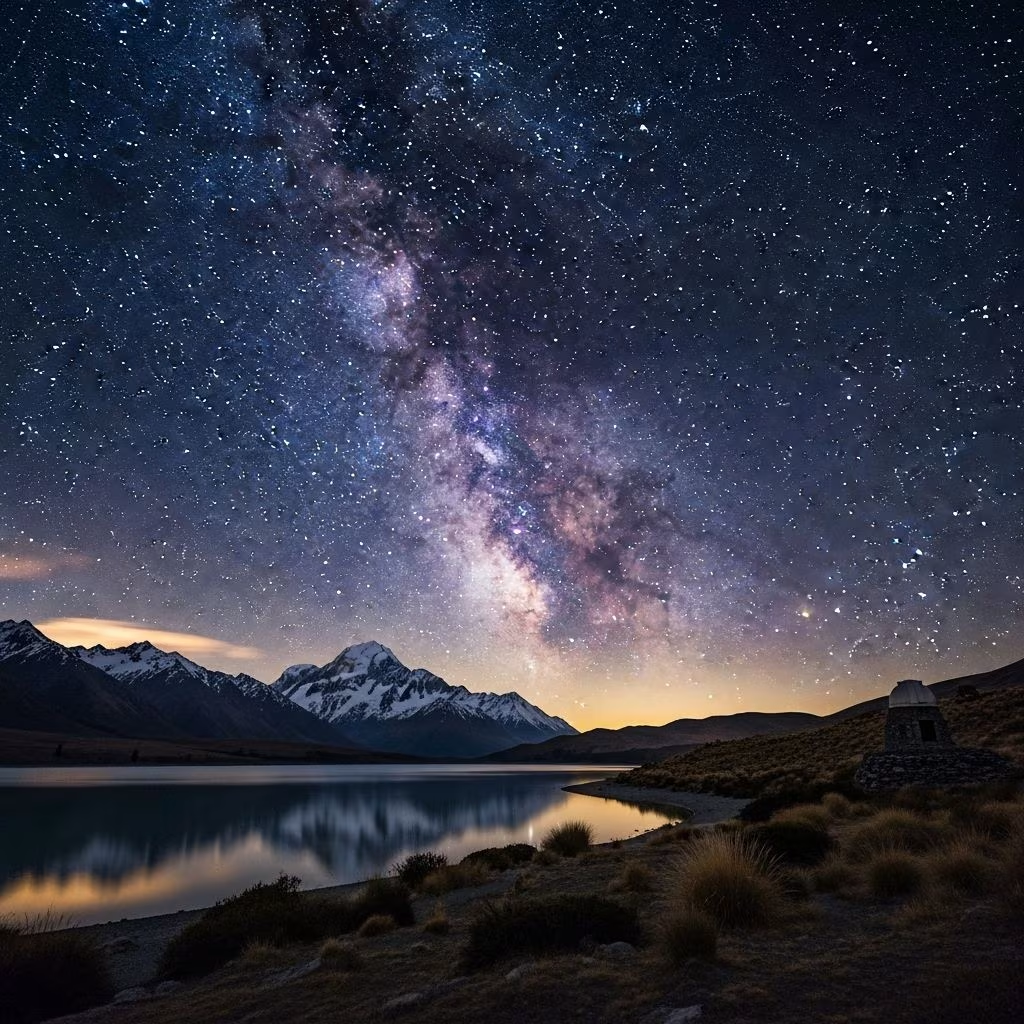
Explore Aoraki Mackenzie, the premier destination for stargazing with minimal light pollution, iconic landmarks, guided tours, and year-round celestial wonders in New Zealand's South Island.
 Travel Essentials
The Aoraki Mackenzie International Dark Sky Reserve stands as the largest of its kind globally, spanning 4,367 square kilometers across New Zealand’s South Island, providing exceptional conditions for observing the night sky free from artificial light interference.
Dark sky reserves are specially designated areas where communities and authorities collaborate to minimize light pollution, preserving the natural darkness essential for clear astronomical views. In Aoraki Mackenzie, this commitment ensures visitors witness millions of stars, the vivid Milky Way, and unique Southern Hemisphere phenomena like the Magellanic Clouds.
Light pollution, caused by excessive or misdirected artificial lighting, not only obscures celestial displays but also impacts wildlife, human health, and energy use. The reserve’s proactive measures, including sustainable lighting guidelines, safeguard these skies for future generations.
Encompassing Aoraki/Mount Cook National Park and the expansive Mackenzie Basin, the reserve benefits from high altitude, dry air, and vast open landscapes that naturally reduce atmospheric interference. Designated in 2012, it covers 4,367 square kilometers, making it the biggest in the Southern Hemisphere and one of only a handful worldwide.
The region’s pristine environment, combined with local dedication to dark sky preservation, positions it as New Zealand’s top stargazing location. Communities in areas like Lake Tekapo (Takāpō) actively promote education and advocacy to maintain this status.
Winter months deliver the clearest skies due to lower humidity, ideal for spotting the full splendor of constellations and the Milky Way arching overhead. However, every season offers distinct attractions: summer brings warmer nights for extended sessions, autumn features meteor showers, and spring showcases planetary alignments.
| Season | Key Celestial Events | Weather Notes |
|---|---|---|
| Winter (June-August) | Milky Way at peak visibility, Southern Cross | Cold, crisp, driest air |
| Summer (December-February) | Scorpius constellation, late-night comfort | Milder temps, longer twilight |
| Autumn (March-May) | Eta Aquariid meteors, Magellanic Clouds | Cooling, stable skies |
| Spring (September-November) | Planetary parades, Milky Way rise | Warming, variable clouds |
Enhance your visit with professional tours. Tekapo Stargazing combines hot pools with expert narration on constellations. Mount John offers observatory sessions peering through professional telescopes at nebulae and galaxies. Guided night walks in the national park reveal shooting stars and lore from Māori astronomy.
For photographers, the reserve’s low Bortle scale (measuring sky darkness) ensures sharp Milky Way captures. Rent equipment locally or join workshops to master long-exposure techniques.
The Dark Sky Project leads initiatives promoting low-glare lighting, public education, and policy advocacy. Residents and businesses adopt shielded fixtures to prevent sky glow, ensuring the reserve’s gold-tier status from DarkSky International.
Visitors contribute by using red flashlights, staying on paths, and supporting eco-friendly accommodations. These collective actions combat global light pollution trends, protecting biodiversity like nocturnal insects and birds.
Pack layers for chilly nights, a sturdy tripod for photos, and apps like Stellarium for navigation. Check weather forecasts for cloud cover and moon phases—new moons are optimal. Book tours in advance, especially peak season.
Unlike urban-adjacent sites, this reserve’s size and isolation deliver unmatched clarity. New Zealand hosts multiple dark sky areas, but Aoraki Mackenzie’s scale and infrastructure make it the ultimate choice, attracting global astro-tourists.
Emotional impacts are profound—many report awe-inspired tears under these prehistoric skies, fostering a deep cosmic connection.
Its 4,367 sq km expanse, minimal light pollution, and clear basin air provide naked-eye views of millions of stars and the Milky Way.
Yes, though winter offers the clearest skies; each season has unique events.
Naked-eye viewing suffices, but tours and telescopes enhance details like planets.
Fly to Christchurch or Queenstown, then drive 3-5 hours to Lake Tekapo.
Dark-sky friendly lodges, glamping, and hotels prioritize low lighting.
Aoraki Mackenzie transforms nights into portals of wonder, blending nature, science, and adventure. Whether solo or guided, prepare for life-changing views that linger long after dawn.
