

 Travel Essentials
 Travel Essentials

Explore Rome's iconic Appian Way: from its origins as a Roman engineering marvel to must-visit sites like catacombs, tombs, and parks. Perfect for history lovers seeking an immersive day trip.
 Travel Essentials
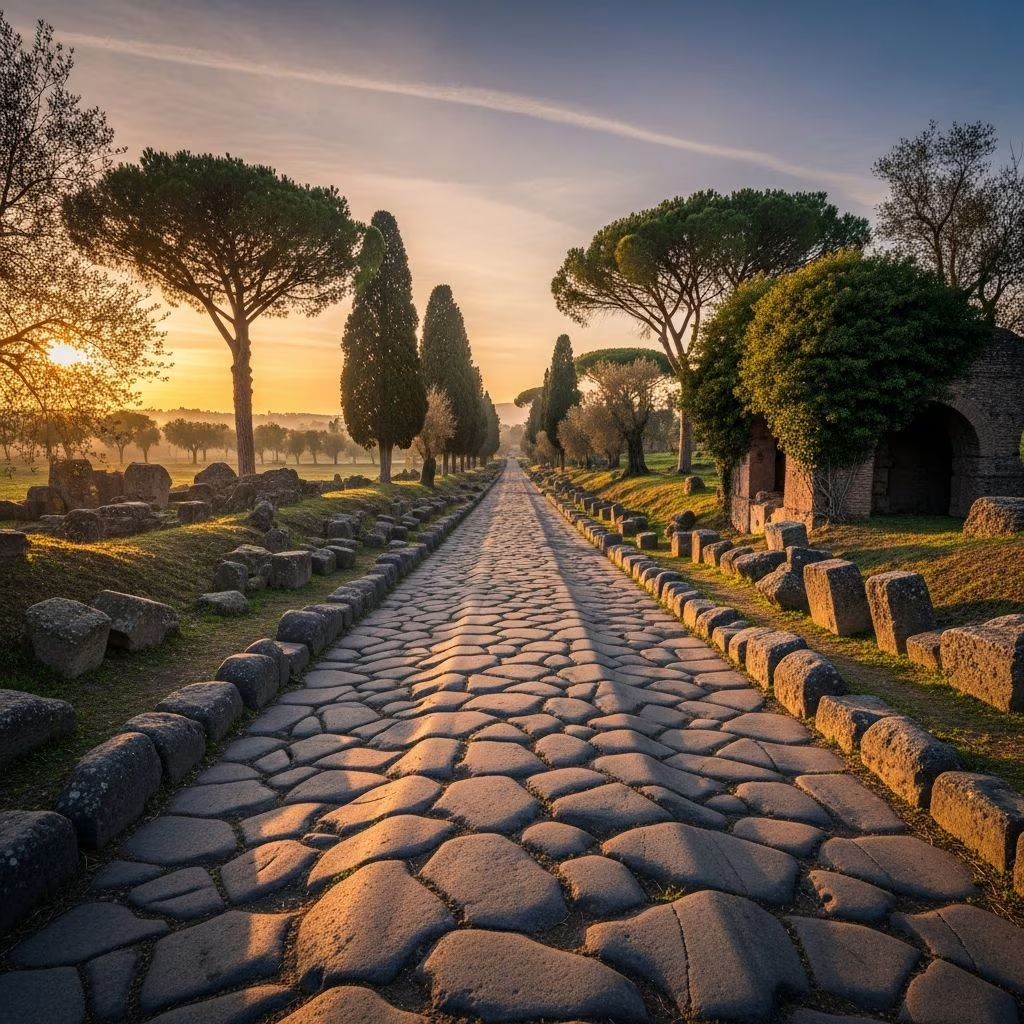
The Appian Way, known as Via Appia Antica, stands as one of ancient Rome’s most enduring legacies. Constructed in 312 BC, this monumental road stretched over 563 kilometers from Rome to Brindisi, facilitating military campaigns, trade, and travel across the empire. Today, its initial segments near Rome invite modern explorers to walk the same basalt stones trodden by legions, emperors, and early Christians.
Initiated by censor Appius Claudius Caecus, the road revolutionized connectivity in the Roman Republic. It began as a vital link to Capua and expanded over centuries to reach the Adriatic port of Brindisi, enabling efficient transport to eastern provinces. Engineering feats like bridges, tunnels, and precise gradients overcame natural barriers, showcasing Roman ingenuity that influenced road-building worldwide.
The road’s strategic role peaked during expansions under emperors like Trajan and Hadrian. Tombs and monuments lined its path, as Roman law prohibited burials inside city walls, turning the via into a grand necropolis. Christianity later infused it with sacred significance through catacombs serving as underground burial and worship sites.
The journey starts near Rome’s historic core. Key entry points include Porta San Sebastiano or Porta Metronia along the Aurelian Walls, built in 275 AD to encircle the city. From central Rome, take metro line B to Circo Massimo, then bus 118 or 218 directly into Appia Antica Regional Park.
For a car-free experience, rent bikes at the park’s visitor center—electric options suit varied fitness levels. Walking tours span 9-15 km, ideal for half or full days. Public transport returns from sites like Frattocchie via train or bus. Best visited spring or fall to avoid summer heat; arrive early for fewer crowds.
Embark from Porta San Sebastiano, where the Museum of the Walls offers insights into Rome’s defenses. Stroll amid umbrella pines and wildflowers in the 3,500-hectare Appia Antica Regional Park, encompassing the first 16 km of the road, Caffarella Valley, and aqueducts.
| Stop | Distance from Start | Highlights | Time Needed |
|---|---|---|---|
| Porta San Sebastiano | 0 km | Aurelian Walls Museum | 30 min |
| Church of Domine Quo Vadis | 2 km | Peter’s footprint legend | 15 min |
| Catacombs of San Sebastiano | 4 km | Early Christian tombs, basilica | 45 min |
| Catacombs of San Callisto | 6 km | Papal burials, St. Cecilia | 45 min |
| Mausoleum of Fosse Ardeatine | 8 km | WWII memorial | 30 min |
| Villa of the Quintili | 12 km | Imperial villa ruins | 1 hour |
After Porta San Sebastiano, the road reveals tombs and fountains signaling entry into antiquity. At Via Ardeatina’s junction, the tiny Church of Domine Quo Vadis commemorates St. Peter’s vision of Christ, with a stone bearing his footprint—a poignant blend of legend and faith.
The Catacombs of San Sebastiano, carved into tufa rock, house pagan and Christian burials. A fourth-century basilica above preserves relics and frescoes, offering guided tours into multi-level galleries. Nearby, the grander Catacombs of San Callisto extend over 20 km, burying five early popes and St. Cecilia. Marvel at inscribed loculi and symbolic art depicting fish and anchors—early Christian icons.
These networks, developed in the 2nd-4th centuries AD, served persecuted communities, doubling as secret chapels. Tours (half-hour, €10) illuminate their role in faith’s survival amid persecution.
Along the way, encounter monumental tombs like the Tomb of Cecilia Metella, a drum-shaped mausoleum for a Roman noblewoman, adorned with reliefs of war trophies. Further on, the Fosse Ardeatine Mausoleum honors 335 victims of a 1944 Nazi massacre, its tunnel shrine evoking modern tragedy amid ancient stones.
The itinerary culminates at this vast 4th-century AD villa complex, owned by consular brothers Quintilius Condianus and Valerius. Spanning baths, theaters, and porticos, it exemplifies elite Roman leisure. Overlooking the park’s greenery, ruins evoke opulent banquets and mosaics.
Beyond ruins, the park thrives as a biodiversity haven. Maritime pines, olive groves, and meadows host birds, butterflies, and grazing cattle—a pastoral escape from urban Rome. Trails weave through untouched landscapes, perfect for picnics or birdwatching.
Wear sturdy shoes for uneven paving; bring water, sunscreen, and hats. Sites open 9 AM-5 PM (closed Wednesdays for some); book catacomb tours online. Combine with Caffarella Valley hikes for extended adventures. Families enjoy bike rentals; history buffs opt for audio guides.
The pedestrian-friendly stretch from Porta Metronia to Frattocchie covers about 15 km, taking 5+ hours with stops.
Yes, dedicated cycle paths run parallel; rentals available at park entrances.
Children over 6 welcome on guided tours; no photography inside.
It marks where St. Peter, fleeing Rome, met Jesus, prompting his return to martyrdom.
Buses 118/218 and trains from Frattocchie connect frequently to Rome center.
This ‘Queen of Roads’ transcends a mere path—it’s a portal to layered eras: republican engineering, imperial grandeur, Christian resilience, and wartime remembrance. Wandering its length fosters reflection amid ruins whispering of fallen empires and enduring human spirit. Whether seeking solitude or scholarly depth, the Appian Way delivers an irreplaceable Roman odyssey.
