

 Travel Essentials
 Travel Essentials

Comprehensive guide to exploring Arches National Park, featuring hiking trails, scenic drives, best times to visit, and insider tips for first-time travelers.
 Travel Essentials
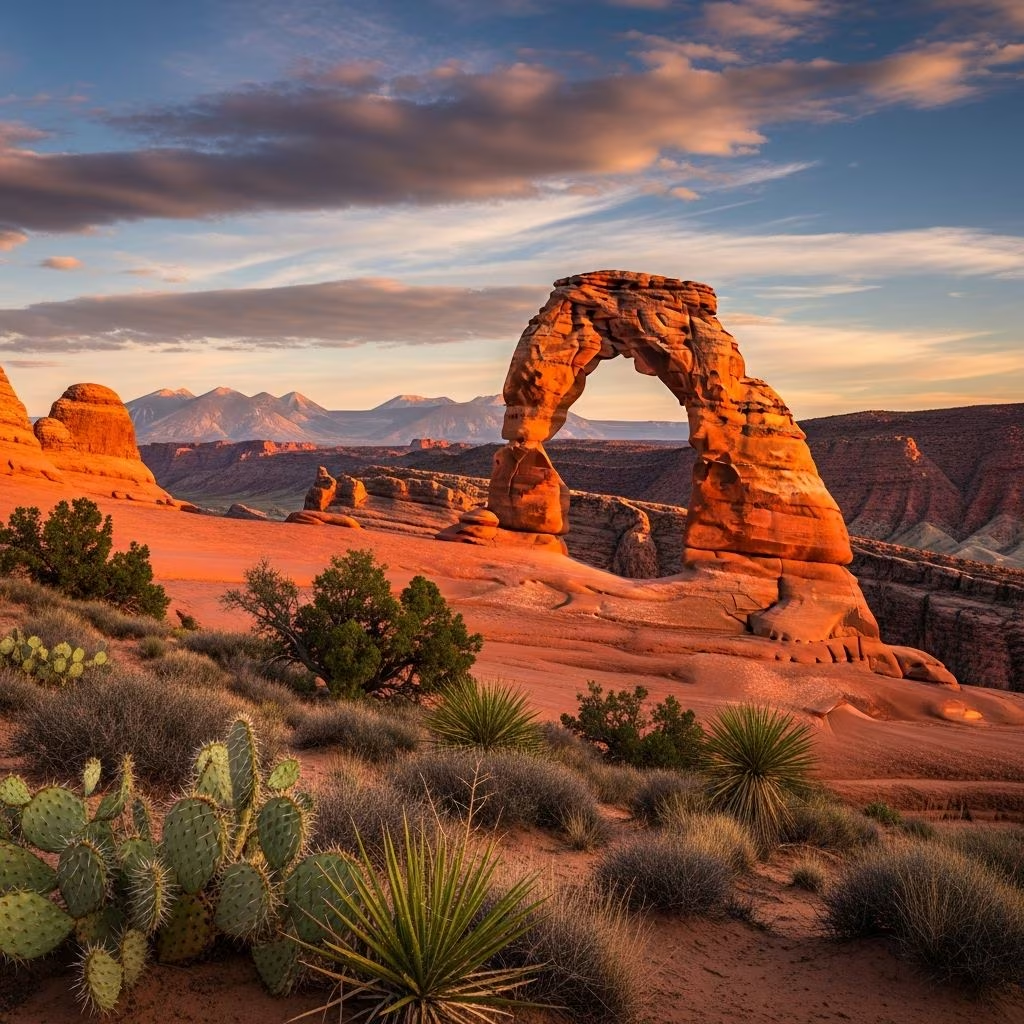
Arches National Park stands as one of America’s most extraordinary natural treasures, showcasing the raw beauty of Utah’s high desert landscape. Spanning over 76,000 acres, this remarkable park contains the world’s highest concentration of natural stone arches, with more than 2,000 documented formations scattered throughout its boundaries. Beyond the iconic arches themselves, visitors encounter hundreds of towering pinnacles, massive rock fins, and precariously balanced boulders that create an otherworldly terrain unlike anywhere else on Earth. The park’s distinctive red-hued geology creates a striking visual palette that shifts in tone throughout the day, particularly during sunrise and sunset when the landscape appears to glow.
For first-time visitors, Arches National Park presents an impressive variety of experiences suited to different fitness levels and time constraints. The park’s accessibility ranges from straightforward scenic drives to challenging wilderness hikes, making it possible for families with young children, elderly visitors, and experienced hikers to all find suitable activities. The main scenic drive spans approximately 18 miles and winds through the park’s core attractions, featuring multiple pull-outs and overlooks that allow visitors to experience dramatic vistas without extensive hiking.
A crucial distinction exists between viewing formations from vehicles and experiencing them on foot. Many of the park’s most celebrated natural features require walking to fully appreciate their magnitude and intricate details. The famous landscape formations that appear so striking in photographs genuinely dwarf visitors when encountered in person, an experience that cannot be replicated from a parking area.
Due to significant overcrowding challenges in recent years, Arches National Park implemented a timed entry reservation system to address parking shortages and entrance delays. This system operates during peak seasons when the park experiences the highest visitor volume.
Entry Requirements by Season:
Each timed-entry ticket permits park access during a one-hour window on your selected date. Once inside the park, visitors may exit and re-enter without additional restrictions for the remainder of that day. This flexible approach acknowledges that many visitors may want to explore other attractions in the Moab area during their trip.
The primary park road serves as the main thoroughfare for visitors seeking to maximize their viewing opportunities without undertaking strenuous hikes. Starting from the Visitor Center, the road ascends through a series of switchbacks and gradually flattens as it curves around the landscape, revealing numerous pullouts and scenic overlooks.
Initial stops along the drive feature accessible viewpoints that showcase the park’s dramatic geology without requiring significant physical exertion. Park Avenue, named for its resemblance to New York City’s famous street, presents towering red rock walls forming a narrow wash—a striking introduction to the park’s distinctive formations. Beyond Balanced Rock, a popular photo stop, the road forks toward the Windows Section, an area renowned for its concentration of accessible arches and photogenic rock formations.
Visitors seeking moderate exercise with substantial reward should prioritize trails that offer significant geological features with minimal elevation gain. The Windows Section features a one-mile loop trail that gently climbs approximately 100 feet while presenting three massive, architecturally distinctive arches. This area’s first portion is wheelchair accessible, making it particularly valuable for visitors with mobility considerations.
Double Arch, accessible from the same parking area, stands as the park’s tallest arch at 112 feet and provides an entirely different visual perspective than the Windows formations. Sand Dune Arch and Broken Arch combine to form a 0.3-mile roundtrip excursion suitable for families with young children, providing close contact with genuine arch formations without requiring significant distance or elevation.
Landscape Arch represents perhaps the park’s most accessible moderate-difficulty hike, featuring a well-maintained trail system and manageable distance. Despite its 290-foot span—making it the fifth longest arch globally—the roundtrip distance of 1.8 miles with only 40 feet of elevation gain makes this formation attainable for most reasonably fit visitors.
The Fiery Furnace presents an entirely different hiking experience, offering an unmarked sandstone labyrinth requiring navigation skills and appropriate footwear with sticky soles to manage the slickrock surfaces. While self-guided permits are available, ranger-led tours provide invaluable guidance through this maze-like canyon system, making them the preferable option for visitors without previous canyoneering experience.
The Devils Garden Loop encompasses the park’s most comprehensive hiking experience, stretching 9 miles as a lollipop configuration that connects multiple arches and unusual rock formations. This trail extends beyond Landscape Arch into primitive terrain marked by rock cairns rather than maintained paths. Hikers encounter steep scrambles, natural pools that may contain water seasonally, and diverse geological features that create an authentic wilderness experience. Completing the entire loop requires substantial time and physical conditioning but rewards dedicated hikers with unparalleled access to the park’s remote formations.
Temperature extremes significantly impact the Arches experience across different seasons. Spring and fall months offer moderate conditions ideal for extended hiking, though spring thunderstorms can create sudden hazardous conditions in slot canyons. Summer temperatures frequently exceed 100°F in direct sunlight, making early morning and late afternoon hiking preferable. Winter months bring mild daytime temperatures but can produce icy conditions on north-facing slopes and reduced visibility during occasional snowfall.
The peak visitation period from April through October correlates with the most pleasant weather conditions, driving the need for the timed-entry system during these months. Visiting during shoulder seasons—early April, late October, or winter months—provides significantly fewer crowds while remaining weather-appropriate.
The Visitor Center, located near the park entrance, provides essential resources including drinking water, limited snacks, restrooms, and educational exhibits about the park’s geology and natural history. Hours vary seasonally, with extended hours during peak visitation periods. No additional food or beverage vendors operate within the park boundaries except at the Visitor Center, necessitating advance planning for longer visits. Water availability is limited primarily to the Visitor Center and Devils Garden area at the park’s terminus.
The park operates continuously 24/7, though practical visitor access depends on daylight hours for safe hiking and driving. Most facilities maintain seasonal schedules, requiring advance research for specific opening times.
The National Park Service charges per-vehicle entrance fees for park access, with additional fees for camping, certain permits, and ranger-led activities. A significant portion of collected fees—approximately eighty percent—returns directly to the park for maintenance, infrastructure improvements, and visitor services.
The broader Moab region offers exceptional natural attractions accessible without entering Arches National Park. Corona Arch, situated along the scenic Potash Road west of Moab, presents a short yet adventurous trail requiring scrambling ability but rewarding visitors with a magnificent natural formation. Fisher Towers, also east or west of Moab along the Colorado River drainage, offers stunning landscape photography and geology study opportunities.
The park’s fragile high-desert ecosystem requires visitor cooperation to maintain ecological integrity. Cryptobiotic soil—a living crust composed of cyanobacteria, lichens, and mosses essential to desert ecology—remains vulnerable to foot traffic damage. Visitors must strictly adhere to established trails and designated hiking routes, traveling only on rock and soft sand surfaces when necessary.
Staying on marked paths prevents cumulative damage to sensitive vegetation and soil systems while preserving the wilderness experience for future visitors. This commitment to environmental stewardship ensures that the park’s natural wonders remain accessible and intact for generations to come.
Spring (March-May) and fall (September-November) offer ideal weather conditions for hiking and exploring. These seasons balance comfortable temperatures with manageable visitor numbers outside the peak summer months.
A minimum of one full day allows for the scenic drive and at least two moderate hikes. Two to three days enable more comprehensive exploration of multiple trail systems and less-crowded attractions.
Yes, multiple short trails and scenic overlooks accommodate young children. Sand Dune Arch provides a particularly engaging destination for families.
The trail to Landscape Arch suits most visitors with basic fitness. The extended primitive trail requires more experience, balance, and navigation ability.
Carry abundant water (at least two liters per person), sun protection, proper footwear with good traction, and a map. Download offline maps for canyon areas where GPS signals are unreliable.
Arches National Park transcends typical outdoor recreational destinations, offering visitors direct engagement with geological processes spanning millions of years. The combination of easily accessible scenic overlooks and challenging wilderness hikes ensures that visitors of varying abilities can experience the park’s distinctive character. Whether spending a single afternoon or multiple days, visitors consistently report transformative encounters with this remarkable landscape that inspire appreciation for geological time scales and natural processes operating beyond human comprehension.
