

 Travel Essentials
 Travel Essentials

Discover what it takes to journey to the North Pole, explore remote Arctic landscapes, and join an elite community of polar travelers on purpose-built expedition vessels.
 Travel Essentials
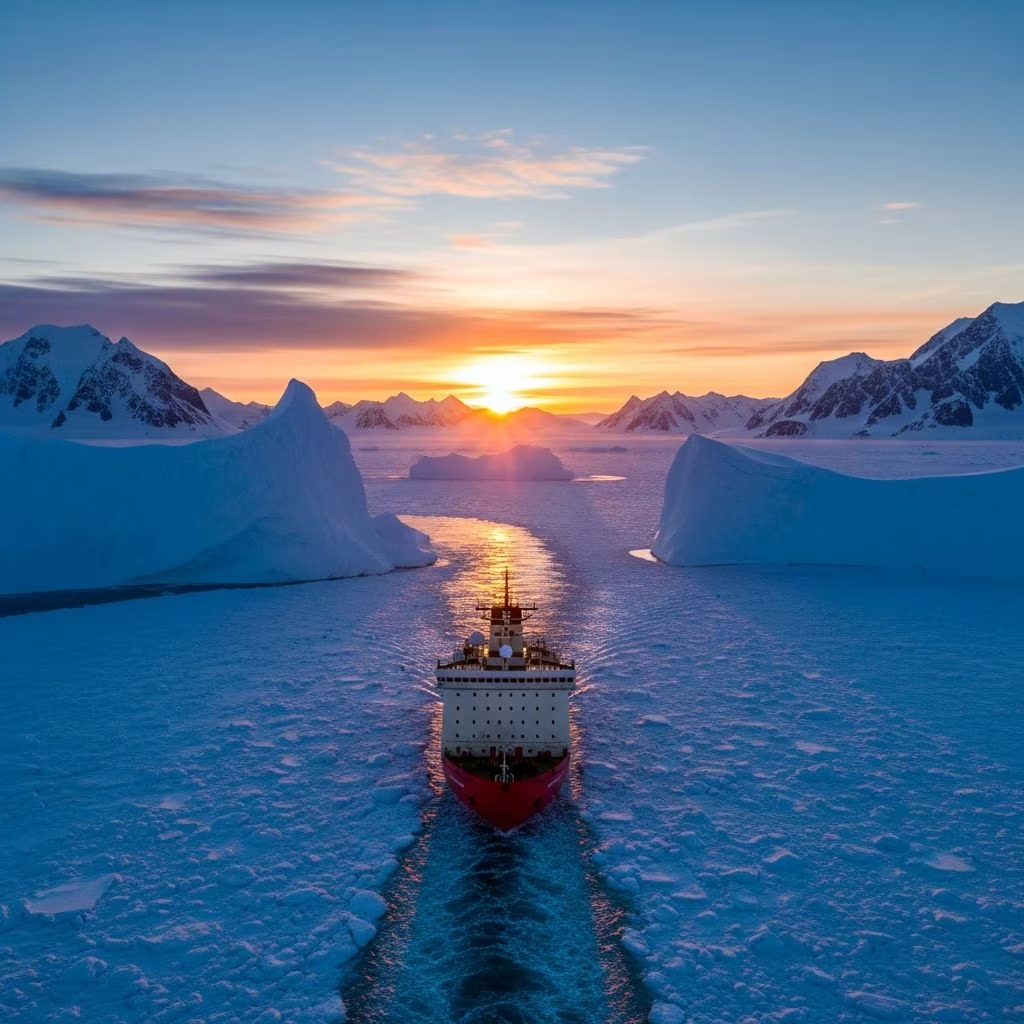
The Arctic represents one of the last truly untamed regions on Earth, a destination that demands respect, preparation, and specialized infrastructure to reach safely. Unlike conventional cruise vacations, journeys to the polar regions require expedition-class vessels, expert crews trained in extreme environments, and travelers willing to embrace adventure in one of the world’s most unforgiving landscapes. This exploration of polar cruising reveals what transforms an ordinary vacation into an extraordinary encounter with the planet’s most dramatic geography.
Polar expedition cruising differs fundamentally from traditional maritime travel. These voyages utilize purpose-built ships specifically engineered to navigate through ice-choked waters and extreme weather conditions. The vessels must possess reinforced hulls, advanced navigation systems, and redundant safety features that exceed standard cruise ship specifications. Crew members undergo specialized training in polar operations, ice navigation, and emergency response protocols unique to Arctic environments.
The expedition model prioritizes exploration and environmental interaction over the entertainment-focused approach of mainstream cruising. Rather than relying on onboard casinos and theatrical performances, passengers engage in active exploration through guided excursions, naturalist lectures, and direct interaction with Arctic landscapes. This fundamental difference attracts a specific demographic: adventurous travelers seeking meaningful experiences over passive leisure.
Multiple entry points provide access to Arctic exploration, each offering distinct environmental and cultural characteristics:
Traveling to the Geographic North Pole represents membership in an exclusive club. Only those who reach 90° North join this distinguished group of polar adventurers. This achievement requires commitment, as North Pole expeditions typically span 16 days and demand significant personal and financial investment. The journey combines elements of exploration, comfort, and extraordinary privilege into an experience without parallel.
Reaching the North Pole involves sailing through progressively thicker pack ice, requiring vessels with icebreaking capabilities. The experience culminates in a symbolic moment at the planet’s northern terminus, where all longitude lines converge and geographic direction becomes meaningless. This psychological and physical accomplishment transforms participants’ understanding of Earth’s geography.
Modern expedition vessels incorporate revolutionary design elements that enhance safety while reducing environmental impact. The X-BOW hull configuration, featured on several polar-class ships, produces a smoother sailing experience through ice fields while minimizing vessel emissions. These innovations allow expeditions to navigate sensitive polar environments while maintaining passenger comfort.
Expedition vessels typically accommodate 50 to 200 passengers, creating intimate communities rather than the anonymous masses found on conventional cruise ships. This scale permits personalized service, flexible itineraries adjusted for ice conditions and wildlife sightings, and meaningful interaction between crew and guests.
Arctic expeditions provide diverse engagement opportunities designed for active participants:
Arctic summer offers a unique celestial occurrence: the midnight sun. This phenomenon extends daylight hours beyond conventional expectations, permitting extended exploration and outdoor activities regardless of clock time. The continuous illumination transforms the psychological experience of Arctic travel, eliminating the temporal constraints of normal day-night cycles and allowing maximum engagement with landscapes.
Arctic regions support specialized wildlife adapted to extreme environments. Polar bears roam ice floes, walruses congregate on coastal haul-outs, and whales migrate through Arctic waters during summer months. Expeditions employ experienced naturalists who provide ecological context, enhance species identification, and ensure wildlife viewing remains ethical and safe. The combination of pristine environments and expert guidance creates wildlife observation opportunities unavailable elsewhere on Earth.
Arctic exploration demands physical capability beyond typical vacation standards. Passengers must confidently board inflatable Zodiacs in challenging water conditions, walk across uneven ice and snow terrain, and kayak through remote waters. These requirements exceed the passive participation model of conventional cruising. Expedition operators typically require cardiovascular fitness, mobility, and psychological comfort with uncertainty and challenging conditions.
Preparation extends beyond physical conditioning. Mental resilience, flexibility regarding itinerary adjustments, and genuine enthusiasm for remote environments determine expedition satisfaction more than physical prowess. Experienced polar travelers recommend training several months before departure to ensure physical readiness.
Multiple expedition operators specialize in Arctic cruising, each offering distinct approaches and regional focus. Some operators emphasize 30 years of polar expertise, maintaining deep relationships with Arctic communities and extensive knowledge of ice conditions and wildlife patterns. Others focus on luxury amenities combined with expedition capabilities, offering refined accommodations aboard advanced vessels. Selecting operators based on specific Arctic interests, vessel preferences, and expedition style ensures alignment between traveler expectations and actual experiences.
| Planning Element | Key Considerations |
|---|---|
| Timing | Arctic travel operates during brief summer windows (June-September), with peak season typically July-August |
| Duration | Expeditions range from 7-day regional explorations to 16-day North Pole voyages |
| Cost | Arctic cruises represent significant investment; budget accordingly for premium experiences |
| Physical Fitness | Assess personal capability against operator requirements before booking |
| Passport Requirements | Verify documentation needs for crossing Arctic waters and visiting multiple countries |
| Travel Insurance | Expedition-specific coverage essential for Arctic regions |
Expedition cruises prioritize exploration and active engagement over entertainment and relaxation. Specialized vessels, expert crews, smaller passenger counts, and itinerary flexibility around environmental conditions define expedition cruising. Passengers participate actively rather than observe passively, creating fundamentally different travel experiences.
No. Many operators welcome first-time Arctic explorers. However, comfort with uncertainty, physical capability, and genuine enthusiasm for remote environments matter more than previous expedition participation. Operators provide detailed briefings and professional guidance throughout journeys.
Arctic conditions remain unpredictable. Summer temperatures typically range from just above freezing to 50°F, with variable weather including fog, wind, and precipitation. Proper clothing layers and flexibility regarding planned activities become essential.
Expedition vessels accommodate significantly fewer passengers than conventional cruise ships, typically 50-200 people. This smaller scale enables personalized service and flexible itineraries.
Arctic cruises represent premium travel experiences. Regional Svalbard and Greenland expeditions begin around $5,000-$8,000 per person, while North Pole voyages exceed $20,000 per person for 16-day expeditions.
Arctic expeditions fundamentally alter participants’ perspectives on Earth’s geography, climate dynamics, and environmental conservation. Direct observation of glacial landscapes, wildlife adaptation to extreme conditions, and the sheer isolation of polar regions creates lasting impressions that photographs and descriptions cannot capture. These journeys represent investment not merely in vacation experiences but in personal transformation and expanded understanding of planetary systems.
The combination of specialized vessels, expert guidance, active engagement, and access to Earth’s most remote regions creates travel experiences of unparalleled significance. Whether reaching the North Pole’s symbolic 90° North or exploring Svalbard’s dramatic fjords, Arctic expeditions offer adventurers access to environmental and cultural treasures few humans ever witness.
