

 Travel Essentials
 Travel Essentials

Discover key differences between Arctic and Antarctic cruises, from wildlife and accessibility to seasonality and itinerary length, to decide which polar region suits your adventure.
 Travel Essentials
Planning a journey to one of Earth’s polar regions represents a once-in-a-lifetime decision. Between the Arctic and Antarctic, each offers distinct landscapes, wildlife encounters, and expedition experiences that cater to different travel preferences and constraints. Understanding the fundamental differences between these two extreme destinations will help you make an informed choice that aligns with your interests, timeline, and expectations.
The Arctic and Antarctic represent two fundamentally different geographic realities. The Arctic constitutes an ocean surrounded by continents, including portions of Russia, Canada, Greenland, Norway, and Alaska. In contrast, Antarctica is a continent surrounded entirely by ocean, with no permanent human settlements and no sovereign territory claims by any single nation. This geographic distinction shapes virtually every aspect of your expedition experience, from accessibility to the types of activities available.
These structural differences mean that Arctic expeditions provide opportunities to interact with established communities, explore human settlements, and experience cultural exchanges. Antarctica, conversely, offers a true wilderness experience where your only human contact comes from your fellow travelers aboard the expedition vessel.
Travel to either polar region is confined to specific seasonal windows that correspond to summer months in each hemisphere. Arctic cruises operate from May through September, while Antarctic expeditions run from November through March. This timing ensures that ice conditions permit safe vessel navigation and that temperatures remain relatively moderate for outdoor activities.
Summer temperatures in both regions hover similarly, ranging from 20-50°F depending on the specific location and time within the season. Both destinations offer extended daylight hours, with up to 24 hours of continuous daylight during peak summer months. This extended sunshine enables longer exploration windows and unique photography opportunities unavailable in other parts of the world.
The beginning of each season typically presents colder conditions with more extensive snow and ice coverage. If you prioritize dramatic ice landscapes and crystalline formations, visiting early in the season provides these features. However, traveling during mid to late summer offers slightly warmer temperatures and more extensive ice-free access to certain regions.
Geographic proximity plays a significant role in determining which destination proves more practical for your expedition. The Arctic is more accessible for travelers based in North America and Europe, with departure points typically located in major cities. Common embarkation points include Oslo, Bergen, Reykjavik, and Kangerlussuaq—all positioned between four and nine hours by flight from New York. Additional Arctic access routes operate from Murmansk in Russia, Alaska, and various Canadian Arctic ports.
Antarctic expeditions require greater logistical investment. Most departures originate from Ushuaia, Argentina, or Punta Arenas, Chile, necessitating flights to South America followed by additional travel to your vessel. This additional travel time and expense reflect the extreme remoteness of the Antarctic continent. However, certain Antarctic itineraries now offer fly-over options that skip the notorious Drake Passage, reducing total journey time by several days.
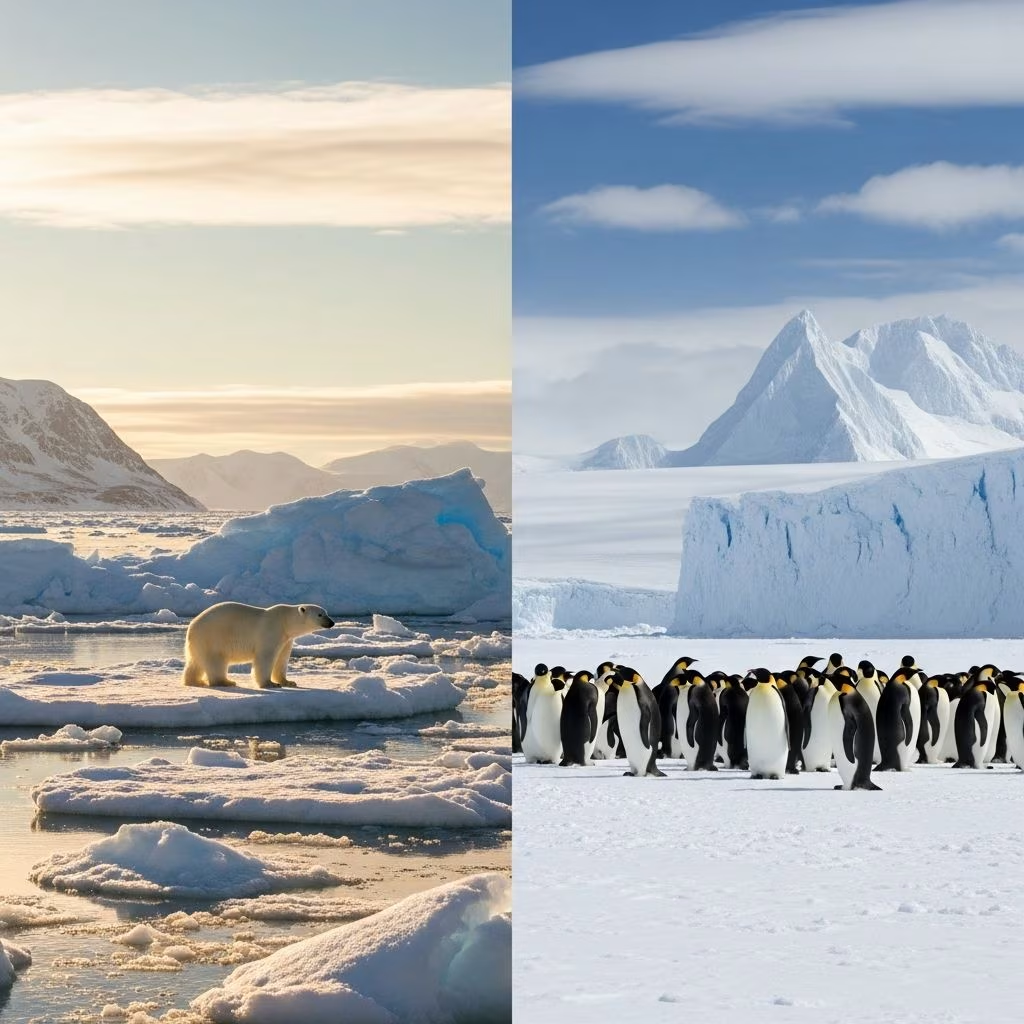
Perhaps the most compelling reason to choose one polar destination over another involves the wildlife you hope to encounter. Antarctica is famous for its penguin colonies, hosting multiple species including Emperor, Adélie, Chinstrap, and Gentoo penguins in vast rookeries. The Antarctic Peninsula region offers thrilling Zodiac expeditions that navigate between towering icebergs and bring you into close proximity with penguin colonies and seal populations.
Arctic expeditions showcase fundamentally different fauna. The Arctic’s iconic predator is the polar bear, and specialized itineraries focus specifically on polar bear sightings, particularly in regions like Svalbard. The Arctic also hosts musk oxen, walruses, beluga whales, and diverse Arctic bird species. However, wildlife viewing in the Arctic functions differently from Antarctica. Arctic expeditions represent true voyages of discovery where the ship’s captain and expedition leader continuously adjust course based on wildlife reports, weather conditions, and ice patterns—much like early polar explorers.
Antarctic voyages follow more established itineraries with predictable wildlife viewing locations. While you observe more wildlife from the ship’s deck or bridge, expedition leaders conduct frequent Zodiac operations to position you near glaciers, icebergs, and wildlife aggregations. The abundance and accessibility of wildlife in Antarctica—particularly penguin colonies numbering in the thousands—provides guaranteed impressive encounters.
The two polar regions present strikingly different visual experiences. Antarctic landscapes evoke an otherworldly quality, characterized by vast ice shelves, towering icebergs in geometric formations, and ice-covered peaks rising from frozen valleys. The environment feels alien and remote, untouched by human infrastructure or development. Snow and ice dominate the visual landscape, creating a monochromatic palette broken only by the deep blue of open water and the occasional contrast of rocky outcrops.
Arctic scenery carries a more traditional mountainous character. Snow-covered peaks, glaciers, and tundra define many popular Arctic cruise destinations. Importantly, many Arctic landing sites feature rock or grass terrain rather than ice or snow, allowing for more varied onshore exploration. The Arctic’s accessible landscape means you encounter natural features like fjords, coastal formations, and mountain passes alongside ice-based phenomena.
Additionally, the Arctic’s human presence shapes its landscape. Settlements like Longyearbyen in Svalbard, home to over 2,000 residents, feature vibrant hotel and restaurant scenes that contrast sharply with the pristine wilderness beyond town boundaries. Antarctica, by stark contrast, maintains no permanent settlements anywhere on the continent, preserving its completely untouched character.
Both polar regions now offer overlapping adventure activities, though regional specialization remains. Antarctic cruises feature kayaking, Zodiac expeditions, camping on ice, and diving opportunities in select locations. Arctic expeditions have expanded their offerings to include these same activities while adding region-specific options like ice fishing and mountain biking. Certain advanced polar vessels now facilitate helicopter-assisted excursions to remote locations in the Arctic.
The expedition philosophy differs between regions. Antarctic cruises emphasize observation and documentation of pristine wilderness and wildlife. Arctic expeditions, particularly those focused on polar bear tracking or photography, emphasize the adventure and uncertainty of exploration. You become an expedition participant rather than a passive observer, contributing to the collective experience of discovery.
Shore excursions reveal fundamental differences between the two destinations. Arctic expeditions provide extensive on-land exploration due to the abundance of dry terrain and fewer regulatory restrictions on landing. You spend considerable time walking through settlements, exploring geological formations, and experiencing diverse landscapes. Antarctic expeditions concentrate more time on water-based Zodiac operations, though you do have opportunities to walk on penguin-populated islands and rock-based landing sites.
The Arctic represents a living cultural landscape. Indigenous peoples, particularly the Inuit across the Canadian Arctic, maintain active communities throughout the region. Arctic expeditions frequently incorporate cultural exchanges, visits to indigenous settlements, and opportunities to learn about traditional Arctic lifestyles adapted to extreme conditions. Modern Arctic towns blend contemporary amenities with traditional heritage, creating a unique cultural experience.
Antarctica lacks permanent human presence and indigenous populations. No permanent settlements exist on the continent, and international agreements prohibit territorial claims by any single nation. However, Antarctic voyages often include stops in sub-Antarctic regions like South Georgia—frequently called the Galapagos of the South Seas due to its extraordinary wildlife—and the Falkland Islands, which do have small populations and fascinating colonial histories. These stops provide human-interest elements while maintaining the pristine character of the Antarctic continent itself.
| Criteria | Arctic Better For | Antarctica Better For |
|---|---|---|
| Time Available | Limited time (10-14 days) | Extended time (14-20+ days) |
| Geographic Proximity | North American/European travelers | Long-haul adventure seekers |
| Primary Wildlife Interest | Polar bears, walruses, whales | Penguins, seals, vast colonies |
| Preferred Landscape | Mountains, fjords, varied terrain | Ice, icebergs, crystalline formations |
| Activity Focus | Mixed exploration and cultural experience | Wildlife observation and pristine wilderness |
| Human Interaction | Settlements, culture, communities | Isolation, complete wilderness |
| Budget Consideration | Generally more affordable | Typically more expensive |
Selecting based on available time: If your vacation window extends only one to two weeks, Arctic expeditions provide optimal value with shorter total journey times. Antarctic trips require minimum two-week commitments, with most well-regarded itineraries extending 16-20 days when including South Georgia or the Falkland Islands.
Budget implications: Arctic cruises typically cost less than comparable Antarctic expeditions. The shorter travel distances, established infrastructure, and less remote locations result in lower operational costs that translate to reduced ticket prices. Antarctic expeditions command premium pricing due to extreme remoteness, specialized vessel requirements, and logistical complexity.
Physical demands: Both destinations challenge participants with cold temperatures, rough seas, and rigorous activities. The Arctic’s varied terrain may suit those with moderate fitness levels, while Antarctica’s ice-based environment and Drake Passage crossing demand better physical conditioning and seasickness tolerance.
Experience level: First-time polar explorers find Arctic expeditions accessible and manageable. Antarctic cruises, while not requiring prior expedition experience, appeal more to seasoned travelers seeking maximum wilderness immersion and spectacular landscape drama.
Modern expedition cruise operators offer increasingly specialized voyages targeting specific interests. Arctic expeditions now include photography-focused trips emphasizing polar bear documentation, geology-centered voyages exploring Arctic geological formations, and cultural immersion experiences prioritizing interaction with Arctic communities.
Antarctic voyages feature circumnavigation routes traversing the entire continent, South Georgia extensions showcasing extraordinary wildlife density, and history-focused trips retracing early polar explorer routes. Photography specialists serve photographers seeking optimal light conditions and dramatic compositions.
Both polar regions face environmental pressures from climate change, requiring responsible tourism practices. Choose expedition operators committed to strict environmental protocols, minimal-impact landing procedures, and support for polar research. Many reputable cruise lines contribute portions of revenue to polar conservation initiatives and employ naturalists who provide scientific context for your observations.
Ultimately, both the Arctic and Antarctic deliver extraordinary experiences that reshape perspectives on our planet’s extreme environments. Your decision should reflect your personal priorities: the Arctic suits travelers prioritizing accessibility, cultural engagement, varied landscapes, and shorter timeframes, while Antarctica appeals to those seeking ultimate wilderness immersion, penguin encounters, dramatic ice scenery, and are prepared for extended travel commitments.
Consider also that many serious polar enthusiasts ultimately visit both destinations, as each delivers irreplaceable experiences impossible to replicate elsewhere. Your first polar expedition represents merely the beginning of polar exploration, with endless possibilities for future adventures as you discover which region captures your imagination most profoundly.
