

 Travel Essentials
 Travel Essentials

Explore key differences in geography, climate, wildlife, and travel between the Arctic and Antarctica to decide which frozen frontier suits your expedition dreams.
 Travel Essentials
The Arctic and Antarctica represent Earth’s most extreme environments, yet they differ dramatically in their physical makeup, ecosystems, and accessibility for explorers. While both draw adventurers with their pristine beauty and wildlife spectacles, understanding their unique traits helps travelers choose the right destination.
At their core, the Arctic and Antarctica invert each other geographically. The Arctic centers on the Arctic Ocean, an expanse of water encircled by continents like North America, Europe, and Asia, including landmasses such as Greenland and Svalbard.
Antarctica, conversely, is a solid continent—the fifth largest—blanketed in ice and ringed by the Southern Ocean. This land-ocean reversal shapes everything from climate patterns to biodiversity.
These polar caps cover similar expanses but host vastly different terrains: the Arctic’s frozen sea supports drifting ice floes, while Antarctica’s ice elevates its average height to 3,000 meters, making it Earth’s highest continent.
Both poles endure brutal cold, but Antarctica claims the title of coldest place on Earth. Its winter averages plunge to -60°C at the South Pole, compared to the Arctic’s -40°C at the North Pole.
The record low? Antarctica’s -89.2°C in 1983, a mark unmatched in the north. Factors amplifying this chill include Antarctica’s high elevation—temperatures drop 1°C per 100 meters gained—and its landmass, which cools faster than water.
| Aspect | Arctic | Antarctica |
|---|---|---|
| Winter Avg. Temp | -40°C | -60°C |
| Summer Avg. Temp | 0°C | -30°C |
| Elevation Impact | Sea level dominant | 3,000m average |
| Ocean Moderation | Strong warming effect | Limited by ice sheet |
The Arctic Ocean tempers extremes, as water heats and cools slowly, keeping northern winters milder. Antarctica’s surrounding seas can’t offset the massive ice sheet’s cooling power, especially during southern winter when Earth is farthest from the sun.
Seasons follow polar patterns: midnight sun in summer brings 24-hour daylight, while polar night cloaks winter in darkness. Transitions are brief, blending into endless cold.
Polar regions rank among Earth’s driest, with precipitation under 200 mm annually along coasts. Vegetation adapts accordingly.
Antarctica hosts just two flowering plants, alongside mosses, lichens, and liverworts that thrive in ice-free zones by drawing moisture from air. Its isolation and harshness limit diversity.
The Arctic tundra bursts with more variety in summer: delicate flowers, berries, shrubs, mosses, and lichens support herbivores. Warmer soils and longer thaws foster this richer plant life.
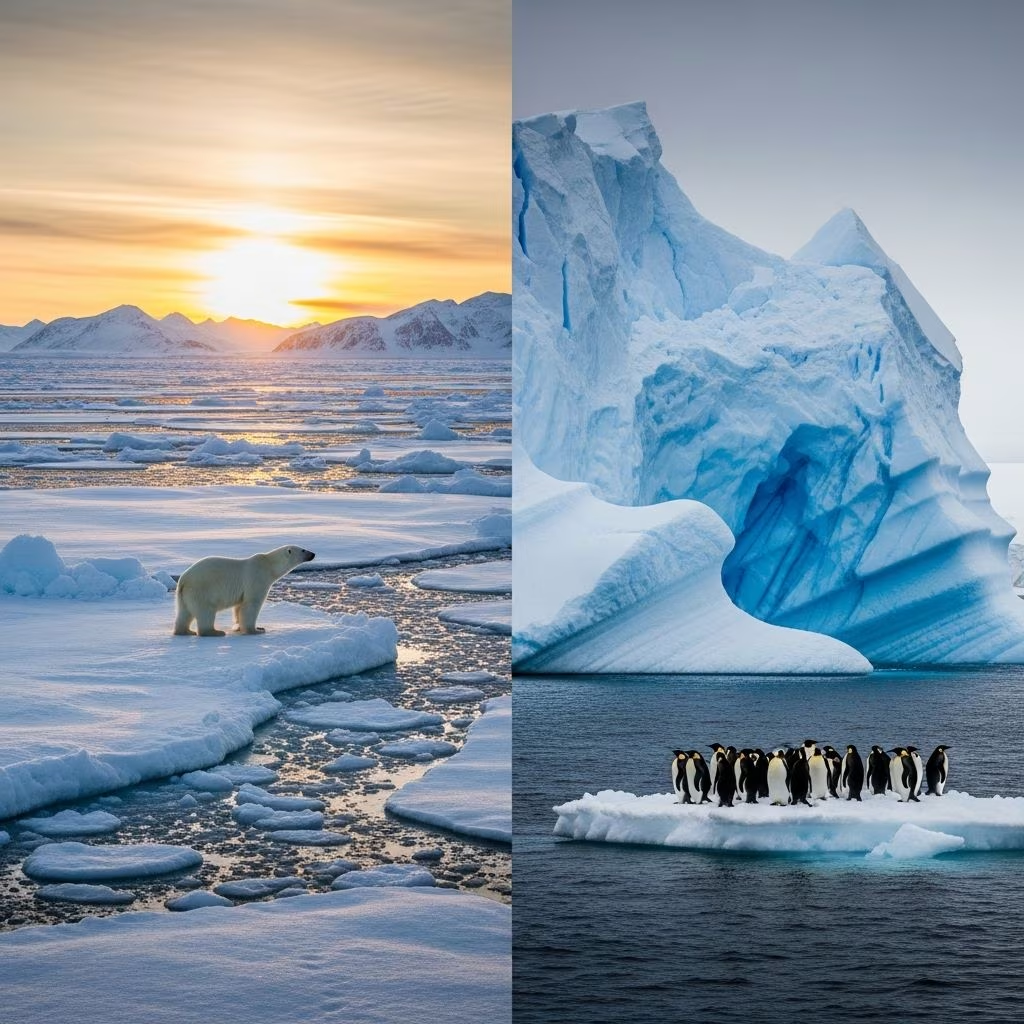
Marine mammals dominate both, but land dwellers distinguish the Arctic. No polar bears roam Antarctica—they’re Arctic exclusives, hunting on sea ice.
Antarctica teems with penguins (Adélie, chinstrap, emperors), seals (Weddell, crabeater), and whales (humpback, orca). Its seas host 10,000+ species, adapted to icy depths.
Arctic wildlife includes walruses, reindeer, Arctic foxes, and seabirds like puffins. Summer blooms feed caribou herds.
| Animal Type | Arctic Highlights | Antarctic Highlights |
|---|---|---|
| Mammals | Polar bears, walruses, reindeer | Seals, no land predators |
| Birds | Puffins, ptarmigans | Penguins (6+ species) |
| Marine | Beluga whales, narwhals | Blue whales, orcas |
Breeding seasons align with summer ice melt, offering peak viewing for expeditioners.
No permanent residents call Antarctica home; 60+ research stations host 1,000-5,000 seasonal scientists. The Antarctic Treaty preserves it for peace and science.
The Arctic sustains 7 million people, including Inuit in Greenland, Alaska, and Siberia, with cultures tied to the land for millennia. Communities blend tradition with modern life.
Tourism surges in both, regulated by IAATO for Antarctica and similar bodies northward. Ships navigate summer ice minima.
Access demands ships or flights; summer (Northern June-August, Southern November-February) melts ice for navigation.
Arctic entry points: Norway’s Svalbard, Iceland, Canada. Closer to civilization, more options.
Antarctica launches from Ushuaia, Argentina, crossing the Drake Passage. Longer voyages yield tabular icebergs unique to the south.
Costs range high: $10,000+ per person. Pack layers for -40°C swings.
Climate change hits hard: Arctic sea ice shrinks faster, threatening polar bears. Antarctica’s shelves calve dramatically, but its ice holds 70% of global freshwater.
Regulations protect both, emphasizing low-impact travel.
Seek wildlife diversity and culture? Arctic beckons. Crave untouched ice and penguins? Antarctica awaits. Both deliver lifelong memories amid nature’s grandeur.
Antarctica is colder overall, with extremes like -89.2°C versus the Arctic’s -40°C winter averages, due to elevation and landmass.
No, polar bears are Arctic-only; Antarctica has penguins instead.
Antarctica has no natives, only researchers. The Arctic supports millions, including Inuit peoples.
Summer months: Arctic (June-August), Antarctica (November-February) for milder weather and wildlife.
Expedition cruises from nearby ports; Antarctica often via Ushuaia.
