

 Travel Essentials
 Travel Essentials

Explore Arequipa's role as a modern artisan hub, featuring alpaca textiles, ceramics, and jewelry rooted in Andean heritage and sustainable practices.
 Travel Essentials
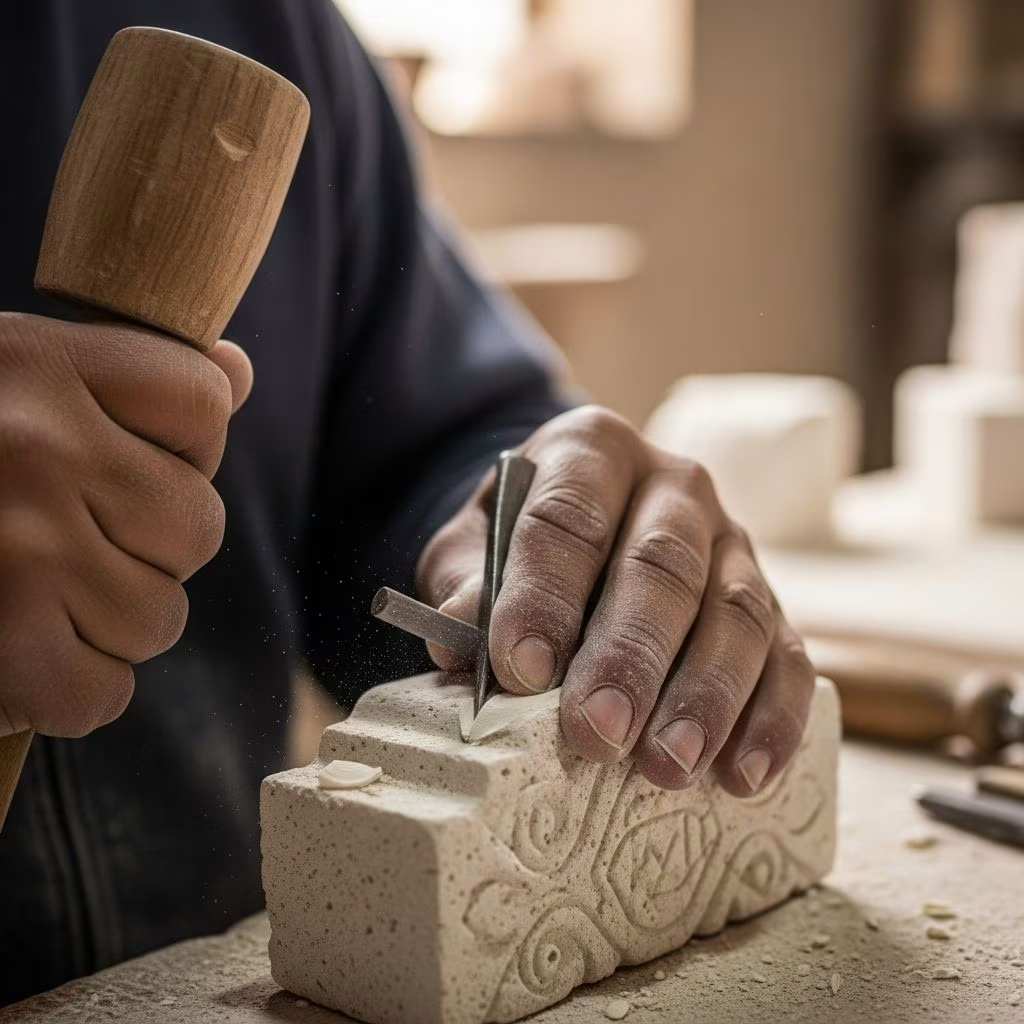
Arequipa, often called the White City for its volcanic sillar stone architecture, has emerged as Peru’s premier destination for contemporary artisanal creations. Nestled in the Andes and surrounded by majestic volcanoes, this southern hub fuses millennia-old techniques with forward-thinking designs, producing everything from luxurious alpaca garments to hand-painted ceramics. Visitors flock here not just for souvenirs, but for an authentic dive into Peru’s living cultural heritage.
The story of Arequipa’s artisans begins long before Spanish colonial influences, tracing back to pre-Incan civilizations like the Collaguas and Cabanas in the nearby Colca Valley. These groups developed sophisticated weaving and pottery methods tied to their altiplano lifestyle, using local fibers and natural dyes derived from plants, insects, and even mollusks. Today, Arequipa dominates Peru’s alpaca fiber market, reportedly handling 99 percent of sales through cooperatives and modern enterprises that prioritize sustainability.
Quechua-speaking weavers continue these traditions, employing backstrap looms to create intricate patterns symbolizing nature, animals, and spiritual motifs. Embroidery techniques, known locally as ‘maquinasca,’ add personalized flourishes with floral and fauna designs, elevating simple wool pieces into wearable art. This blend of history and innovation positions Arequipa as a bridge between Peru’s past and its creative present.
Textiles reign supreme in Arequipa’s artisan scene, with alpaca wool as the star material. Softer and warmer than sheep’s wool, alpaca comes in 22 natural shades, from creamy white to deep black, allowing for vibrant dyes without synthetic chemicals. Artisans in workshops around the city demonstrate backstrap weaving, a labor-intensive process where the weaver’s body tensions the loom to produce tight, durable fabrics.
Key textile hotspots include family-run ateliers in the Colca Valley and urban outlets like those operated by Incalpaca and Sol Alpaca. These companies collaborate with rural communities, ensuring fair wages and eco-friendly shearing practices. Products range from cozy ponchos and scarves to high-end rugs and shawls, often featuring geometric motifs inspired by Andean cosmology.
| Craft Category | Key Materials | Signature Techniques | Best Buys |
|---|---|---|---|
| Textiles | Alpaca wool, cotton | Backstrap weaving, natural dyeing, embroidery | Shawls, ponchos, baby alpaca blankets |
| Ceramics | Local clay, mineral pigments | Hand-throwing, low-fire glazing, sgraffito | Decorative plates, vases, figurines |
| Jewelry | Silver, copper, stones | Hammering, filigree, stone setting | Earrings, necklaces with Andean motifs |
For an intimate experience, head to Arequipa’s textile workshops where artisans invite visitors to watch or participate in dyeing and weaving sessions. In the shadow of Misti volcano, these spaces buzz with the rhythmic clack of looms and the earthy scent of cochineal dye—a red pigment from scale insects. Many operations emphasize ethical sourcing, working directly with herders in the Colca Valley to promote biodiversity and prevent overgrazing.
Beyond textiles, ceramics studios showcase hand-painted pieces depicting Colca Canyon landscapes or mythical chullpas (funerary towers). Metalworkers craft silver filigree jewelry echoing pre-Columbian designs, often sold alongside alpaca goods in boutique cloisters. These workshops not only preserve skills but also innovate, incorporating contemporary colors and patterns to appeal to global tastes.
Top-rated shops like Mundo Alpaca Arequipa and Alpaca AB draw crowds for their quality assurance and live demonstrations. Bargaining is common in markets, but fixed-price boutiques ensure authenticity certificates.
Arequipa’s artisan boom hinges on sustainability. Large exporters partner with small producers to implement regenerative farming, where alpaca herds naturally fertilize pastures, reducing erosion in the fragile Andes. Dyeing relies on renewable sources like quinoa husks for yellows and indigo for blues, minimizing water pollution.
Community cooperatives empower women weavers, many of whom speak indigenous languages and pass techniques intergenerationally. This model not only boosts local economies but also positions Arequipa’s crafts on international stages, from European boutiques to U.S. design fairs.
Each piece tells a story: bold reds symbolize fertility, while diamond patterns evoke terraced fields. Contemporary artisans experiment with fusion styles, like alpaca denim hybrids or laser-etched ceramics, attracting younger buyers. Festivals such as the Arequipa Artisan Fair amplify this evolution, showcasing emerging talents alongside masters.
The Colca Valley’s influence is profound, with its condor-inspired motifs and earthquake-resistant pottery techniques adapted for urban markets. This cultural crossroads—Incan roots meets Spanish baroque—makes Arequipa’s output uniquely Peruanissimo.
Timing matters: Visit during dry season (May-September) for optimal workshop access. Budget $20-50 USD for quality scarves, up to $200 for bespoke items. Verify authenticity via fiber-burn tests (alpaca smells like hair, not plastic) and artisan stamps. Combine shopping with volcano hikes or Colca Canyon treks for a full immersion.
Arequipa controls 99% of Peru’s alpaca sales, using premium baby alpaca for unmatched softness and sustainability.
Yes, most offer free demos and paid classes; book via shops like Incalpaca for personalized tours.
Embroidered keychains, small ceramics, or cotton pouch purses blend affordability with authenticity.
Look for natural sheen, even weaves, and certificates; avoid overly cheap ‘alpaca’ from street vendors.
Possible in 3-4 hours; Chivay market offers freshest crafts straight from weavers.
