

 Travel Essentials
 Travel Essentials

Discover practical strategies for experiencing Argentina affordably, from transportation and accommodation to dining and entertainment options.
 Travel Essentials
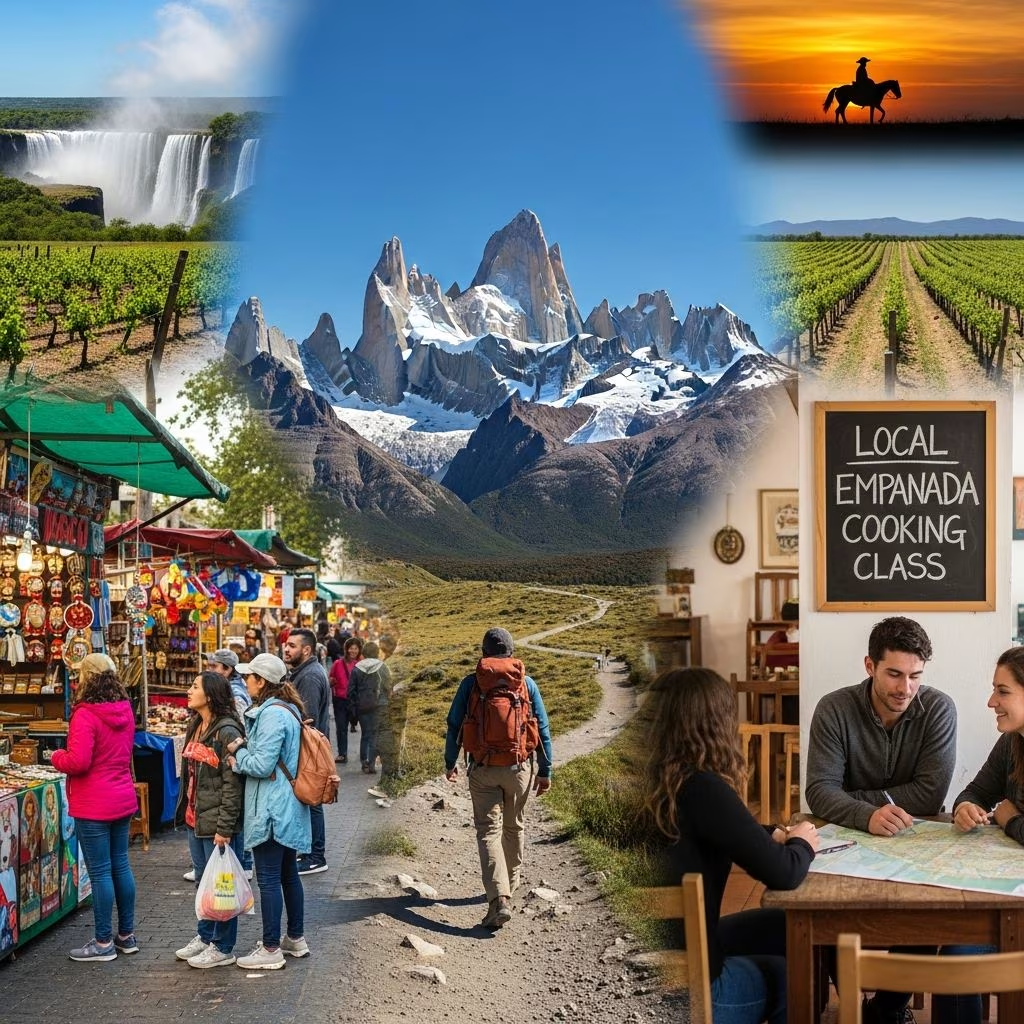
Argentina has earned its reputation as one of South America’s most captivating destinations, offering diverse landscapes from Patagonian glaciers to vibrant urban centers. The country’s economic volatility, particularly its hyperinflation, creates unique opportunities for budget-conscious travelers who understand how to navigate local pricing structures and seasonal variations. This guide provides actionable strategies for maximizing your Argentina experience while minimizing expenses.
The cost of traveling in Argentina varies significantly based on your travel style, accommodation choices, and activity preferences. Budget travelers typically allocate between 35,000 to 85,000 Argentine Pesos daily, depending on their comfort level and the season. This range reflects the distinction between minimal-cost backpacking and moderate comfort travel that still maintains financial discipline.
For the most economical approach, allocate approximately 35,000 ARS daily. This budget assumes hostel dormitory accommodations, primarily self-catered or street-food meals, reliance on public transportation, and participation in free or low-cost activities. Mid-range budget travelers typically spend around 85,000 ARS per day, which permits private hostel rooms, occasional restaurant dining, selective tour participation, and moderate entertainment expenses.
Exchange rate fluctuations significantly impact your purchasing power. Recent rates have hovered around 1 USD to 35-40 Argentine Pesos, though this fluctuates based on macroeconomic conditions. Always verify current rates before your trip and plan accordingly, as withdrawal fees from ATMs can reach 10-15% of your withdrawal amount.
Your lodging represents one of your largest expense categories, making strategic selection crucial for budget optimization. Argentina offers diverse accommodation options at various price points.
Hostels dominate the budget traveler landscape across Argentina. Dormitory beds typically cost between 14,000-25,000 ARS per night outside major urban centers, with Buenos Aires commanding a premium of an additional 10,000-20,000 ARS. Private hostel rooms range from 40,000-90,000 ARS nightly, offering a middle ground between shared dormitories and full hotel accommodations.
Recommended budget-friendly hostels include:
Budget hotels cost approximately 45,000-85,000 ARS per night, offering private rooms without hostel social dynamics. Airbnb accommodations typically range from 50-100 USD (approximately 1,750-3,500 ARS) nightly for standard options, with pricing escalating for multi-bedroom units.
Camping presents an exceptional budget alternative, particularly in Patagonia and around natural attractions. Many regions offer free or minimal-cost campgrounds—particularly abundant along the 7 Lakes Route and within the Ibera Wetlands. Several Patagonian hostels, notably those in El Chaltén, permit tent pitching on their grounds at substantially reduced rates compared to private accommodation.
Argentina’s transportation infrastructure accommodates all budget levels, from subway systems to long-distance bus networks. Strategic transportation choices directly impact your daily expenditures.
Buenos Aires operates the Subte, Argentina’s sole subway system, providing affordable and efficient city navigation. The system operates from 5:30 AM to 11:30 PM on weekdays, 6 AM to midnight on Saturdays, and 8 AM to 10:30 PM on Sundays. A single Subte journey costs approximately 1,000 ARS in Buenos Aires.
Public buses extend transportation access throughout Argentine cities, with fares starting at 800 ARS in Mendoza and remaining similarly affordable in other urban centers. Buenos Aires, Mendoza, and Mar del Plata require transit cards available at kiosks throughout these cities, while smaller towns accept cash payments. Bus route planning is simplified through apps like Cómo Llego or Google Maps.
Taxis, while economical compared to international standards at approximately 500 ARS base fare plus 300 ARS per kilometer, are typically unnecessary given robust public transportation availability.
Long-distance travel between Argentine cities presents multiple budget-conscious options. Overnight buses connect major cities affordably, particularly when compared to domestic flights, which carry significant foreigner taxes. Train service links Buenos Aires with Cordoba and Rosario, with journey costs around 28,400 ARS between Buenos Aires and Cordoba.
Specialized train experiences, while transcending basic transportation, offer exceptional value. La Trochita, the historic Old Patagonian Express between Esquel and El Maiten, operates at 30,000 ARS. The legendary Train to the Clouds beginning in Salta and traversing the Andes represents one of the world’s highest railway routes.
Budget airlines including Flybondi frequently offer pricing competitive with or inferior to long-distance buses, making flights occasionally worthwhile for time-constrained travelers despite typical domestic flight premiums.
Argentine cuisine provides remarkable value, particularly for carnivorous travelers. Strategic food choices enable substantial savings without culinary sacrifice.
Authentic Argentine street food offers exceptional economy. Empanadas, choripán (sausage sandwiches), and traditional pizza and burger shops provide filling, economical meals, with prices typically ranging from 500-2,000 ARS depending on location and item selection.
Rotiserías—casual rotisserie establishments specializing in grilled chicken dinners—offer extraordinary value for self-catering arrangements. These establishments provide complete meals including sides like mashed vegetables for minimal investment.
Following local dining patterns rather than tourist-oriented establishments significantly reduces costs. While renowned steakhouses in affluent neighborhoods command premium prices, neighborhood parrillas (traditional steakhouses) throughout Argentine cities deliver authentic quality at fraction of tourist-area pricing.
Hostels typically provide kitchen facilities enabling meal preparation from grocery store purchases. This approach suits budget-constrained travelers, particularly for breakfasts and lunch preparation. Argentine wine and beef remain notably affordable compared to global standards, presenting opportunities for cost-effective dining experiences that would be prohibitively expensive in Northern Hemisphere countries.
Argentina offers substantial cultural and natural experiences without requiring tour bookings or paid attractions, enabling budget optimization beyond basic accommodation and food.
Multiple free walking tour companies operate throughout major Argentine cities, with Buenos Aires supporting operators like Buenos Aires Free Tour and Free Walks Buenos Aires. These tours provide exceptional value—typically requiring only voluntary tips for guides—while delivering insider knowledge of neighborhood histories, architecture, and local culture impossible to acquire independently.
Tango, Argentina’s iconic cultural expression, transcends expensive theatrical productions. Milongas (tango dance clubs) provide authentic community experiences at minimal cost. San Telmo’s Plaza Dorrego hosts afternoon tango performances where spectators tip performers directly without mandatory dining purchases. Sunday free tango events in San Telmo and Monday-night La Bomba de Tiempo performances (requiring only minimal admission) provide authentic cultural immersion.
Tango instruction ranges from budget-friendly to moderate pricing, with classes available at 150-180 Argentine Pesos. Activity participation beyond performative observation enables deep cultural engagement without premium resort pricing.
While major natural attractions including Iguazu Falls (600 pesos entry) and Perito Moreno Glacier ice trekking (4,500 pesos) require paid admission, Argentina’s extensive wilderness enables free hiking, camping, and scenic exploration. Regional tours such as Cerro de Los Siete Colores cost 850 pesos, while bike rentals in Bariloche operate at 600 pesos daily, enabling self-directed exploration at minimal cost.
Argentina’s seasonal patterns significantly influence pricing and crowd levels, presenting strategic opportunities for budget-conscious travelers.
The shoulder seasons—March through June (autumn) and September through November (spring)—offer optimal budget travel conditions. These periods provide substantially cheaper accommodations and reduced crowds at major attractions compared to peak seasons. Summer travel from December through February, particularly January, represents peak-season pricing and maximum congestion.
Winter months (June-August) in southern Patagonia increase accommodation costs but reduce crowds, requiring careful planning based on activity preferences. Northern regions including Salta and Iguazu maintain relatively consistent pricing year-round, with winter offering escape from summer tropical humidity.
| Expense Category | Budget (ARS) | Mid-Range (ARS) |
|---|---|---|
| Accommodation | 14,000–20,000 | 40,000–50,000 |
| Food (Self-catered) | 10,000–15,000 | 20,000–30,000 |
| Transportation (daily) | 3,000–5,000 | 5,000–10,000 |
| Activities/Entertainment | 5,000–8,000 | 15,000–20,000 |
| Reserve/Contingency | 3,000–7,000 | 5,000–10,000 |
ATM withdrawal fees constitute significant expenses for extended travelers. Minimize withdrawals by extracting larger amounts when fee structures permit, though balancing cash security concerns. Maintain backup payment methods including credit cards for emergencies. Currency exchange volatility necessitates flexibility in budget planning, particularly for extended stays experiencing significant rate fluctuations.
Argentina occupies an intermediate position—more economical than developed nations but not uniformly cheap. Strategic choices regarding accommodation, dining, and transportation enable genuinely economical travel, particularly when visiting during shoulder seasons and avoiding tourist-concentrated venues.
March-June and September-November provide ideal budget conditions with reduced accommodation pricing and minimal crowds. January represents the worst budget period due to peak summer tourism and highest prices.
Absolutely. Free walking tours, public tango performances, neighborhood exploration, and street-food dining provide authentic cultural immersion at minimal cost. Tourist-oriented attractions command premium pricing, but equivalent experiences exist at fraction of these costs.
Overnight buses between major cities offer affordable alternatives to flights, though requiring longer travel times. Flights occasionally rival bus pricing through budget airlines but carry foreigner tax premiums making buses generally preferable for budget travelers unless time constraints justify premium pricing.
Argentina rewards budget-conscious travelers willing to embrace local patterns, seasonal optimization, and strategic activity selection. By prioritizing public transportation, hostel accommodations, street-food dining, and free cultural activities, travelers can experience this remarkable country’s full cultural and natural diversity while maintaining minimal daily expenditures. The key to successful budget travel in Argentina lies in flexibility, willingness to embrace local experiences rather than tourist-oriented alternatives, and strategic timing around seasonal variations. With disciplined planning and authentic engagement with Argentine communities, transformative travel experiences become accessible regardless of financial constraints.
