

 Travel Essentials
 Travel Essentials

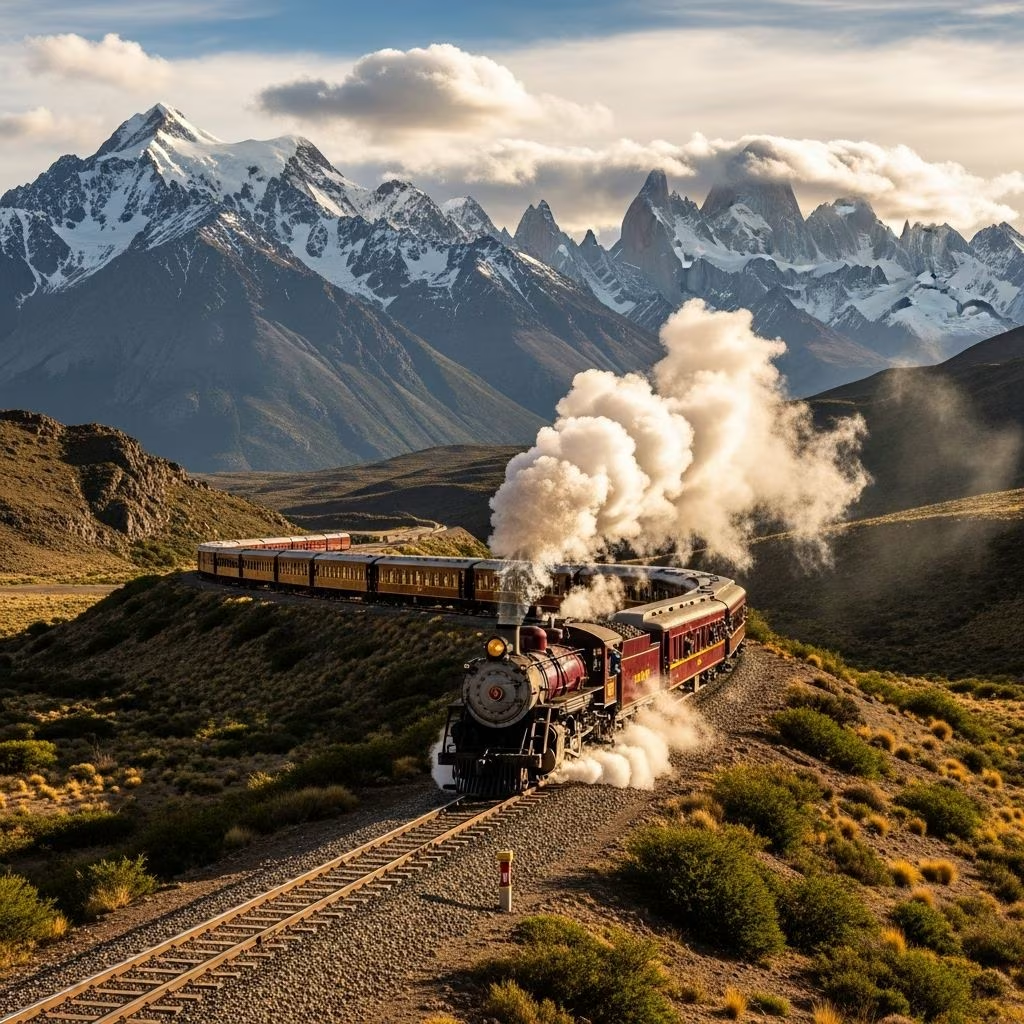
Discover how to navigate Argentina's railway system, from Buenos Aires commuter lines to iconic scenic journeys through Patagonia and the Andes.
 Travel Essentials
Argentina’s railway system offers travelers a distinctive way to experience the country’s diverse landscapes and connect major cities. While the network is more limited than its historical extent, it remains an important transportation option with unique opportunities for adventure and scenic exploration. Understanding how to navigate Argentina’s trains requires knowledge of the system’s structure, available routes, and practical booking procedures.
Argentina’s rail network has undergone significant changes over the past century. Historically, the country maintained one of the world’s largest railway systems with approximately 47,000 kilometers of track. Today, only about one-third of that original network remains operational, reflecting decades of infrastructure decline and economic challenges. Currently, seven active train lines operate throughout the country, managed primarily by Trenes Argentinos, the federal state-owned enterprise responsible for most passenger rail services.
The existing network connects Buenos Aires with several major cities and includes specialized tourist services designed for scenic experiences rather than conventional transport. While the railway infrastructure has limitations, the remaining routes provide travelers with opportunities to experience destinations that showcase Argentina’s geographical diversity.
Buenos Aires maintains an extensive commuter rail system that serves the capital and surrounding suburban areas effectively. The city’s train network often provides superior service compared to bus transportation for traveling within the metropolitan area and reaching nearby destinations.
To use Buenos Aires trains, visitors must obtain a SUBE card, the mandatory payment system for all public transportation in the city. These cards are readily available at Subte stations for a nominal fee, and some neighborhood minimarkets also stock them. Once loaded with funds, travelers can scan the card at turnstiles for entry and exit, with fares calculated based on travel distance.
Several commuter rail lines provide convenient access to popular Buenos Aires neighborhoods and nearby attractions:
While Argentina’s long-distance rail network is more limited than in other regions, several key routes connect the capital to important provincial cities. These services operate with relatively modern rolling stock, though network deterioration affects travel speeds and reliability. Long-distance trains typically depart from two primary Buenos Aires stations: Retiro, connecting northern destinations, and Constitución, serving southern routes.
The following table outlines principal long-distance routes from Buenos Aires:
| Destination | Departure Station | Journey Duration | Route Characteristics |
|---|---|---|---|
| Mar del Plata | Constitución | Approximately 6 hours | Crosses green agricultural plains; scenic sunset views available on afternoon departures |
| Córdoba | Retiro | Overnight service | Connects capital to northern Argentina; passes through Santa Fe province |
| Tucumán | Retiro | Overnight service | Evening departure with morning arrival; sleeper car options available |
| Rosario | Retiro | Variable | Intermediate destination between Buenos Aires and northern cities |
For extended journeys, overnight trains provide sleeping accommodations to enhance comfort. Travelers should specifically request the “camarote” option, which designates sleeper car berths with enhanced amenities compared to standard seating.
Beyond conventional transportation, Argentina features several world-renowned scenic railway journeys designed specifically for tourism and landscape appreciation. These specialized services showcase some of South America’s most dramatic geographical features.
Located in Salta province, this famous excursion represents one of Argentina’s most celebrated railway experiences. The journey combines train travel with bus transportation to reach extraordinary high-altitude vistas. The route culminates at La Polvorilla viaduct, an engineering marvel perched high in the Andean mountains. The expedition showcases dramatically changing landscapes as elevation increases, offering passengers unparalleled views of the mountainous terrain.
This railway operates in Ushuaia, Argentina’s southernmost city, and traverses Tierra del Fuego National Park. The route provides spectacular views of mountains, forests, and waterfalls while traveling through one of the world’s most remote and dramatic regions. The railway features 19 tunnels and 29 bridges, adding to the vertiginous nature of the experience and providing incredible views from significant heights.
Considered possibly Argentina’s finest long-distance train service, the Tren Patagónico represents a comprehensive Patagonian experience. The 19-hour journey connects Viedma with San Carlos de Bariloche, crossing the Patagonian steppe while gradually ascending into the lush Andean forests. Passengers witness a complete geographical transformation as the landscape evolves from desert-like plains adjacent to coastal areas to verdant mountain environments.
The provincial railway includes 12 stations renowned for spectacular scenery and operates on a weekend schedule, departing Viedma on Fridays and Bariloche on Sundays. This route represents the country’s most extensive scenic rail journey, offering travelers a comprehensive Patagonian perspective.
Reaching Patagonian train services requires multi-leg travel arrangements. To access the Tren Patagónico from Buenos Aires, travelers should first take the train to Bahía Blanca (approximately 19 hours), then bus to Viedma (approximately 4 hours), and finally board the Tren Patagónico for the final 14-hour leg to San Carlos de Bariloche.
Argentina offers several other scenic train experiences designed for tourism purposes rather than long-distance transportation. These include the Tren Solar de la Quebrada in Jujuy province and the Tren de la Costa in Buenos Aires, each offering distinctive regional perspectives.
Multiple options exist for purchasing train tickets in Argentina. The official national railway company website, SOFSE, offers online booking with potential discounts for advance purchases. The website operates primarily in Spanish but provides a straightforward interface for those with basic language skills.
Alternatively, travelers can purchase tickets directly at station ticket offices in person. In Buenos Aires, ticket sales counters operate at three primary stations: Constitución, Retiro, and Once. In-person ticket purchases typically require Spanish language communication.
Train fares in Argentina remain remarkably economical by international standards. A representative example includes the Mar del Plata route, which in 2022 cost approximately 600 Argentine pesos (equivalent to a few dollars) for a six-hour journey. Long-distance and scenic routes offer comparable value, though sleeper accommodations command additional fees.
While basic Spanish skills improve the experience, international travelers can navigate the system by purchasing tickets online through SOFSE prior to arrival. Tourist information centers in Buenos Aires also assist non-Spanish speakers with railway planning.
The SUBE card is Argentina’s mandatory payment system for all Buenos Aires public transportation, including trains. The card can be obtained at Subte stations and some minimarkets and is essential for accessing the urban rail network.
Yes, camarote (sleeper) options provide enhanced comfort for overnight travel. Reservations should be requested specifically, as standard seating is the default configuration.
No direct connections exist. Travelers must arrange multi-leg journeys: train to Bahía Blanca, bus to Viedma, then train to Bariloche on the Tren Patagónico.
Spring (September-November) and autumn (March-May) offer moderate temperatures and reliable service. Summer (December-February) brings larger crowds on popular routes, while winter (June-August) may cause occasional service disruptions in high-altitude regions.
Argentina’s railway system, though more limited than historical precedent, continues offering distinctive travel experiences ranging from practical urban commuting to world-class scenic journeys. The combination of economical fares, modern amenities on key routes, and access to Argentina’s most dramatic landscapes makes train travel an valuable component of comprehensive itinerary planning. Whether exploring Buenos Aires neighborhoods via commuter rail or embarking on multi-day scenic expeditions through Patagonia and the Andes, Argentina’s trains provide memorable perspectives on the country’s geographical and cultural diversity.
