

 Travel Essentials
 Travel Essentials

Explore the best national parks in Argentina, featuring glaciers, waterfalls, ancient forests, and diverse wildlife across Patagonia, the Andes, and beyond.
 Travel Essentials
Argentina boasts 35 national parks that protect a remarkable array of ecosystems, from towering glaciers and rugged Patagonian peaks to steamy subtropical rainforests and arid desert canyons. These protected areas offer unparalleled opportunities for hiking, wildlife viewing, and immersive nature experiences. Whether you’re trekking through ancient petrified forests or cruising past massive ice walls, Argentina’s parks deliver world-class natural beauty.
These parks safeguard unique biodiversity and geological wonders shaped over millennia. They span diverse climates: icy southern tundras, Andean highlands, humid northeastern jungles, and dry western badlands. Many feature accessible trails for all skill levels, while others challenge expert adventurers with multi-day treks. Conservation efforts, including indigenous co-management in some areas, ensure these treasures endure for future generations.
Park fees are affordable, typically 3,000-5,000 ARS for foreigners (around $3-5 USD), with free entry for locals and Mercosur citizens. Best visited October to April in Patagonia for milder weather, year-round in the north.
Patagonia’s vast, windswept landscapes host some of Argentina’s most iconic parks, dominated by glaciers, lakes, and jagged mountains.
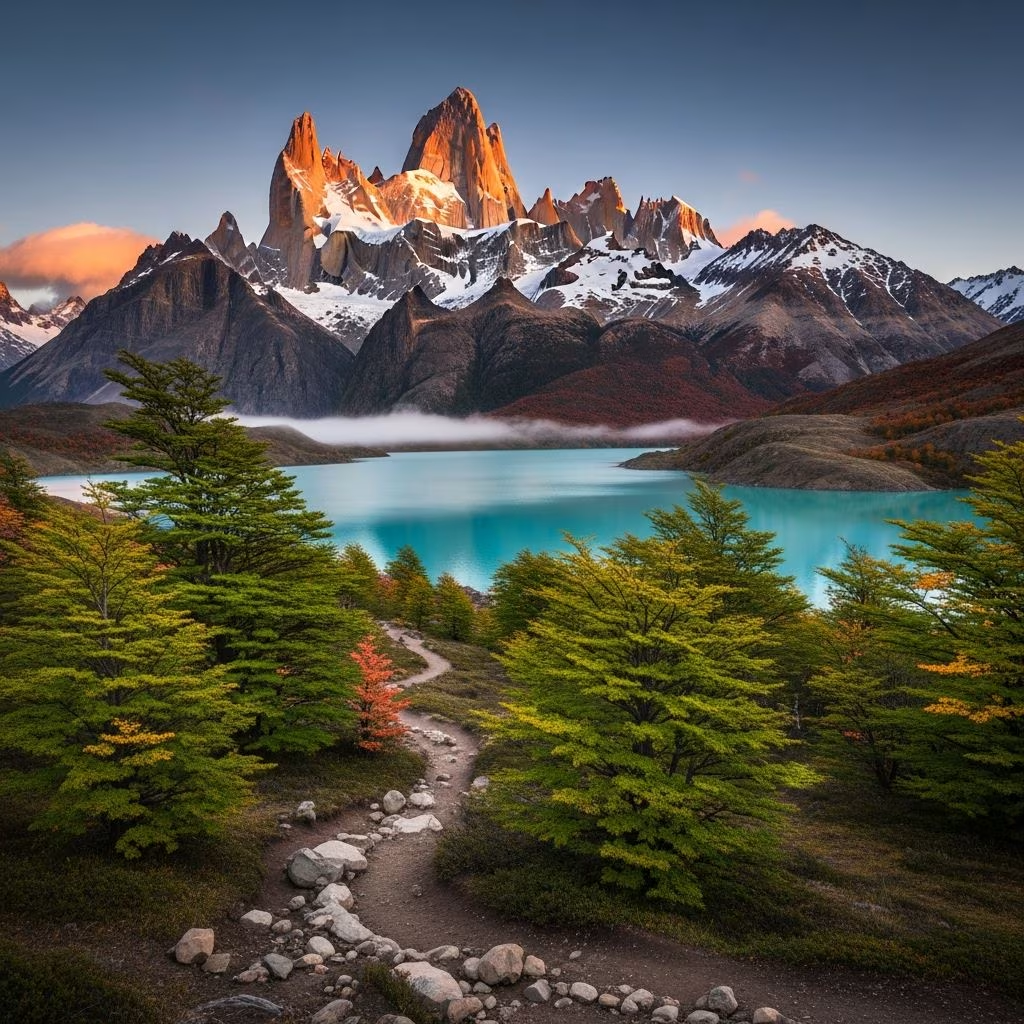
Spanning 726,000 hectares in Santa Cruz province, Los Glaciares is a UNESCO World Heritage site famed for the Perito Moreno Glacier. This 30km-long, 70m-high ice river calves massive chunks into Lake Argentino, creating thunderous spectacles best viewed from boardwalks or boat tours. Nearby El Chaltén serves as base for hikes to Fitz Roy peak, offering panoramic vistas of granite spires and turquoise lagoons.
Activities include ice trekking on the glacier surface, kayaking amid icebergs, and multi-day circuits through the Southern Ice Field. Wildlife: Andean condors, guanacos, and elusive pumas.
Argentina’s oldest park (est. 1934), covering 710,000 hectares around Nahuel Huapi Lake in Neuquén and Río Negro. Towering Andes frame deep blue waters, with Bariloche as the gateway town. Summer brings hiking, sailing, and fly-fishing; winter transforms it into a ski haven at Cerro Catedral.
Highlights: Arrayanes Forest on Quetrihué Peninsula, with cinnamon-barked trees; Circuito Chico for scenic drives; Tronador Mountain for glacier views.
At South America’s tip near Ushuaia, this 69,000-hectare park blends subantarctic forests, mountains, and Beagle Channel coastlines. Trails like S end to Lapataia Bay lead to Tierra del Fuego’s end, where the Andes meet the sea. Spot Magellanic penguins, sea lions, and huemul deer.
Winter offers cross-country skiing; summer, catamaran cruises to penguin rookeries.
The central Andes and lakes region deliver volcanic drama and pristine waters.
Encompassing 379,000 hectares straddling Neuquén and Río Negro, Lanín features the snow-capped Lanín Volcano (3,776m) and araucaria monkey puzzle trees. Co-managed with Mapuche communities, it offers beaches on Lácar and Huechulafquen lakes, plus treks to volcanic craters.
Access from San Martín de los Andes or Junín de los Andes for fishing, horseback riding, and hot springs soaks.
In Corrientes province, this 1.3 million-hectare expanse (largest in Argentina) protects swamps, lagoons, and islands teeming with caimans, capybaras, and over 350 bird species. Boat or kayak tours reveal anhingas, jabiru storks, and elusive jaguars. Mercedes or Concepción base camps provide lodging.
Another UNESCO site on the Brazil border, Iguazú’s 275 waterfalls cascade over basalt cliffs amid Atlantic rainforest. Devil’s Throat viewpoint captures the thundering Garganta del Diablo. Trails, train rides, and boat underfalls thrill visitors. Spot toucans, coatis, and butterflies.
Upper and lower circuits offer varying perspectives; Macuco Boat Safari for adrenaline.
In La Rioja’s desert, 275,000 arid hectares showcase towering red sandstone canyons etched by ancient rivers. Guided 4×4 tours reveal petroglyphs from 1,000+ years ago and dinosaur fossils. Neighboring Ischigualasto (Valle de la Luna) adds moonlike formations.
In Santa Cruz’s steppe, 13,000 hectares preserve 160-million-year-old fossilized araucaria trees up to 30m tall, petrified by volcanic ash. Windswept trails lead through this ‘eerie forest,’ with guanacos and ñandús roaming.
| Park | Region | Key Attraction | Best Activity | Size (ha) |
|---|---|---|---|---|
| Los Glaciares | Patagonia | Perito Moreno Glacier | Ice Trek | 726,000 |
| Iguazú | Misiones | Waterfalls | Boat Tour | 67,000 |
| Nahuel Huapi | Lake District | Lakes & Mountains | Hiking | 710,000 |
| Talampaya | La Rioja | Canyons | 4×4 Tour | 275,000 |
| Iberá | Corrientes | Wetlands Wildlife | Kayaking | 1,300,000 |
Getting There: Fly into Buenos Aires, then connect domestically (Australinews to El Calafate for Glaciers, Puerto Iguazú for falls, Bariloche for Nahuel Huapi). Buses serve Patagonia; rent cars for flexibility.
Best Time: Patagonia: Nov-Mar (summer); North: year-round, avoid Jan-Feb rains.
Tips:
Iguazú National Park draws millions for its waterfalls, followed by Los Glaciares.
Foreigners pay entry (valid 48h-1wk); kids under 12 free.
Yes, many have designated sites; permits required in popular areas like Fitz Roy.
Generally yes; stick to trails, inform rangers of plans.
Nahuel Huapi or Iguazú offer easy walks and amenities.
Argentina’s parks face climate change, tourism pressure, and invasive species. Support via APN donations, low-impact travel. New expansions, like Iberá’s rewilding (reintroducing jaguars), promise more wonders.
