

 Travel Essentials
 Travel Essentials

A comprehensive guide to planning an unforgettable Arizona road trip, covering top destinations, scenic routes, and regional highlights.
 Travel Essentials
Arizona represents one of North America’s premier destinations for travelers seeking dramatic landscapes, rich cultural heritage, and outdoor adventures. The state’s diverse geography ranges from the iconic Grand Canyon to vibrant urban centers, offering experiences suited to every type of traveler. Whether you’re planning a week-long expedition or an extended journey through the Southwest, understanding Arizona’s most compelling attractions and how to connect them strategically will enhance your overall experience.
Arizona’s vastness means that strategic planning is essential for maximizing your time. The state can be divided into distinct regions, each offering unique attractions and natural features. The central Phoenix metropolitan area serves as the state’s largest urban hub, providing excellent access to both northern destinations and southern attractions. Northern Arizona features the Grand Canyon, Monument Valley, and the artistic community of Sedona. Eastern Arizona contains historic mining towns and natural formations, while southern Arizona near the Mexican border offers desert landscapes and cultural sites.
The distances between major destinations vary considerably. From Phoenix to Sedona requires approximately two hours of driving, while reaching Monument Valley involves a significantly longer journey. Understanding these distances helps in crafting a realistic itinerary that doesn’t involve excessive driving between destinations.
Phoenix serves as an ideal starting point for most Arizona road trips due to its major airport and extensive hospitality infrastructure. As Arizona’s largest city, Phoenix combines urban sophistication with authentic desert character. The downtown core features impressive murals, local art galleries, and farm-to-table restaurants showcasing Sonoran cuisine. The Desert Botanical Garden provides insight into native plant species adapted to arid climates.
Beyond the city center, Phoenix offers hiking opportunities with stunning sunrise and sunset views. Camelback Mountain presents a challenging ascent rewarding hikers with panoramic city vistas. Papago Park offers more moderate trails suitable for families. Taking time to explore Phoenix’s culinary scene—particularly Mexican and Southwestern cuisine—provides cultural context for the region you’re visiting.
Located roughly ninety minutes north of Phoenix, Sedona represents one of Arizona’s most visited destinations. The town is renowned for its stunning red rock formations that dominate the landscape, creating a visually striking backdrop for outdoor activities and artistic expression. The area attracts creative professionals, resulting in numerous galleries, studios, and cultural events throughout the year.
Sedona offers exceptional hiking opportunities with more than two hundred trails ranging from leisurely walks to challenging scrambles. Popular routes include Devil’s Bridge Trail, which leads to Arizona’s largest natural stone arch, and Cathedral Rock Trail, featuring dramatic spires and rock formations. The Red Rock Scenic Byway provides vehicle access to stunning viewpoints without requiring strenuous hiking.
The town’s spiritual reputation stems partly from the vortex concept—locations believed to be centers of energy conducive to self-exploration. Whether or not visitors embrace this aspect, the genuine natural beauty and peaceful atmosphere attract those seeking rejuvenation and reflection. Local operators offer jeep tours for visitors preferring guided experiences over self-directed exploration.
The journey from Sedona to Monument Valley spans several hours but crosses through increasingly remote and dramatically beautiful terrain. Monument Valley straddles the Arizona-Utah border and is managed as a Navajo Tribal Park, preserving this iconic landscape while supporting Native American communities.
The park features distinctive buttes and mesas rising abruptly from the desert floor, creating landscapes familiar to film and photography enthusiasts. A seventeen-mile scenic loop allows visitors to drive through the valley, though road conditions vary seasonally. Early morning and late afternoon light produces the most dramatic photography opportunities, with fewer visitors during these times.
Several viewpoints provide access without requiring extensive hiking. Forrest Gump Point, located just south of the Utah border, offers the classic straight-ahead view that has appeared in countless photographs and films. Mexican Hat Rock and various lesser-known overlooks provide alternative perspectives of this remarkable landscape. The Monument Valley Wild Cat Trail offers a more immersive hiking experience for those seeking closer contact with the terrain.
Page serves as a gateway to some of Arizona’s most distinctive geological features. Located in the northern portion of the state, this small town provides lodging and services for visitors exploring the surrounding natural attractions. Lake Powell, formed by the Glen Canyon Dam, offers water-based recreation opportunities contrasting with the desert environment.
Antelope Canyon, consisting of upper and lower sections, represents one of the most photographed slot canyons in North America. Both sections require guided tours managed by Navajo guides who maintain the sites and provide cultural context. Upper Antelope Canyon features narrow passages where light beams penetrate from above during midday hours, creating ethereal atmospheric effects. Lower Antelope Canyon involves ladder descents and ascending through deeper, more technical passages.
Horseshoe Bend, located a short distance from Page, presents another remarkable geological formation. The Colorado River curves dramatically within a near-complete circle, creating a striking viewpoint accessible via a relatively short hiking trail. Timing your visit for sunrise or sunset provides superior lighting conditions and smaller crowds compared to midday visits.
The Grand Canyon requires little introduction as one of Earth’s most recognizable natural formations. The South Rim provides the most accessible views and visitor infrastructure. Multiple overlooks along the rim present different perspectives of the canyon’s immensity and geological complexity. Several scenic drives, including Desert View Drive, offer extended exploration of the rim ecosystem.
While many visitors stop briefly to view the canyon from established overlooks, extended visits reveal the landscape’s complexity and beauty. Hiking into the canyon itself requires significant preparation and physical capability, but even moderate rim-level trails provide enhanced appreciation of the formation. Sunrise and sunset create distinctly different atmospheric conditions, each offering unique photographic and emotional value.
A practical seven to ten-day Arizona road trip might incorporate the following sequence:
A variation of the standard route incorporates historic towns and eastern destinations. After visiting Sedona and the Grand Canyon, traveling south through Flagstaff provides access to Route 66 heritage sites and mountain communities. Jerome, an old mining town perched on a hillside, offers quirky shops and galleries. Continuing south reaches Tucson, Arizona’s second-largest city, which features Spanish colonial architecture and mission heritage.
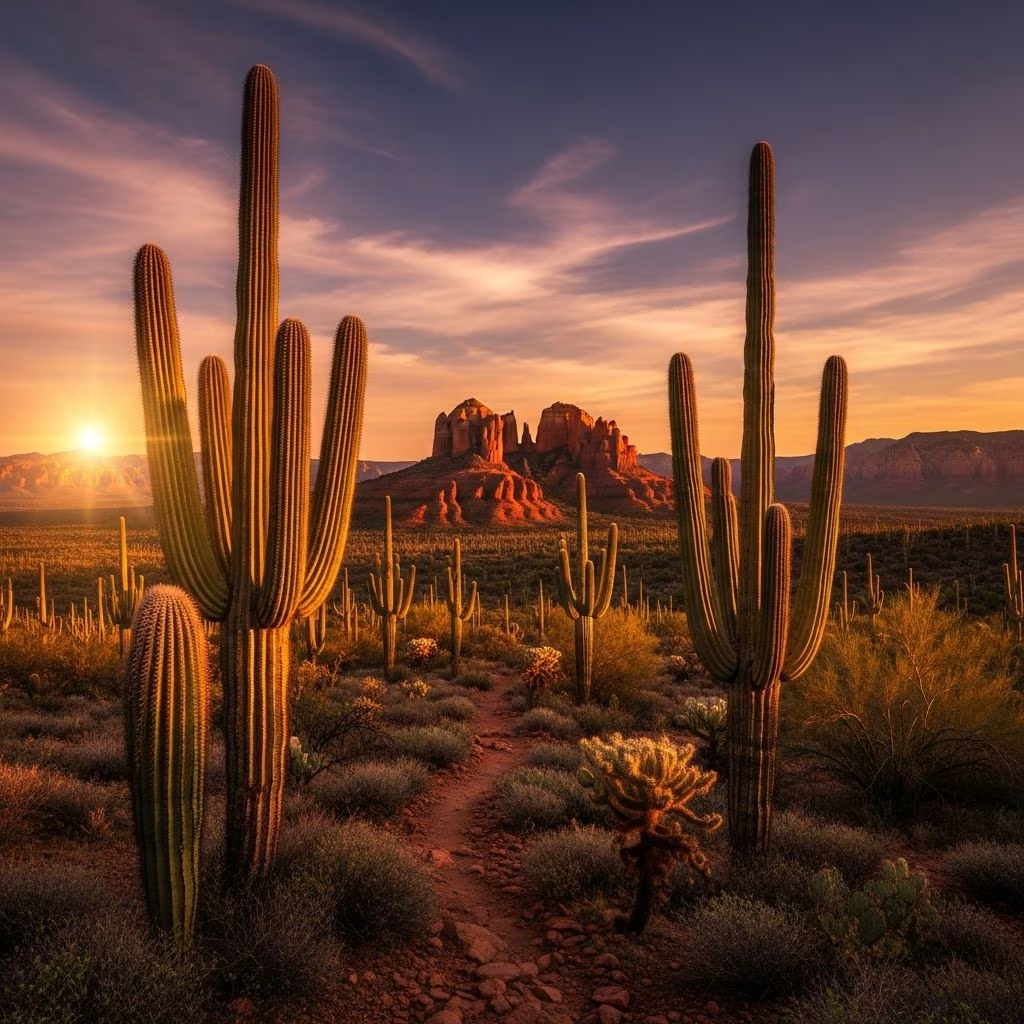
From Tucson, exploring nearby areas such as Saguaro National Park, where distinctive tall cacti dominate the landscape, or traveling further south to Tombstone—famous for Wild West history and the OK Corral shootout—provides cultural and historical dimensions beyond natural attractions. Bisbee, a former copper mining town, contains well-preserved Victorian architecture and thriving artist communities.
Vehicle preparation is essential for Arizona road trips. The state’s vast distances require a reliable vehicle, and full fuel tanks are necessary when traversing remote areas. Summer temperatures exceed 100°F (37°C), necessitating proper hydration and sun protection. Many attractions require early morning or late afternoon visits to avoid excessive heat and crowding.
Accommodation options range from luxury resorts in Sedona and Scottsdale to modest motels in small towns. Advance reservations are essential during peak seasons (October through April). National park lodges provide convenient access but require early booking. Local dining experiences, particularly Mexican cuisine in communities near the Mexican border, enhance cultural understanding of the region.
Timing your visit affects both weather and crowding. Spring (March-April) and fall (October-November) offer ideal temperatures and manageable crowds. Summer brings extreme heat, while winter occasionally produces snow at higher elevations. Some northern attractions may experience weather-related closures during winter months.
Arizona’s landscapes inspire wonder and contemplation. The scale of the Grand Canyon, the otherworldly appearance of Monument Valley, and the vibrant red rocks of Sedona challenge perception and invite deeper appreciation for Earth’s geological complexity. Beyond famous attractions, small towns, local cuisine, and cultural interactions create equally valuable travel experiences.
Planning allows flexibility rather than rigid adherence to schedules. Unexpected discoveries—a favorite restaurant, an impromptu hike, conversation with local residents—often become trip highlights surpassing predetermined attractions. Arizona’s diversity ensures that different travelers find unique value, whether seeking spiritual renewal, outdoor challenge, cultural enrichment, or simple appreciation of magnificent landscapes.
