

 Travel Essentials
 Travel Essentials

Explore Arslanbob's vast walnut forests in Kyrgyzstan: history tied to Alexander the Great, economic importance, ecological challenges, and adventure opportunities amid stunning landscapes.
 Travel Essentials
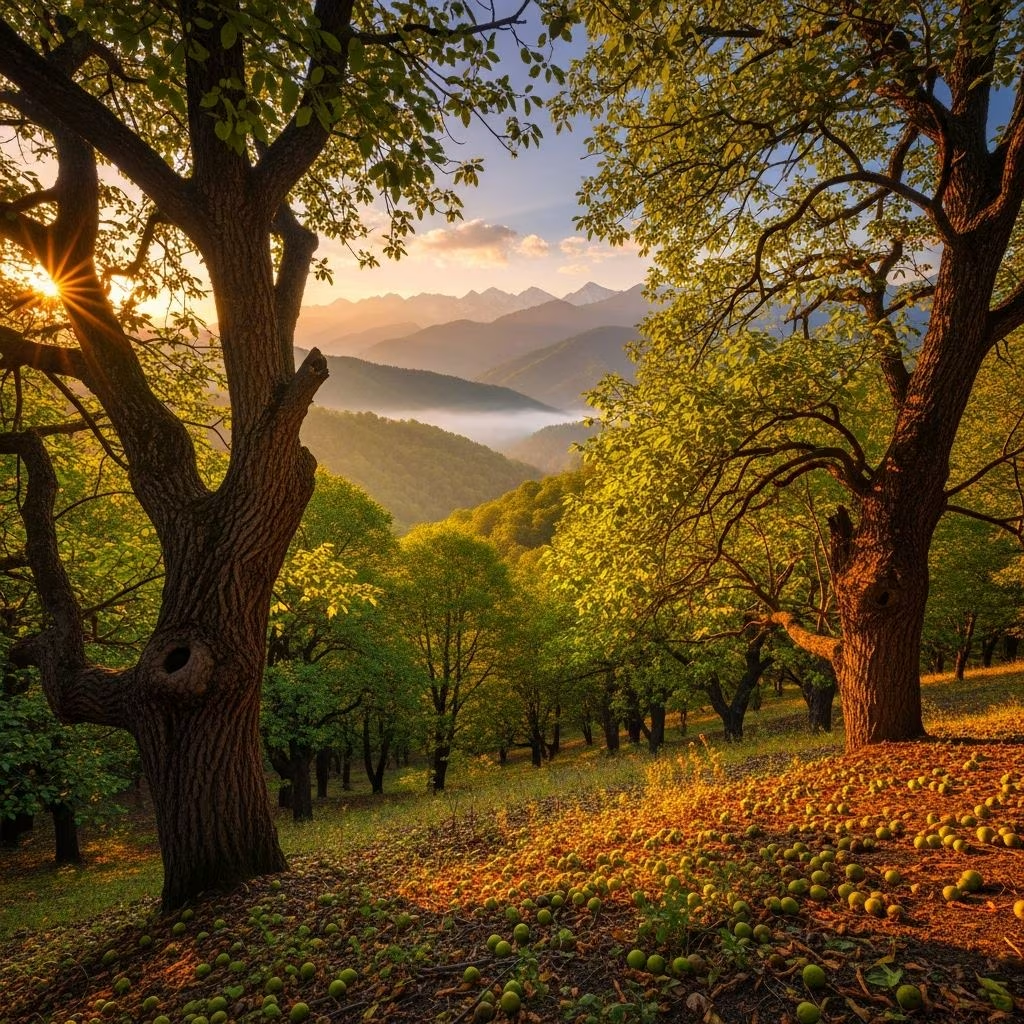
Deep in the rugged mountains of southern Kyrgyzstan lies a natural wonder: the world’s largest continuous walnut forest, spanning thousands of hectares around the village of Arslanbob. These ancient groves, dominated by towering Juglans regia trees, have sustained local communities for millennia, offering nuts, wood, and a rich biodiversity hotspot. Blending legend, economy, and ecology, these forests represent a unique fusion of human history and pristine wilderness.
Local folklore ties these forests to Alexander the Great, who reportedly carried Kyrgyz walnuts to Europe over 2,000 years ago, dubbing them ‘Persian walnuts.’ One tale claims his scouts discovered the groves during reconnaissance in the Fergana Valley, lingering due to abundant nuts and game before being snowed in. Another version suggests injured soldiers recovered here thanks to the nutritious nuts, explaining occasional light features among locals.
Archaeological finds, including nutshells and artifacts, confirm human presence for at least 2,000 years, underscoring the groves’ ancient role in regional life. Nestled in the Chatkal range at elevations up to 6,500 feet, the forests thrive on steep slopes shadowed by peaks like Babash-Ata, creating a lush valley oasis.
These woodlands cover around 13,000 hectares, with 2,000 hectares of pure walnut stands mixed with wild fruits like apples, pears, cherries, plums, and peaches—species that evolved in Central Asia’s mountains. Walnuts dominate, some reaching 30 meters tall and living up to 1,000 years, their canopies fostering diverse understories.
The forests integrate with agroforestry systems at boundaries, blending into croplands and meadows. Walnut leaves deter insects, protecting livestock and fruits; dropped apples feed animals, whose grazing maintains short grass ideal for harvesting. This symbiotic ecosystem supports anti-parasitic grasses and natural fertilization, embodying sustainable harmony.
Arslanbob, an ethnically Uzbek village of 16,000, pulses with walnut life. Located 700 km southwest of Bishkek near the Uzbek border, it serves as the epicenter. In September, schools close as families head to assigned forest plots for harvest, transforming the area into a bustling camp.
Winters bring heavy snow—up to a meter—challenging poorly insulated homes, where locals burn low-quality coal or illegally harvest wood despite bans and gates. Summers offer bucolic charm with fragrant air, waterfalls, and gorges drawing regional visitors.
Each fall, villagers scale trees or shake branches to collect fallen nuts from 2,000 hectares, yielding about 1,500 tons annually—the world’s largest natural supply. Harvest rights allocate sections per family; workers beat, crack, sort, and package kernels.
Peak season employs up to 10,000 in kernel processing, per World Bank estimates, providing crucial income amid Kyrgyzstan’s rugged terrain. Nuts export globally, sustaining the local economy.
| Harvest Stage | Description | Employment Impact |
|---|---|---|
| Collection | Climbing/shaking trees; gathering drops | Thousands of families |
| Cracking | Manual nut splitting | High-season labor surge |
| Sorting/Packaging | Quality checks and bagging | Up to 10,000 workers |
Aging trees yield declining nuts due to a logging ban preventing renewal; overgrazing stifles young growth. Illegal logging persists via old jeeps smuggling timber, threatening sustainability.
Climate shifts and population pressures exacerbate issues, yet initiatives like World Agroforestry’s projects aim to restore balance through agroforestry integration.
Efforts emphasize regeneration: controlled grazing, young tree planting, and community education. The 1995 Arslanbob conference highlighted recreational value—pure air, scenic gorges—for eco-tourism.
World Bank ProFor supports employment while promoting sustainability. Locals view forests as sacred, integral to health and economy, fostering hope for preservation.
Visitors hike trails amid giants, camp during harvest, or explore via horseback. Nearby Osh offers ancient Silk Road vibes, just 5 km from Uzbekistan.
Winter skiing contrasts summer treks; homestays immerse in Uzbek culture, walnut feasts, and wood-carving.
Arslanbob blends Kyrgyz and Uzbek traditions: vibrant bazaars, tea houses, and festivals celebrate the nut. Wood-carving pauses for harvest, resuming in winter.
Blue-eyed locals nod to Alexander legends; stories passed orally reinforce forest reverence.
Beyond nuts, these groves offer raw beauty, authentic encounters, and conservation insights. In a globalized world, Arslanbob remains a timeless enclave.
Around Arslanbob in southern Kyrgyzstan’s Chatkal mountains.
Legends persist, backed by 2,000-year archaeology, though unproven.
About 1,500 tons of walnuts.
Yes, with standard precautions; homestays and guides enhance safety.
Aging trees, overgrazing, illegal logging.
