

 Travel Essentials
 Travel Essentials

Explore India's stunning Art Deco buildings, blending global modernism with local flair in Mumbai, Kolkata, Chennai, and beyond. Uncover hidden histories and top sites.
 Travel Essentials
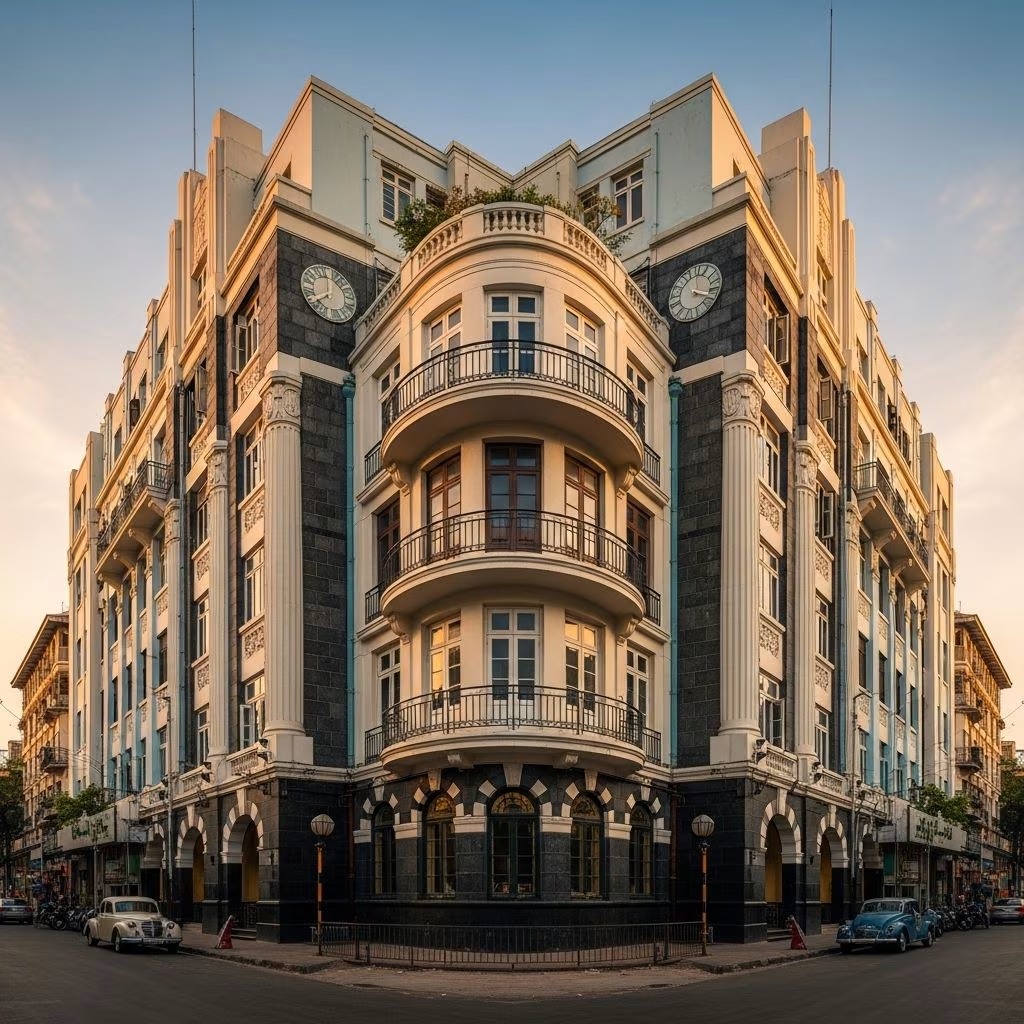
India’s architectural landscape boasts a unique chapter dedicated to **Art Deco**, a style that swept through the country in the early 20th century, merging international modernism with indigenous artistry. Emerging prominently in the 1930s, this movement brought sleek lines, geometric patterns, and vibrant hues to urban skylines, particularly in coastal hubs like Mumbai. What began as an import from Europe evolved into a distinctly Indian expression, adorning cinemas, residences, offices, and palaces with ziggurat motifs, curved balconies, and tropical flourishes.
Art Deco arrived in India amid a period of cultural exchange and colonial modernity. Architects and entrepreneurs, inspired by trips to Europe, imported the style’s bold aesthetics—think streamlined forms, chrome accents, and pastel palettes—adapting them to local climates and tastes. In Mumbai, the maritime gateway, it flourished due to the city’s booming film industry and commerce. The first notable structure, a bank from 1932 featuring zigzag patterns and flame-topped torches, set the tone for over 1,500 surviving examples today.
This style symbolized progress, contrasting Victorian heaviness with optimistic geometry. Materials like stucco, terracotta, and reinforced concrete enabled intricate facades that withstood tropical monsoons. By the 1940s, Art Deco had radiated to inland cities, influencing everything from public halls to royal estates, creating a legacy now protected in heritage zones.
No exploration of India’s Art Deco is complete without Mumbai, home to the world’s second-largest concentration of such buildings after Miami. Neighborhoods like Colaba, Marine Drive, and Juhu pulse with streamlined silhouettes facing the Arabian Sea. Over 200 structures dot the city, many UNESCO-recognized for their preservation efforts.
Key features include nautical themes, sunburst motifs, and porthole windows, evoking ocean liners—a nod to Mumbai’s port heritage. Pastel shades of pink, mint, and ochre animate facades, while interiors boast terrazzo floors and Deco chandeliers.
Visitors can stroll the Art Deco Walk in South Mumbai, a guided trail highlighting 76 protected sites. Preservation groups advocate for restoration, ensuring these neon-lit relics shine for future generations.
Shifting east to Kolkata, Art Deco manifested in ‘picture palaces’ and bourgeois homes during the 1930s. The style’s vertical lines and curved forms graced entire neighborhoods in south Kolkata, earning residences the affectionate moniker ‘metro bari’ after iconic cinemas.
MGM’s Metro Cinema, with its ziggurat signage, became a cultural beacon, inspiring local architecture. Nearby, the Roxy Cinema’s Deco interiors are undergoing revival, promising a fresh look at its angular elegance.
| Building | Year | Highlights |
|---|---|---|
| Metro Cinema | 1930s | Ziggurat signage, opulent interiors |
| Roxy Cinema | 1930s | Curved facades, vertical lines |
| Elite Mansion | 1940s | Geometric balconies, pastel hues |
These structures reflect Kolkata’s film obsession, with theaters designed as glamorous escapes. Today, walking tours delve into this heritage, connecting Deco to the city’s intellectual vibe.
In Chennai, Art Deco embraced maritime motifs, suiting its bayside location. The 1936 Oriental Insurance Building pioneered the style here, followed by the Taj Connemara hotel’s Deco revival and Raja Annamalai Mandram’s geometric poise. Architect Prathyaksha Krishna Prasad leads talks and tours, spotlighting these seaside treasures.
Kerala’s Deco is subtler but striking: Thrissur’s Bindu Cinema sports bold patterns, Kannur’s Ahmadiyya Mosque fuses faith with Deco curves, and Kochi’s Ernakulam Gymnasium exemplifies streamlined utility.
In Tamil Nadu’s Chettinad, the Visalam hotel marries ancestral mansions with Deco updates, featuring pink plaster and luxurious interiors—a testament to regional adaptation.
Indore’s Lal Bagh Palace, commissioned in 1930 by Maharaja Yeshwant Rao Holkar II, fuses European Deco with Indian opulence: pink exteriors, curved edges, and lavish salons. Built over a decade, it stands as a royal Deco pinnacle.
Gujarat’s Morbi boasts the Mani Bhavan Palace (1931-1944), with similar rosy facades and angular grandeur, showcasing princely patronage of the style.
Delhi’s All India Radio building highlights northern Deco, using concrete and stucco for geometric purity amid the capital’s eclectic mix.
Austrian architect Karl Malte von Heinz seeded Deco in Hyderabad. Standouts include the Arya Samaj Mandir, a Hindu temple with dazzling Deco motifs, and Sheesha Mahal Cinema’s whimsical popcorn-like form. The Raj Bhavan’s grand staircase graphic marked the style’s centenary, underscoring its cultural weight.
India’s Art Deco faces urban pressures, but initiatives abound. Mumbai’s UNESCO listing protects Marine Drive’s ensemble. Kolkata restores cinemas, Chennai organizes walks, and Hyderabad documents its sites via dedicated records.
Challenges include weathering and redevelopment, yet communities rally. Art Deco India (ADF) promotes conservation, hosting events that blend tourism with heritage advocacy.
Geometric patterns, ziggurat towers, curved lines, pastel colors, and local motifs like flora or nautical elements.
Mumbai, with over 1,500 structures, leads the pack.
Yes, in Mumbai, Chennai, and Kolkata through heritage groups.
Options like Taj Connemara (Chennai) and Visalam (Chettinad) offer Deco charm.
Many sites are heritage-listed, especially in Mumbai’s precincts.
