

 Travel Essentials
 Travel Essentials

Discover what makes the Art Institute of Chicago a world-class destination, from its extensive collections to practical visitor information and hidden gems.
 Travel Essentials
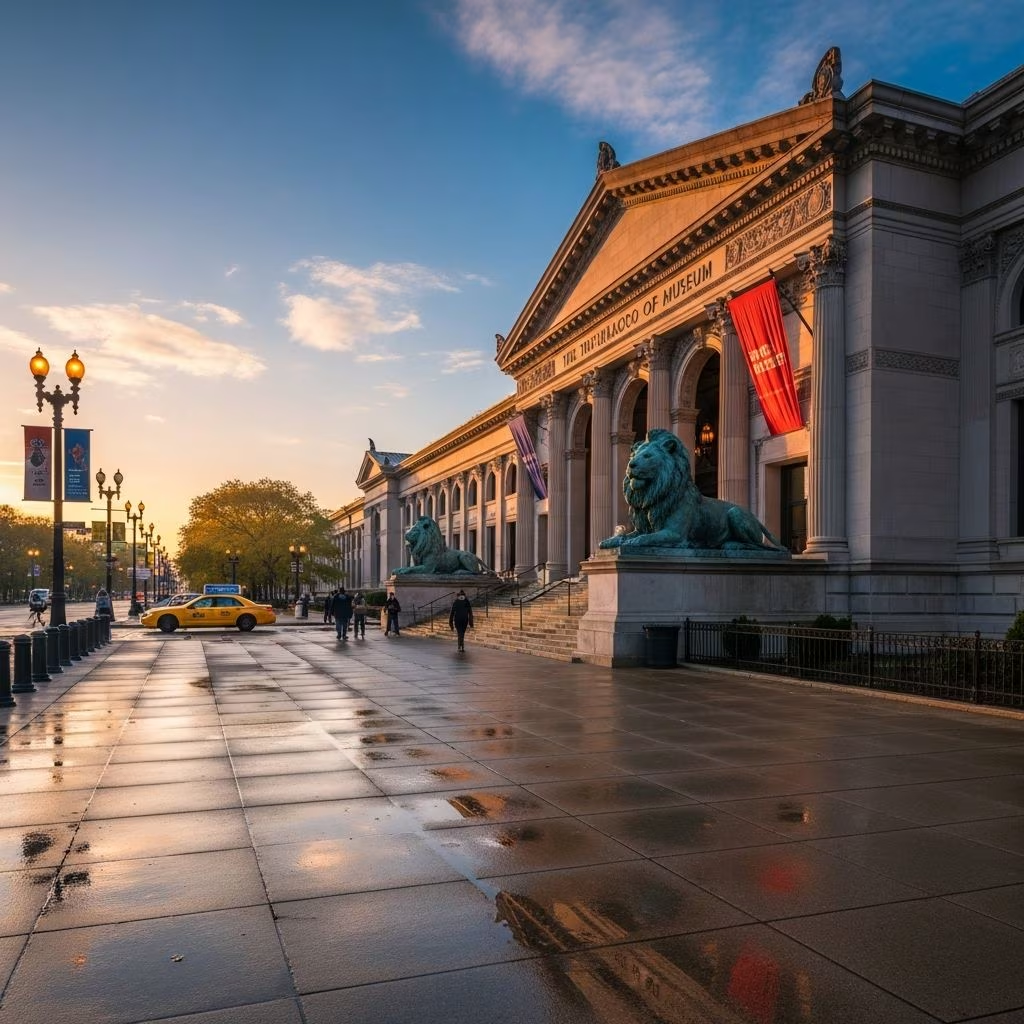
The Art Institute of Chicago stands as one of the most significant art repositories in the United States, attracting visitors from around the world who seek to immerse themselves in centuries of artistic achievement. Situated in the heart of Chicago’s downtown cultural district, this institution represents far more than just a repository of paintings and sculptures—it embodies the city’s commitment to making world-class art accessible to diverse audiences. Whether you’re a seasoned art historian or someone visiting for the first time, understanding what this museum offers and how to navigate it effectively can transform your visit into a deeply enriching experience.
The Art Institute of Chicago holds a distinctive place in the American cultural landscape. Established in 1879 as both a museum and educational institution, it has evolved into one of the nation’s most comprehensive art museums. The facility encompasses approximately one million square feet of space distributed across multiple interconnected buildings, housing more than 300,000 individual artworks. This staggering collection spans an enormous geographical and chronological range, from ancient Chinese bronzes to cutting-edge contemporary installations, offering visitors an opportunity to encounter virtually every major artistic movement and cultural tradition represented in visual form.
What distinguishes this museum from its peers is not merely the quantity of its holdings but their exceptional quality and strategic curation. The institution has invested considerable resources in acquiring representative works across diverse artistic traditions, ensuring that visitors encounter not just canonical masterpieces but also significant examples of lesser-known yet equally important artistic contributions.
One of the museum’s most celebrated strengths lies in its extraordinary collection of Impressionist and Post-Impressionist paintings. This collection ranks among the most significant assemblages of such works outside France, representing a major attraction for visitors specifically seeking to engage with this transformative artistic movement. The museum’s commitment to acquiring these works during the late nineteenth and early twentieth centuries demonstrates institutional foresight, as these paintings were not universally appreciated at the time of acquisition.
The galleries dedicated to this period showcase works that fundamentally altered the trajectory of Western art. Visitors encounter paintings that challenged academic traditions and introduced revolutionary approaches to light, color, and compositional structure. These works provide essential context for understanding how artistic movements develop and influence subsequent generations of creators.
The Modern Wing represents the museum’s commitment to contemporary artistic practice and twentieth-century modernism. This light-filled section of the building creates an environment distinctly different from the more traditional gallery spaces, with architectural choices that complement the artworks on display. Within these galleries, visitors encounter seminal works by artists who fundamentally reshaped artistic practice, including figures such as Andy Warhol, Roy Lichtenstein, Kara Walker, Jasper Johns, and Cindy Sherman.
The curatorial approach in these galleries emphasizes how contemporary artists respond to and build upon earlier traditions while simultaneously questioning established conventions. The arrangement of works encourages visitors to consider how artistic expression evolves in response to technological innovation, social change, and shifting cultural values.
Beyond the mainstream galleries, the museum contains numerous specialized collections that reward careful exploration. Japanese prints represent a particularly rich area of the collection, offering visitors insight into aesthetic principles developed across centuries of artistic practice in East Asia. Greek ceramics and architectural elements provide tangible connections to ancient Mediterranean civilizations, while an extensive collection of stained-glass windows documents the evolution of this distinctive artistic medium from medieval times through contemporary practice.
The Thorne Miniature Rooms deserve particular mention as one of the museum’s most enchanting attractions. Located on the Lower Level in Gallery 11, these meticulously detailed architectural interiors represent an extraordinary feat of craftsmanship. Created by Agnes F. Northrop and her colleagues, these rooms reproduce historical interior designs at miniature scale with remarkable precision, inviting visitors to contemplate the relationship between architectural space, decoration, and human habitation.
The museum’s engagement with artistic expression extends beyond its interior spaces. The contemporary sculpture terrace showcases cutting-edge sculptural works in an outdoor setting that takes advantage of Chicago’s urban environment. This outdoor exhibition space serves multiple functions: it provides respite from the intensity of indoor gallery viewing, offers different perspectives on how artworks interact with environmental and spatial contexts, and connects seamlessly to the broader downtown cultural landscape through the Nichols Bridgeway, which links the museum to adjacent Millennium Park.
First-time visitors should plan to spend at least two hours exploring the museum’s highlights. This timeframe allows sufficient opportunity to encounter major masterpieces and develop a general understanding of the collection’s breadth without overwhelming exhaustion. However, serious art enthusiasts will discover that several days could be productively spent engaging with the full depth of available materials.
The museum maintains regular operating hours throughout the week, with extended evening hours on Thursdays. The facility closes on Tuesdays, allowing staff time for essential maintenance and collections care. It’s worth noting that the first hour of each operating day—from 10 to 11 a.m.—is reserved exclusively for museum members, affecting how non-members might structure their visits.
The museum operates an admission policy designed to maximize accessibility across diverse demographic groups. Advance tickets are available online and recommended, particularly when special exhibitions attract large audiences. However, general admission lines typically move efficiently during normal operations. Multiple free admission programs ensure that cost does not prevent access for specific groups: Illinois residents receive complimentary admission on designated days, children under fourteen and Chicago teenagers enter without charge, and various other populations including active-duty military personnel and educators receive free or discounted admission.
The museum offers multiple guided tour options designed to accommodate different visitor preferences and time constraints. Daily tours led by knowledgeable museum professionals last approximately forty-five minutes and highlight both famous masterpieces and lesser-known treasures. These tours occur at 1:00 and 3:00 p.m., with Spanish-language tours available on Friday and Saturday afternoons. Families with children can utilize JourneyMaker, a custom tour builder located in the Ryan Learning Center, which allows visitors to construct personalized routes organized around thematic interests such as superheroes or time travel.
For visitors preferring independent exploration, the museum provides comprehensive resources. The “What to See in an Hour” guide offers a carefully curated path through major highlights, with suggested routing that adapts based on which entrance visitors use. The institution’s free mobile application, available for both Apple and Android devices, provides audio commentary featuring artists, experts, and community members discussing featured works and collections. This technology allows visitors to engage with curatorial perspectives and contextual information at their own pace.
| Category | Details |
|---|---|
| Location | 111 South Michigan Avenue, Chicago, IL 60603 |
| Contact | Phone: (312) 443-3600 |
| Monday Hours | 11 a.m. – 5 p.m. |
| Tuesday Status | Closed |
| Wednesday Hours | 11 a.m. – 5 p.m. |
| Thursday Hours | 11 a.m. – 8 p.m. |
| Friday-Sunday Hours | 11 a.m. – 5 p.m. |
| Member-Only Hours | 10 a.m. – 11 a.m. daily |
The museum provides food and beverage options within its facilities, allowing visitors to sustain themselves during extended visits without needing to leave the building. The museum shop offers an extensive range of merchandise, including reproductions of artwork, exhibition catalogs, exclusive apparel, jewelry, and other items that allow visitors to extend their engagement with the collection beyond their physical visit.
While advance online ticketing is available and recommended for maximizing efficiency, particularly during special exhibitions, the general entrance queue moves relatively quickly during typical operating conditions. However, purchasing tickets in advance eliminates this minor inconvenience and guarantees entry.
The “What to See in an Hour” guide provides a carefully optimized path through masterpieces, allowing meaningful engagement with the collection even within severe time constraints. Alternatively, taking a forty-five-minute guided tour efficiently introduces visitors to highlights while providing curatorial context.
The museum provides comprehensive accessibility information and accommodations for visitors with mobility considerations or other accessibility needs. Contacting the institution directly allows visitors to discuss specific requirements and receive appropriate guidance.
Photography policies vary by exhibition and collection area. Contacting the museum or reviewing guidelines upon arrival clarifies what documentation is permitted in different sections.
The institution operates as both museum and educational facility, with revenues from memberships, donations, and operational activities funding conservation efforts, acquisitions, and exhibitions. The integrated approach to education and collection management ensures that works receive appropriate care and scholarly attention.
Visiting the Art Institute of Chicago represents an opportunity to engage with human creative achievement across cultures and centuries. Rather than attempting to view everything during a single visit, consider approaching the museum as an institution you might return to multiple times, allowing deeper engagement with specific interests and artistic traditions. The scale and diversity of the collection ensure that each visit can provide new discoveries and insights, making it a destination that rewards repeated exploration.
Whether your interests center on specific artistic movements, particular cultural traditions, or contemporary artistic practice, the museum’s comprehensive holdings provide genuine opportunities for meaningful engagement. The institutional commitment to accessibility, combined with the quality and breadth of collections, makes the Art Institute of Chicago a destination that genuinely serves diverse audiences and supports visitors in developing their own relationships with visual culture.
