

 Travel Essentials
 Travel Essentials

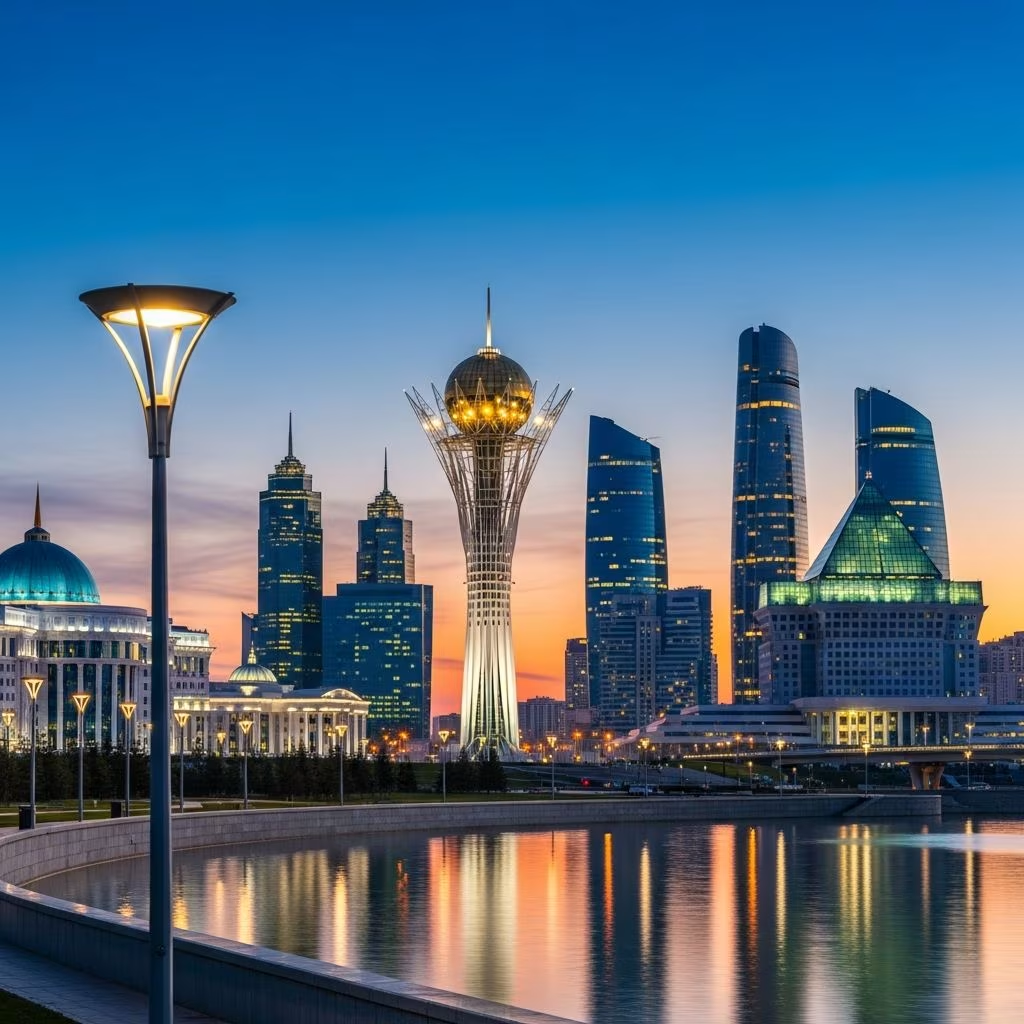
Astana is Kazakhstan's ultra-modern capital featuring futuristic architecture, innovative landmarks, and a unique blend of culture and innovation in Central Asia.
 Travel Essentials
Kazakhstan’s capital city represents one of the most ambitious urban development projects of the modern era. Transformed from a remote settlement into a thriving metropolis in less than three decades, Astana embodies the nation’s aspirations and forward-thinking vision. This Central Asian hub offers visitors an extraordinary glimpse into how contemporary urban planning can create a functional, aesthetically striking, and culturally rich destination from the ground up.
In 1997, Kazakhstan’s leadership made a bold decision to relocate the capital from Almaty to a sparsely populated area in the north-central region known as Akmola. This relocation marked a turning point in the nation’s history, symbolizing independence and modernization. The city, which had existed since 1830 under various names including Akmolinsk and Tselinograd, underwent a dramatic metamorphosis when Japanese architect Kisho Kurokawa was commissioned to design the new capital in 1998.
What makes Astana’s development particularly remarkable is the speed of its growth. The population has skyrocketed to over 1.5 million residents, making it one of the fastest-growing capitals globally. This rapid expansion occurred while maintaining a cohesive architectural vision and urban planning strategy, distinguishing Astana from traditionally evolved cities.
The cityscape of Astana reads like a manifesto of contemporary design philosophy. Rather than adhering to conventional architectural traditions, the city showcases bold, experimental forms that push aesthetic boundaries. Among the most striking landmarks is Baiterek, a distinctive tower featuring a design that resembles a lollipop or stylized tree, reportedly conceptualized by the country’s president. Standing at 97 metres, the structure includes an observation deck offering panoramic views across the city. Visitors can place their hands on a gilded handprint at the tower’s apex—a symbolic gesture said to commemorate the relocation year of 1997.
Another architectural marvel is the Khan Shatyr, designed by the renowned British architect Norman Foster. This enormous shopping and entertainment complex is instantly recognizable by its tent-like structure, resembling a massive sail or nomadic dwelling reimagined through contemporary engineering. The building serves as both a functional retail space and an iconic photo opportunity for visitors exploring the city.
The cultural landscape includes additional unconventional structures, such as a flower-shaped concert hall and a circus building designed to evoke a flying saucer. These imaginative designs demonstrate the commitment to creating visual interest throughout the urban environment, transforming everyday buildings into memorable landmarks.
At the heart of Astana’s urban design lies Nurzhol Boulevard, a pedestrian zone stretching 3.1 kilometres across the city. This verdant promenade connects major institutional and cultural sites, serving as both a practical thoroughfare and a recreational space. The boulevard begins at Akorda, the residence of Kazakhstan’s president, and extends to Khan Shatyr, creating a symbolic pathway linking governmental authority with commercial and entertainment districts.
Walking along Nurzhol Boulevard provides visitors with an understanding of the city’s planned layout and architectural priorities. The boulevard features landscaping, public art installations, and accessible pedestrian infrastructure, reflecting contemporary urban design principles that prioritize human-scale experiences within modern metropolitan spaces.
Independence Square represents Astana’s primary public gathering space, established in 2009. This expansive plaza serves as a venue for national celebrations, demonstrations, and civic engagement. The square is anchored by the Kazakh Eli Monument, a towering symbol of national independence, and the Palace of Independence, which hosts governmental functions, international forums, and state meetings.
The presence of these institutional structures reflects the city’s role as a political and cultural capital. Unlike cities that evolved organically around historical centers, Astana’s layout deliberately positions administrative and ceremonial sites as focal points, reinforcing their symbolic significance within national consciousness.
The Ishim River (known as Esil in Kazakh) divides Astana into two distinct sections. The right bank maintains a more traditionally developed character, preserving historical elements from the settlement’s earlier incarnations. The left bank, by contrast, showcases the contemporary capital with its planned neighborhoods, modern infrastructure, and futuristic landmarks. Before 1997, this left-bank area consisted primarily of summer cottages and wild steppe habitat. The transformation of this landscape into an urban center within such a compressed timeframe illustrates the magnitude of this development undertaking.
Few cities have experienced as many name changes as Astana. The settlement has been known as Akmoly (1830), Akmolinsk (1832), Tselinograd (1961), Akmola (1991), Astana (1997), and briefly as Nur-Sultan (2019-2022). The city now reverts to Astana, which literally translates to “the capital” in Kazakh. This pattern of renamings reflects shifting political circumstances, national identities, and ideological orientations throughout Kazakhstan’s history. Astana holds a Guinness World Record for most name changes among 20th-century capital cities.
When compared to other Central Asian capitals such as Dushanbe, Bishkek, and Tashkent, Astana stands apart in its architectural character and urban planning approach. While neighboring capitals retain significant Soviet-era architecture and incorporate local cultural design elements, Astana consciously projects a forward-looking, internationally oriented image. This distinction creates a unique aesthetic experience—visitors often note that the city feels more aligned with Eastern European modernism than with traditional Central Asian urbanism.
Walking through Astana provides an immersive experience in contemporary urban design. The city’s layout facilitates pedestrian movement, with wide avenues, accessible public spaces, and strategic placement of attractions. Infrastructure development has kept pace with population growth, though this remains an ongoing process as the city continues expanding. The contrast between meticulously planned central districts and rapidly developing peripheral neighborhoods creates distinct zones with different characters and development stages.
Beyond its physical structures, Astana represents Kazakhstan’s assertion of sovereignty and modernity following independence from Soviet governance. The deliberate choice to relocate the capital symbolized a break from Soviet-era centers of power and a repositioning of the nation geographically and symbolically. The development of such an ambitious capital city served as a statement about national capabilities, ambitions, and integration into contemporary global systems.
Astana is recognized as one of the world’s newest capital cities and for its distinctive futuristic architecture, including iconic structures like Baiterek tower and the Khan Shatyr complex. The city represents an ambitious urban planning project developed over less than three decades.
The relocation in 1997 reflected Kazakhstan’s desire to establish a new capital symbolizing independence, modernization, and national sovereignty following the dissolution of the Soviet Union. The move represented a strategic repositioning of the nation.
The city’s population has exceeded 1.5 million residents, making it one of the fastest-growing metropolitan areas globally. This dramatic growth occurred as the city developed from a small settlement into a major capital.
This 3.1-kilometre pedestrian promenade serves as the city’s central spine, connecting the presidential residence (Akorda) to the Khan Shatyr entertainment complex. It functions as both a practical thoroughfare and a symbolic pathway through the city’s planned center.
Unlike cities such as Tashkent, Bishkek, and Dushanbe, which retain Soviet-era architecture and local cultural elements, Astana was purpose-built with futuristic, internationally oriented design reflecting contemporary architectural trends.
Travelers considering Astana should prepare for a unique urban experience distinct from traditional travel destinations. The city offers modern accommodations, dining facilities, and transportation infrastructure designed to accommodate contemporary visitors. The planned layout makes navigation relatively straightforward compared to organically developed cities. Independence Square provides a logical starting point for exploration, with Nurzhol Boulevard offering an extended walking route connecting major attractions.
The architectural diversity and public spaces encourage extended pedestrian exploration. Visitors should allocate time to experience both the central planned districts and peripheral neighborhoods still undergoing development, as this contrast illustrates the city’s ongoing transformation.
