

 Travel Essentials
 Travel Essentials

Descend into a Spanish cave to train for Mars with suits, spacewalks, hydroponics, and 72 hours of isolation in an authentic habitat.
 Travel Essentials
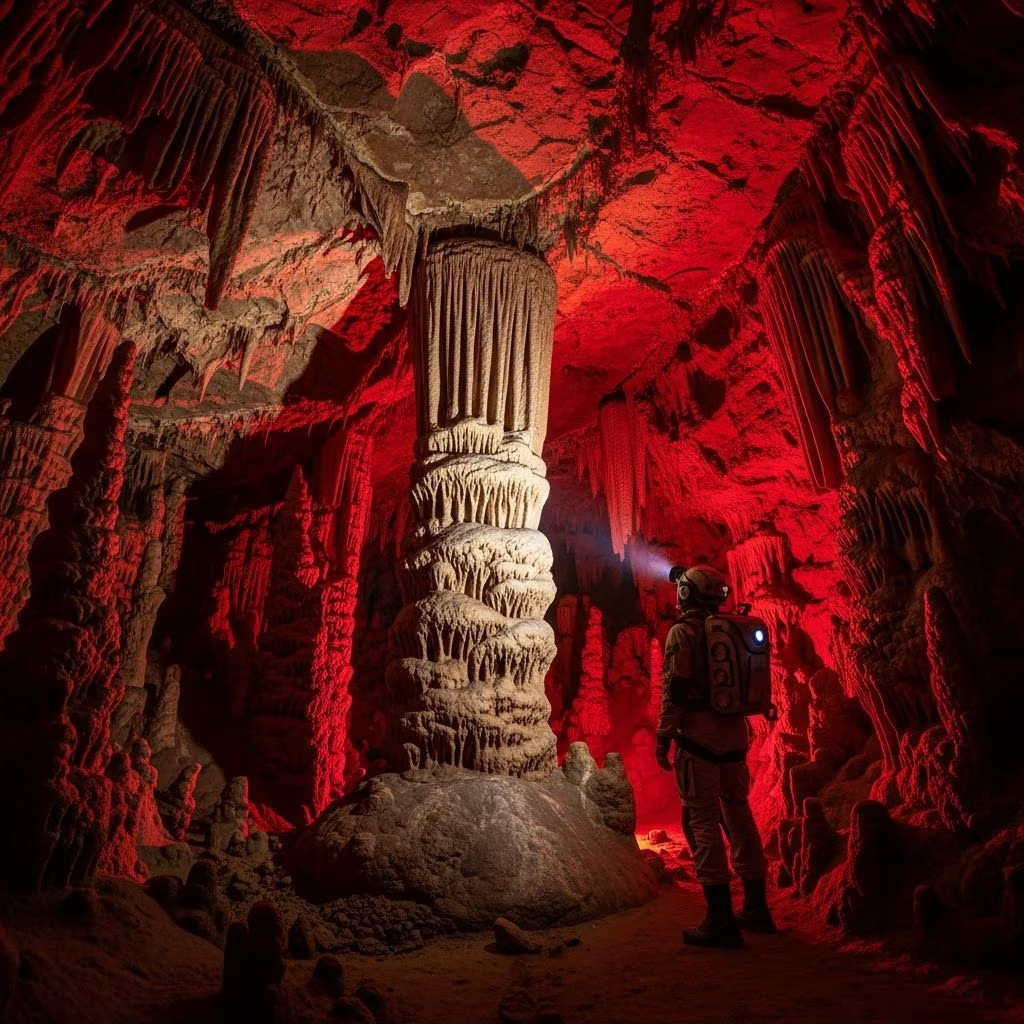
Imagine descending into the Earth’s depths to prepare for humanity’s next giant leap. In northern Spain’s Cantabria region, Astroland’s Ares Station offers a groundbreaking experience that replicates life on Mars. Participants don specialized suits, conduct mock spacewalks, and tend hydroponic gardens in a massive cave system, all while isolated from the surface world.
With space agencies like NASA and private pioneers such as SpaceX pushing toward Mars colonization, the need for realistic simulations has never been greater. Ares Station fills this gap by transforming a 1.5 km long, 60-meter-high cave near Arredondo into a fully equipped Martian habitat. This underground facility mimics the Red Planet’s harsh conditions, including lack of natural light, extreme confinement, and radiation shielding provided by rock layers.
The concept draws from scientific consensus that future Mars settlers would likely inhabit lava tubes or caves to protect against cosmic radiation and temperature swings. By leveraging Spain’s extensive karst cave networks, Astroland creates an authentic analog mission site accessible to civilians.
Becoming an Ares Station crew member demands commitment. Applicants, aged 18 and over, start with online modules covering space basics, survival skills, and team dynamics. Selected candidates undergo rigorous interviews and pre-mission coaching, including cave climbing and leadership workshops.
The core experience spans three intense days and nights underground. Pricing varies by reports, ranging from €6,000 to €10,000 per person, reflecting comprehensive training and exclusive access. Non-scientists face the higher end, which includes 26 days of virtual prep plus on-site immersion.
Once inside, the cave buzzes with futuristic tech. Custom astronaut suits made from polymers enable ‘spacewalks’ across rocky terrain, simulating low gravity via harnesses and resistance training. Life support systems include pressurized sleeping capsules, autonomous water recyclers, and solar-independent power units.
The hydroponics lab stands out, where crews grow crops without soil using nutrient-rich water solutions. This soilless farming technique is vital for Mars, where arable land is scarce. Participants monitor plants, adjust pH levels, and harvest greens, contributing real data to space agriculture research.
| Facility | Function | Mars Relevance |
|---|---|---|
| Hydroponics Lab | Soil-free crop growth | Sustainable food production |
| Research Labs | Tech testing & experiments | Human performance studies |
| Gym & Leisure Area | Physical & mental health | Countering isolation effects |
| 3D Printers | On-site manufacturing | Resource utilization |
| Robot Explorer | Remote scouting | Surface exploration analog |
Daily routines mirror a real colony: morning briefings, task rotations, meals tailored to dietary needs, and evening debriefs. Biodegradable undergarments minimize environmental impact, echoing resource conservation on Mars.
Isolation tests resilience. With no sunlight and limited communication—one supervised call allowed—crews confront confinement akin to deep-space travel. Psychological prep addresses group dynamics, stress management, and decision-making under pressure.
Physical demands include navigating uneven caves in suits, simulating weightlessness drills, and maintaining fitness in the gym. A BBC report highlighted emotional highs, from suit donning excitement to pre-descent nerves, underscoring the human element.
“It’s emotional and I’m a little bit scared.” – Participant reaction upon suiting up.
Beyond tourism, Ares Station advances knowledge. Crews test technologies with academic partners, gathering data on human factors in extreme environments. A 2023 Nature study cited similar cave missions, where a young participant honed astronaut skills, proving these simulations’ value for diverse trainees.
Astroland reports one completed mission and plans for 10 more annually, each with up to 10 members. Partnerships with universities yield insights into hydroponics efficiency and crew cohesion, directly informing Mars mission designs.
This isn’t casual tourism. Ideal candidates are adventure seekers, STEM enthusiasts, or aspiring space professionals. No prior experience required, but mental fortitude and team spirit are essential. Families or solo travelers find equal challenge; diversity enriches crews.
Costs cover all gear, training, and meals, but extras like travel to Cantabria apply. Book via TripAdvisor Experiences or Astroland’s site after interviews.
Expect €6,000-€10,000, including prep and three-day stay.
26 days online plus three days on-site.
No, but physical fitness and psychological readiness help.
Yes, with expert oversight and emergency protocols.
Polymer suits and eco-friendly diapers for sustainability.
Must be 18+.
In an era of accelerating space ambitions, hands-on analogs like Ares Station bridge theory and reality. They train minds and bodies for isolation, resource scarcity, and collaboration—core Mars challenges. As missions like Artemis pave the way, these caves remind us: the stars are closer than they seem, starting beneath our feet.
Whether chasing Elon Musk dreams or seeking unparalleled adventure, Ares Station delivers a taste of tomorrow today.
