

 Travel Essentials
 Travel Essentials

Discover essential insights for first-time visitors to Chile's Atacama Desert, including top activities, travel logistics, and insider recommendations.
 Travel Essentials
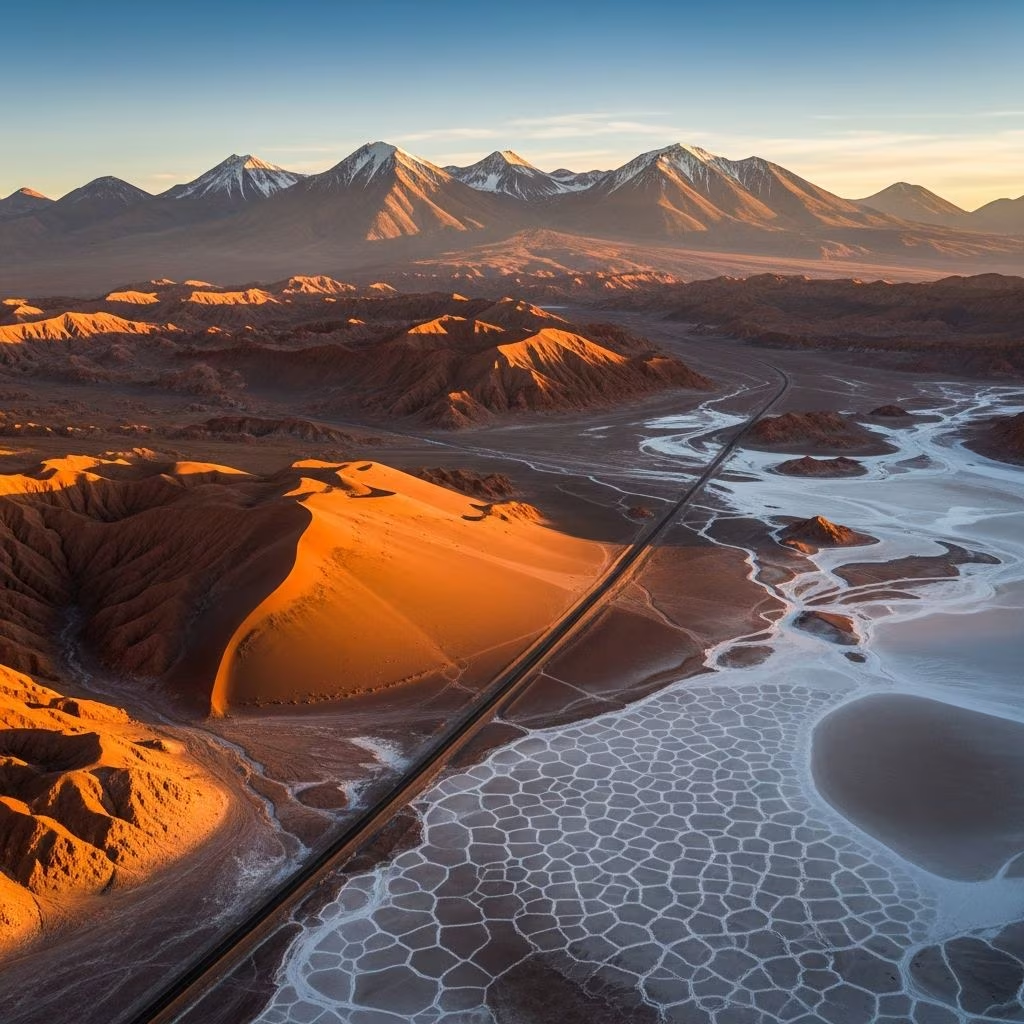
The Atacama Desert represents one of the planet’s most remarkable natural phenomena, earning distinction as the driest place on Earth. This vast expanse of otherworldly terrain spans portions of northern Chile, creating a landscape that defies conventional expectations of desert environments. Rather than endless golden dunes, the Atacama presents visitors with an astonishing diversity of geological formations—from towering salt formations to geothermal hot springs that demonstrate the region’s dynamic geological character. The landscape’s surreal qualities have inspired comparisons to extraterrestrial environments, making it a destination that challenges and captivates explorers seeking something genuinely unique.
The region’s extreme conditions stem from geographical factors that have combined over millennia to create an environment where rainfall remains virtually non-existent in certain areas. This desiccation has preserved geological features with remarkable clarity, allowing visitors to observe rock formations and geological processes that remain hidden beneath vegetation in more temperate regions. The interplay between high altitude locations and coastal proximity creates distinct microclimates throughout the desert, each offering different ecosystems and experiences for visitors.
San Pedro de Atacama serves as the primary gateway for most visitors exploring this region. This small town, despite its isolated location, has developed comprehensive tourism infrastructure while maintaining authentic character. The community exists as a verdant oasis surrounded by arid landscapes, creating a striking visual contrast that immediately orients visitors to the environment’s extreme nature.
The town functions as a hub where adventure operators, accommodation providers, and service businesses concentrate. This organization makes San Pedro an efficient launching point for day excursions into surrounding attractions. Most major destinations within the Atacama remain accessible via half-day or full-day guided tours originating from this central location. The town’s size facilitates easy navigation on foot, while local establishments provide opportunities to experience regional cuisine and cultural traditions.
Visitors with limited time benefit from strategic activity selection that maximizes impact within temporal constraints. Different experiences appeal to varying interests, allowing travelers to customize their Atacama experience according to personal preferences.
For travelers drawn to dramatic geological formations, specific destinations offer unparalleled viewing opportunities. Valle de la Luna presents wind-sculpted rock formations and salt-mineral deposits creating landscape appearance distinctly unlike terrestrial environments. The distinctive white-dusted appearance results from salt composition layering across colorful mineral-rich rock formations. Sunset viewing from established overlooks transforms these formations through dynamic lighting that accentuates topographical features.
Piedras Rojas (Red Stones) represents another prominent geological site featuring dramatic red and green mineral-stained rock formations adjacent to high-altitude lagoons. The striking color contrasts create photographic opportunities while geological narrative remains evident in visible stratification and mineral deposits.
El Tatio Geysers constitute the southern hemisphere’s largest geothermal field and the world’s third-largest. Visiting requires pre-dawn departure to witness geyser activity at optimal conditions when thermal contrasts between erupting steam and morning air create vivid visual displays. Tours typically include thermal spring bathing opportunities following geyser observation.
The Atacama contains numerous high-altitude lagoons supporting specialized wildlife including Andean flamingos and other adapted bird species. Laguna Chaxa and Laguna Cejar rank among the most visited, offering distinct experiences. Chaxa emphasizes birdwatching opportunities within Los Flamencos National Reserve, while Cejar allows visitors to experience hypersaline water environments where buoyancy enables floating similar to Dead Sea or Great Salt Lake experiences.
Beyond observation-based activities, the Atacama accommodates active pursuits including mountaineering expeditions to major peaks, with Ojos del Salado (6,893 meters) representing the world’s highest active volcano and primary climbing objective. Fat-biking through desert terrain, horseback desert tours, off-road vehicle expeditions, and paragliding opportunities cater to adrenaline-oriented visitors.
| Duration | Primary Activities | Secondary Activities | Experience Focus |
|---|---|---|---|
| Single Day | Piedras Rojas with lagoon circuit | Stargazing tour (evening) | Geological diversity and night sky |
| Two Days | Day 1: Red Stones/Lagoons; Day 2: El Tatio Geysers | Valle de la Luna at sunset | Geothermal and geological features |
| Three Days | Piedras Rojas circuit, Geysers, Moon Valley | Laguna Cejar relaxation | Comprehensive landscape survey |
| Four Days | All major destinations plus specialized activities | Adventure sports, hiking, local culture | Immersive exploration with flexibility |
Organized tours represent the primary transportation mechanism for most visitors, providing vehicle access, local expertise, and logistical coordination. Tour operators manage the complex routing between distant attractions and handle technical requirements for high-altitude travel. While independent travel remains possible using Google Maps and GPS applications, organized frameworks offer efficiency and safety benefits particularly for first-time visitors unfamiliar with terrain and road conditions.
Significant portions of Atacama exploration occur at elevations exceeding 4,000 meters. Altitude adjustment becomes critical for visitor wellbeing, requiring gradual acclimatization and attention to physiological responses. Arriving in San Pedro a day before high-altitude excursions provides time for bodily adjustment to reduced oxygen availability.
Extreme temperature variations characterize the desert environment. Daytime temperatures may reach comfortable levels while night temperatures drop substantially. Solar exposure intensity at high altitudes demands robust sun protection. Comfortable walking footwear, layered clothing, and hydration supplies become essential equipment for all outdoor activities.
Successful Atacama experiences require thoughtful scheduling that accommodates both physical demands and atmospheric conditions. Early morning departures for geothermal sites maximize geyser activity observation before day progression reduces thermal contrasts. Midday periods suit lower-altitude lagoon activities and leisurely exploration allowing afternoon rest before evening activities. Sunset viewing and stargazing tours capitalize on optimal atmospheric and lighting conditions occurring during evening hours.
Physical demands warrant consideration when sequencing activities across multiple days. Combining high-altitude geyser visits with subsequent high-altitude lagoon tours challenges physiological systems. Alternating demanding and recovery-focused days prevents exhaustion while maintaining engagement levels throughout multi-day itineraries.
The Atacama’s extreme fragility demands visitor consideration of environmental impact. Designated trails and established routes exist partly to concentrate use patterns and minimize cumulative damage across sensitive ecosystems. Supporting local tour operators contributes directly to community economic development and conservation incentives. Respecting wildlife observation distances and leaving no trace principles maintains ecosystem integrity for future visitors and species survival.
While organized tours dominate Atacama tourism, alternative approaches exist for visitors seeking different engagement modes. Extended stays in San Pedro allow unstructured exploration of town culture and regional cuisine. Photography-focused visits prioritize optimal lighting conditions and unique compositional opportunities. Adventure-oriented travelers may pursue specialized mountaineering expeditions or extended desert camping experiences offering immersion distinct from day-tour structures.
Year-round visitation remains feasible due to minimal precipitation; however, March through November provides temperate daytime conditions reducing heat stress during activities. December through February requires enhanced sun protection and earlier activity scheduling to avoid afternoon heat.
Arriving a day before high-altitude activities allows physiological acclimatization. Staying hydrated, consuming light meals, and moving deliberately reduces altitude illness risk. Seeking medical attention if symptoms persist ensures visitor safety.
Most tour activities span 6-8 hours including transportation and rest intervals. Full-day tours consuming dawn-to-dusk periods combine multiple activities maximizing site density within single expedition frameworks.
While technically possible, organized tours remain preferable for first-time visitors providing expertise, transportation reliability, and established logistical frameworks. Experienced travelers with advanced navigation skills may pursue independent exploration utilizing mapping applications.
Sturdy footwear, layered clothing, high-SPF sunscreen, sunglasses, hats, and substantial water supplies form essential basics. Binoculars enhance wildlife observation while cameras document geological features and atmospheric conditions. Headlamps prove valuable for evening stargazing activities.
The Atacama Desert represents an exceptional destination for travelers seeking landscapes and experiences fundamentally different from conventional tourism destinations. The region’s geological significance, extreme environmental conditions, and diverse activity opportunities create compelling reasons for exploratory visits. Strategic planning, responsible practices, and realistic expectations regarding physical demands enable visitors to engage meaningfully with this remarkable landscape while preserving its integrity for future exploration.
