

 Travel Essentials
 Travel Essentials

Explore the captivating story of Athena and her elephant family navigating drought in Kenya's Tsavo, alongside conservation initiatives fostering coexistence with local communities.
 Travel Essentials
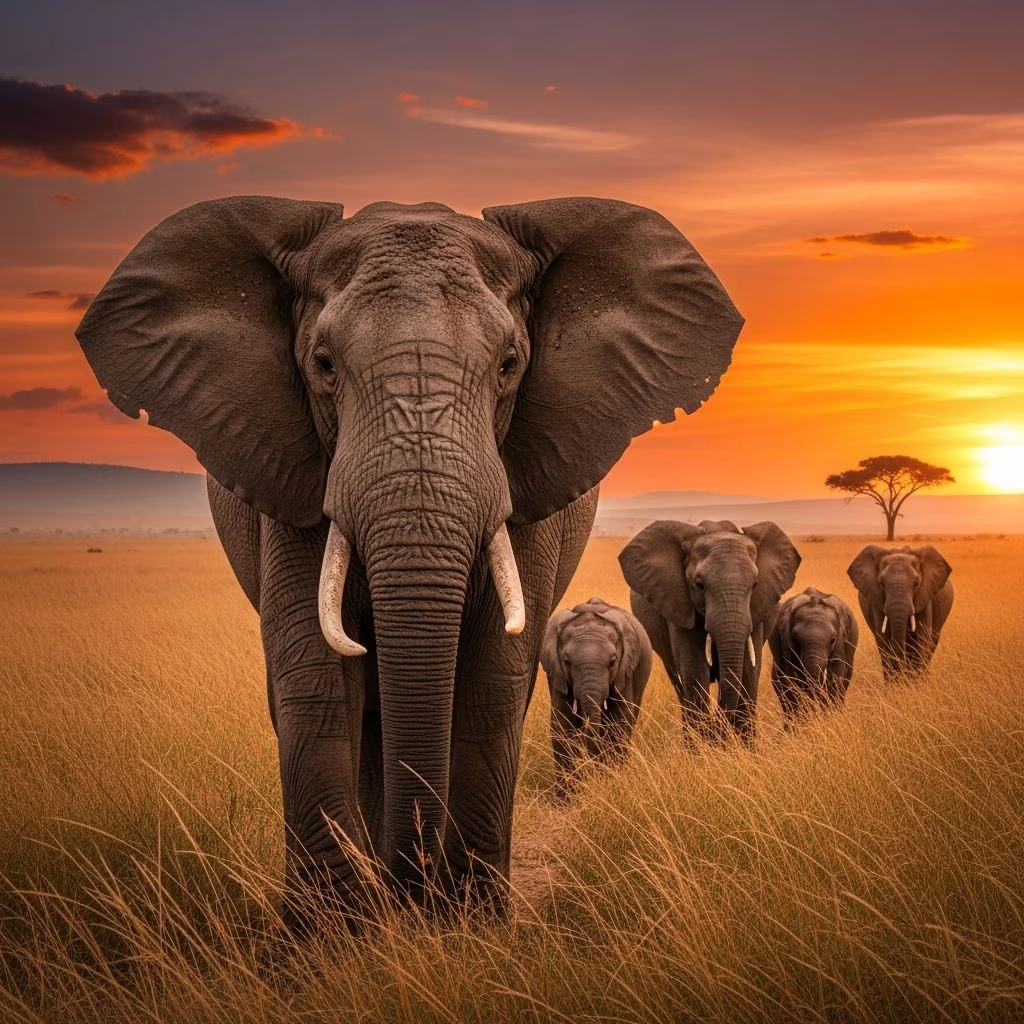
In the vast savannas of Kenya, where ancient migration routes weave through sun-baked plains and acacia-dotted horizons, one elephant stands as a symbol of resilience and leadership. Athena, a formidable 50-year-old matriarch, guides her herd through the challenges of a changing world. This article delves into her story, the ecosystems she inhabits, the threats her family faces, and the groundbreaking initiatives working to ensure their survival alongside human communities.
African elephants, the largest land mammals on Earth, live in complex matriarchal societies where the oldest female leads the family group. These matriarchs possess vast knowledge accumulated over decades, including memory of water sources, safe paths, and seasonal feeding grounds passed down through generations. Athena exemplifies this role, her massive frame and long tusks marking her as a veteran of Kenya’s wilds.
Elephant herds typically consist of related females and their young calves, with adult males joining temporarily for mating. Athena’s clan includes mothers like Mala, her older daughter Milli, and the vulnerable newborn Mimi, each contributing to the group’s dynamics. These families form tight bonds, communicating through infrasound rumbles that travel miles across the landscape.
The narrative of Athena’s herd unfolds in the Greater Amboseli-Tsavo ecosystem, a sprawling 40,000-square-kilometer expanse encompassing Tsavo East and West National Parks. Dubbed ‘the Kingdom’ during rainy seasons, this lush area bursts with verdant grasslands and scattered waterholes, providing ideal foraging.
Filmmakers Victoria Stone and Mark Deeble captured this paradise in their 2019 documentary The Elephant Queen, narrated by Chiwetel Ejiofor. Here, elephants roam freely, their presence shaping the environment. Dung beetles roll massive balls from elephant waste, bee-eaters nest in eroded riverbanks created by the giants, and chameleons hunt insects stirred up by passing feet.
Yet, this idyll is fragile. Elephants engineer ecosystems by uprooting trees, creating clearings that benefit smaller species, and dispersing seeds via digestion. Their migrations connect habitats, but human expansion fragments these corridors.
When rains fail, the Kingdom transforms into a parched wasteland. Waterholes shrink to mud, forcing Athena to make a life-or-death choice: stay and risk starvation or embark on a grueling 200-mile trek to ‘the Refuge,’ a reliable water source.
The journey tests the herd’s endurance. Calves like newborn Mimi must gain strength, while the group faces lions, exhaustion, and scarce food. Athena’s wisdom shines as she delays departure, ensuring the vulnerable can survive the march. Along the way, symbiotic relationships emerge—giraffes, zebras, and birds tag along, drawn to the elephants’ pathfinding.
| Challenge | Impact on Herd | Athena’s Strategy |
|---|---|---|
| Drought | Drying waterholes, malnutrition | Wait for rains or migrate |
| Distance | Physical exhaustion, predation risk | Paced travel, protective formation |
| Human areas | Crop raids, conflicts | Use ancestral corridors cautiously |
This migration highlights elephants’ adaptability but underscores climate change’s toll, with prolonged droughts becoming more frequent.
As Athena’s ancient paths cross farmlands, conflicts arise. In rural Kenya, elephants raid crops, threatening livelihoods and sparking retaliatory killings. Human-elephant conflict affects thousands across Africa and Asia, driven by habitat loss and resource competition.
The film portrays these tense intersections poignantly, showing Athena navigating barbed wires and settlements. Her herd’s forays into human zones illustrate the shrinking space between wildlife and people, with over 500 elephants killed annually in Kenya alone due to such clashes (pre-conservation surges).
Inspired by the documentary, the Elephant Queen Trust launched mobile cinema programs to transform perceptions. Since 2019, screenings have reached over 135,000 people in schools and villages near Tsavo, many experiencing cinema for the first time.
The initiative’s three pillars—film screenings, education, and community engagement—build empathy. Post-viewing surveys show increased tolerance; one study found communities exposed to The Elephant Queen reported 20-30% higher acceptance of elephants.
Partners like the Milgis Trust host events where Athena’s charge at the camera electrifies audiences, sparking discussions on living with giants.
Tsavo’s elephants benefit from ranger patrols, anti-poaching tech like drones, and corridor restoration. Organizations map migration routes to install fences and beehive barriers—elephants avoid bee stings, deterring crop raids.
Athena’s story amplifies calls for protected corridors linking Tsavo to Amboseli, preserving gene flow and resilience against ivory poachers.
A vital 40,000 sq km area supporting 12,000 elephants, connecting key parks.
Forces long migrations, increases mortality in calves, heightens conflict.
A nonprofit delivering wildlife films to communities for harmony-building.
Yes, studies show boosted tolerance in conflict zones.
Guided safaris in Tsavo East offer chances, supporting conservation fees.
Beyond survival tales, Athena’s legacy reveals elephants’ role in biodiversity. They maintain grasslands, enrich soils with dung (hosting microbes and insects), and create water points by digging. Losing matriarchs disrupts this balance, as seen in orphaned herds post-poaching.
Global efforts like CITES bans curb ivory trade, but local action is key. Kenya’s elephant population rebounded from 20,000 in the 1980s to over 36,000 today, thanks to such interventions.
Travelers can witness these wonders ethically. Tsavo East National Park offers self-drive or guided tours, with lodges emphasizing low-impact stays. Combine with Amboseli for volcano-backdropped herds. Always choose operators funding conservation.
As climate pressures mount, innovations like satellite collars track herds, predicting conflicts. Community conservancies empower locals with revenue from tourism, reducing poaching incentives. Athena’s odyssey reminds us: harmony is possible when humans value the wild neighbors we share Earth with.
Through stories like hers, we forge paths to coexistence, ensuring Kenya’s elephants thunder on for generations.
