


 Food & Culture
Food & Culture
Augusta, Missouri: America’s First AVA
Learn how Augusta, Missouri earned designation as the first American Viticultural Area in 1980, establishing standards for U.S. wine regions and reshaping the wine industry.
 Food & Culture
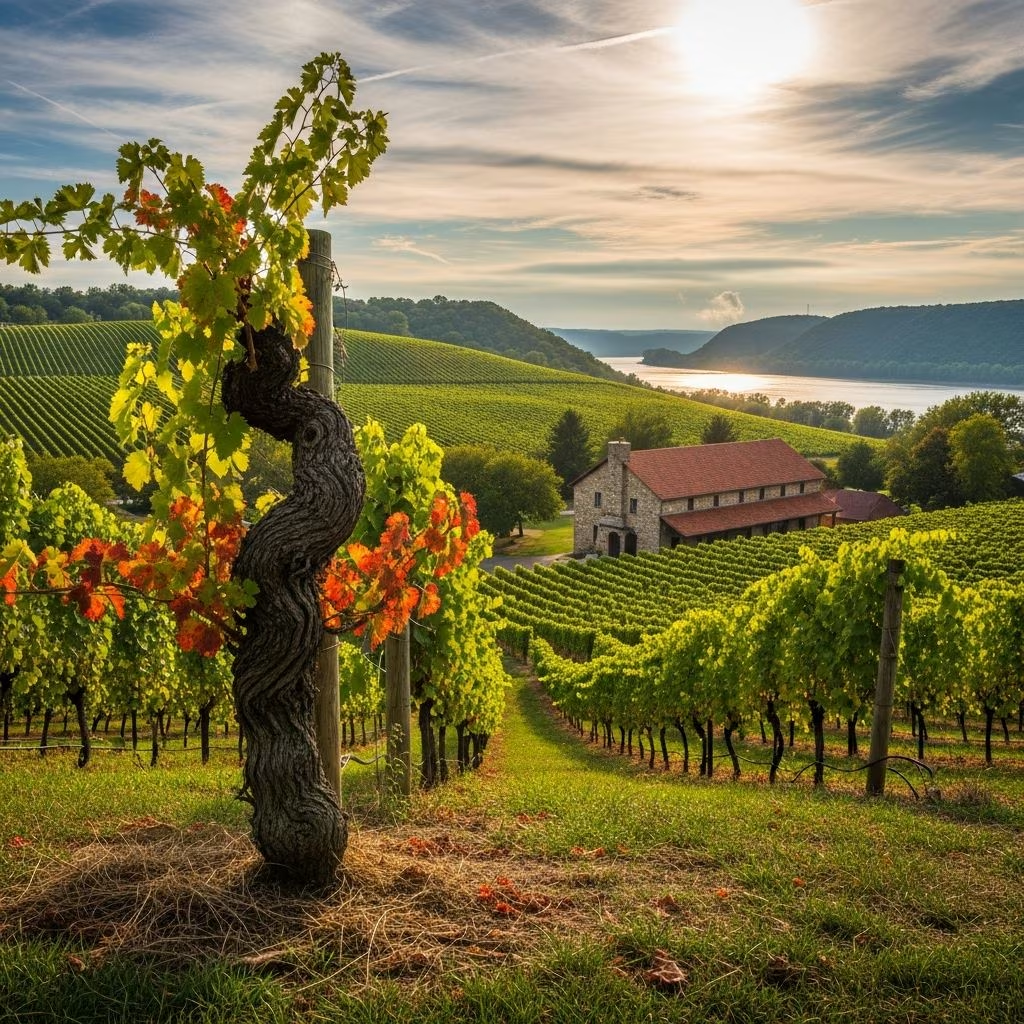
When most people think of American wine, their minds typically drift to the rolling vineyards of California’s Napa Valley or the sun-drenched hills of Sonoma. However, the true birthplace of officially recognized American wine production lies in a modest region along the Missouri River in Augusta, Missouri. On June 20, 1980, the United States government designated Augusta as the nation’s first American Viticultural Area (AVA), a milestone that fundamentally transformed how wine regions are identified, protected, and understood across the country.
The Groundbreaking Designation That Changed Everything
The establishment of Augusta as the inaugural AVA represented a watershed moment in American wine history. Rather than California claiming this distinction, it was Missouri—a state often overlooked in discussions of American viticulture—that earned the honor of being recognized as America’s first federally designated wine region. This decision by the U.S. government marked the beginning of a systematic approach to wine regionalization that would eventually expand across the entire nation.
The significance of this 1980 designation cannot be overstated. It created a framework that would allow subsequent wine regions to seek official recognition based on established criteria, ultimately leading to the creation of more than 240 AVAs throughout all 50 states today. What started in a single Missouri location has evolved into a comprehensive national system that defines and protects American wine production.
Understanding American Viticultural Areas: Definition and Purpose
An American Viticultural Area functions as a federally recognized wine region established by the U.S. government to identify distinctive geographic locations where grapes are cultivated and processed into wine. The AVA system serves a dual purpose: it protects the integrity of wines produced in specific regions while simultaneously ensuring that consumers possess accurate information about the origins of the wines they purchase.
The framework establishes clear requirements for wines bearing an AVA designation. Specifically, any wine labeled as originating from a designated AVA must contain at least 85 percent of its fruit from that particular region. This threshold ensures authenticity while allowing winemakers some flexibility in their production methods. Additionally, certain states have implemented even more stringent requirements, reflecting their commitment to maintaining the highest standards of regional authenticity.
The Criteria Behind Regional Recognition
The process of designating a wine region as an official AVA involves rigorous evaluation against specific standards. These criteria ensure that only areas with genuine geographic and agricultural distinctions receive official recognition. The framework protects the legitimacy of regional wine production and prevents the arbitrary creation of new regions.
- Geographic Boundaries: Each designated region must possess well-defined borders that clearly distinguish it from adjacent areas, establishing clear jurisdictional lines for wine production and labeling purposes.
- Climate Distinctiveness: The region must demonstrate unique climatic conditions that differentiate it from surrounding territories, influencing grape varietals and flavor profiles.
- Soil Composition: The terroir—the distinctive soil characteristics—must be unique and substantially different from neighboring regions, as soil composition directly impacts grape quality and wine characteristics.
- Historical Significance: The area must possess a documented history of viticulture that establishes its legitimacy as a distinct wine-producing location, often spanning decades of continuous grape cultivation.
Augusta’s Unique Position in Wine History
Augusta occupies a distinctive place in American wine heritage, yet its prominence in wine discussions remains surprisingly limited compared to more famous California regions. The Missouri region’s recognition as the first AVA reflects a combination of factors that distinguished it from other potential contenders at the time. Augusta’s location along the Missouri River created specific microclimatic conditions, while its historical tradition of winemaking provided documented evidence of its viticultural significance.
The region’s designation in 1980 represented validation of decades of winemaking tradition that preceded the formal AVA system. Winemakers in Augusta had been cultivating grapes and producing wine long before government recognition formalized their efforts. This historical continuity, combined with geographic and climatic factors, made Augusta the natural choice for America’s first officially recognized wine region.
The Expansion of AVAs Across America
Since Augusta’s groundbreaking designation over four decades ago, the AVA system has experienced significant growth and evolution. The original single designation has multiplied into a sprawling network of more than 240 federally recognized wine regions spread throughout the United States. This expansion reflects growing recognition of American wine’s quality and diversity, as well as increased interest from regions seeking official designation.
New AVAs continue to be established annually as additional regions meet the stringent criteria for designation. This ongoing expansion demonstrates the dynamic nature of American viticulture and the increasing sophistication of the nation’s wine industry. From the Pacific Northwest to the Northeast, from Texas to Michigan, wine regions across the country have sought and achieved official recognition, each bringing unique characteristics and traditions to the broader American wine landscape.
How Designation Benefits Consumers and Producers
The AVA system generates tangible benefits for both wine consumers and producers. For consumers, AVA designations provide reliable information about wine origins, enabling informed purchasing decisions. When a bottle displays an AVA designation, buyers understand that the wine originates from a specific, regulated region where standards have been maintained and verified by federal authorities.
Producers benefit from AVA recognition through enhanced market positioning and brand protection. Wines labeled with a specific AVA designation command greater consumer trust and often achieve higher market values. The official recognition validates a region’s viticultural credentials and allows winemakers to market their products with confidence, knowing that the geographic designation carries government-backed authenticity.
Key Milestones in American Wine Regionalization
| Date | Milestone | Impact |
|---|---|---|
| June 20, 1980 | Augusta, Missouri designated as first AVA | Established federal framework for wine regionalization |
| 1980s | Initial expansion of AVA designations | Early adoption by established wine regions seeking recognition |
| 1990s-2000s | Rapid growth in AVA designations across states | Emergence of diverse regional wine industries nationwide |
| Present | 240+ AVAs across all 50 states | Comprehensive national wine classification system established |
Beyond Augusta: Emerging Wine Regions and Global Perspectives
While Augusta holds the distinction of being America’s first designated wine region, numerous other areas have subsequently achieved AVA status, each contributing unique characteristics to the nation’s wine portfolio. California, predictably, hosts the largest concentration of AVAs, but equally significant wine regions have emerged in unexpected locations. States like Oregon, Washington, New York, and Virginia have developed robust wine industries with multiple federally recognized regions.
The success of the AVA system in the United States has inspired international parallels. Countries worldwide employ similar regionalization frameworks to protect and promote their wine industries. Europe’s appellation systems, such as France’s Appellation d’Origine Contrôlée (AOC) and Italy’s Denominazione di Origine Controllata (DOC), operate on comparable principles, establishing geographic boundaries and production standards to maintain regional authenticity and consumer confidence.
Frequently Asked Questions About Wine Regionalization
What distinguishes an AVA from other wine classifications?
An AVA represents a federally designated wine region with specific geographic boundaries, unique climatic conditions, distinctive soil characteristics, and documented viticultural history. This official status provides government-backed authentication that other wine classifications may not offer.
Can wines be labeled with multiple AVA designations?
Wines must originate from a single AVA to carry that region’s designation on the label. However, some wines blend grapes from multiple regions, and such bottles typically display the broader state or country designation rather than a specific AVA.
How long does the AVA designation process typically require?
The process of seeking AVA designation varies considerably depending on the thoroughness of documentation, regional cooperation, and the complexity of establishing geographic and climatic distinctiveness. Some applications require several years of preparation and review.
Are AVA standards uniform across all United States regions?
While the federal framework establishes baseline standards, individual states retain authority to impose additional requirements beyond the minimum 85 percent fruit content threshold, allowing for regional variations in oversight and quality control.
The Lasting Impact of Augusta’s Legacy
Augusta, Missouri’s designation as America’s first AVA established a precedent that continues to shape the nation’s wine industry decades later. This single decision in 1980 created infrastructure, standards, and systems that have enabled the development of hundreds of wine regions throughout the country. More importantly, it demonstrated that exceptional wine could be produced outside California, challenging prevailing assumptions about American viticulture and opening possibilities for regions that had previously been overlooked.
The AVA system born from Augusta’s recognition protects producers who invest in their regions and rewards consumers who seek authentic wines with documented geographic origins. By establishing clear criteria and maintaining rigorous standards, the system has contributed to the overall quality and credibility of American wine production. Today, as the United States continues to expand its wine industry and gain international recognition for quality production, the foundations laid by Augusta’s 1980 designation remain relevant and valuable.
References
- American Viticultural Areas (AVAs) — Alcohol and Tobacco Tax and Trade Bureau (TTB). U.S. Department of the Treasury. https://www.ttb.gov/wine/american-viticultural-areas
- Wine Region Designations and History — United States Department of Agriculture. https://www.usda.gov
- Mount Etna’s Wine Revolution: The Burgundy of Sicily — Cellar Tours. https://www.cellartours.com/blog/italy/mount-etnas-wine-revolution-the-burgundy-of-sicily
On This Page
The Groundbreaking Designation That Changed Everything Understanding American Viticultural Areas: Definition and Purpose The Criteria Behind Regional Recognition Augusta's Unique Position in Wine History The Expansion of AVAs Across America How Designation Benefits Consumers and Producers Key Milestones in American Wine Regionalization Beyond Augusta: Emerging Wine Regions and Global Perspectives Frequently Asked Questions About Wine Regionalization The Lasting Impact of Augusta's Legacy← Previous
Viking China Cruises: Coastal Itineraries, Yi Dun & Tips
Next →
JFK Centurion Lounge Terminal 4 Guide
Related Reading
More in Food & Culture
Food & Culture Food & Culture
 Food & Culture
Best Places to Eat in Rome: Neighborhood Dining Guide
 Food & Culture
 Food & Culture