

 Travel Essentials
 Travel Essentials

Complete guide to experiencing Austin's 1.5 million Mexican free-tailed bats at Congress Avenue Bridge, including viewing times, locations, and essential tips.
 Travel Essentials
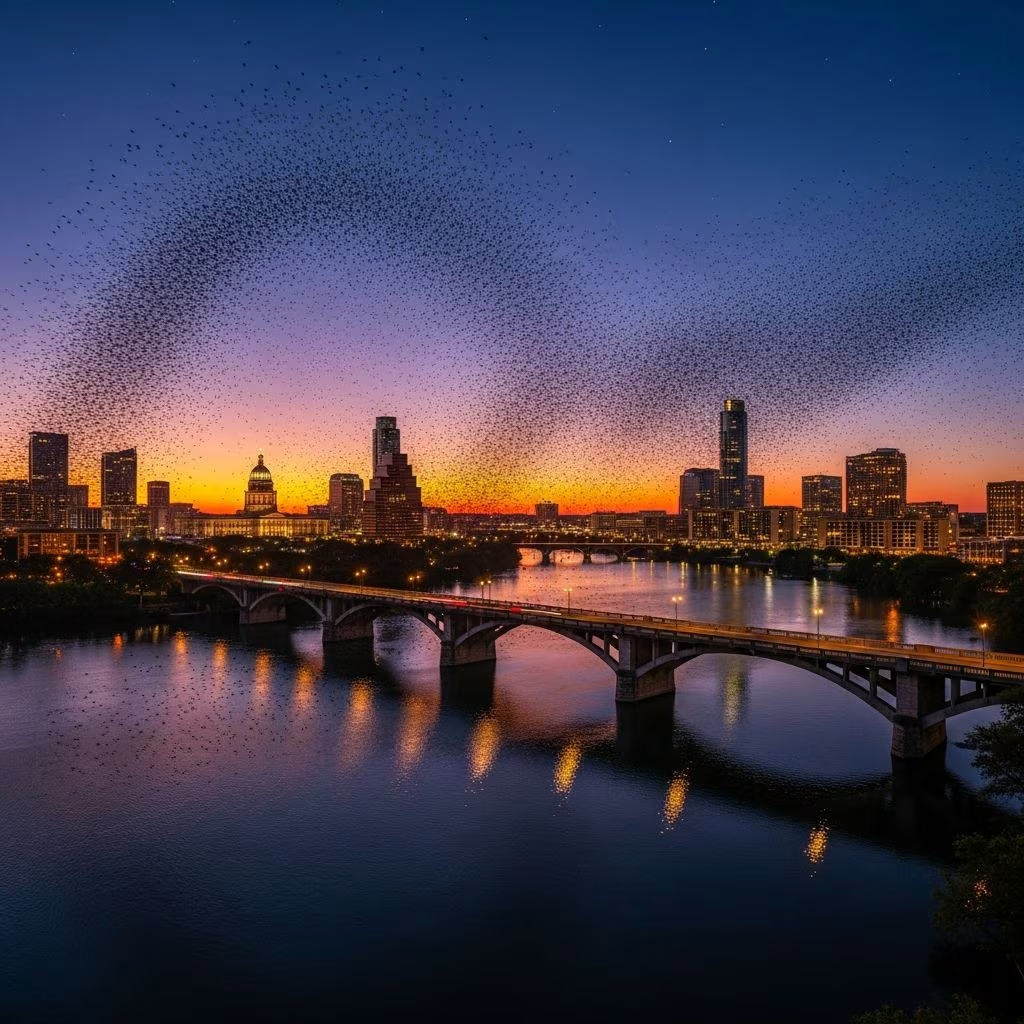
Austin has earned its reputation as one of America’s most unique and vibrant cities, known for live music, culinary innovation, and an unmistakable cultural identity. Yet beneath the spotlight of these well-known attractions lies one of nature’s most remarkable phenomena: the emergence of approximately 1.5 million Mexican free-tailed bats from beneath the Congress Avenue Bridge each evening. This extraordinary gathering represents North America’s largest urban bat colony, transforming the Austin skyline into a living canvas of swooping wings and coordinated flight patterns that captivate visitors and locals alike.
The transformation of Congress Avenue Bridge into one of the world’s most significant bat habitats was neither accidental nor intentional in its conception. During a 1980 renovation project aimed at improving infrastructure over Lady Bird Lake, construction workers modified the bridge’s structure in ways that would prove perfectly suited to bat habitation. The concrete crevices and architectural features created during this modernization inadvertently replicated the natural cave environment that Mexican free-tailed bats require for roosting and raising their young.
What began as a modest population has exploded into a phenomenon of staggering proportions. The bridge now serves as a maternity colony where female Mexican free-tailed bats raise an estimated 750,000 pups annually. The success of this urban refuge demonstrates how modern infrastructure, when aligned with natural patterns, can support thriving wildlife populations within densely populated urban environments.
Mexican free-tailed bats are among the most extraordinary mammals in North America. These relatively small creatures possess remarkable biological capabilities that make them perfectly adapted for their nocturnal lifestyle. With the ability to fly at speeds reaching 100 miles per hour, these bats undertake incredible aerial maneuvers as they hunt for insects throughout the night. Their presence under the Congress Avenue Bridge represents only one phase of their annual migration cycle.
Each spring, Mexican free-tailed bats migrate northward from Mexico and Central America to various locations across the southern United States, with Austin becoming one of their most iconic destinations. The geographic range of these bats extends throughout the Americas, from the southern United States all the way to Argentina, making them one of the most widely distributed bat species in the Western Hemisphere. Their arrival in Austin signals the beginning of the city’s most anticipated natural event.
The presence of bats beneath Congress Avenue Bridge follows a distinct seasonal rhythm. Beginning in late March, as spring temperatures warm and insect populations begin to flourish, the bats start to arrive in Austin. Their numbers continue to grow through spring migration, peaking during the early months of their residence. By late July, another surge of activity occurs as young bats, born in the maternity colony, take their first flights and learn to hunt alongside their mothers. This period represents an exceptional time for viewing opportunities, as the constant movement of learning juveniles creates particularly dynamic aerial displays.
As temperatures begin to decline in September and October, the bats prepare for their southward migration, their presence gradually diminishing until they depart for winter breeding grounds in Mexico. This annual cycle has become so embedded in Austin’s cultural identity that residents and visitors anticipate the bats’ arrival each spring with the enthusiasm typically reserved for other seasonal events.
The nightly emergence of bats from beneath the Congress Avenue Bridge occurs with remarkable consistency during the proper season. The timing of emergence varies based on weather conditions and time of year. During spring migration and again when young bats learn to fly in late summer, early emergences often occur within 30 minutes before sunset on hot, dry evenings. In cooler or damper conditions, the emergence may be delayed up to 40 minutes after sunset, and the duration of the flight can extend up to 45 minutes as thousands upon thousands of bats pour from beneath the bridge.
Peak viewing hours generally fall between 7:30 and 9:45 in the evening, though arriving earlier allows visitors to secure optimal viewing positions and parking. The intensity of the emergence varies from night to night based on weather patterns, with hot, sunny days typically producing the most spectacular displays. Planning a visit to coincide with favorable weather conditions significantly enhances the likelihood of witnessing the most impressive aerial performance.
| Time Period | Viewing Quality | Key Characteristics |
|---|---|---|
| Mid-March to Mid-April | Exceptional | Spring migration period with consistent, large emergences |
| May to Mid-July | Good | Established colony present; daily emergences with variable intensity |
| Late July to Mid-September | Exceptional | Young bats learning to fly create dynamic aerial displays |
| Late September to Early November | Good to Fair | Population declining; fewer bats visible as migration begins |
Multiple vantage points exist for observing the bat emergence, each offering distinct advantages and experiences. The Statesman Bat Observation Center provides a dedicated grassy hill area with sightlines specifically designed for bat watching. Visitors can access this location via paid parking at the Austin American-Statesman building at 305 South Congress Avenue, or by taking steps located at the intersection of Congress Avenue and Barton Springs Road.
The Congress Avenue Bridge itself remains the most direct and accessible viewing spot, with spectators gathering along the bridge railings to witness the bat emergence firsthand. Arriving early to secure positioning ensures an unobstructed view of the bats as they exit their daytime roosting spaces. For those seeking a more active experience, the Butler Hike and Bike Trail along Lady Bird Lake offers numerous clear viewpoints east of the bridge while maintaining sensitivity to other trail users.
For a uniquely immersive experience, kayaks, canoes, stand-up paddleboards, and water bikes can be rented to observe the emergence from the water itself. This perspective provides an entirely different vantage point, allowing observers to position themselves directly beneath the flight path of the departing colony.
Successful bat watching requires thoughtful preparation and planning. Parking represents one of the primary logistical challenges, as viewing locations attract substantial crowds, particularly during peak season. The Austin American-Statesman building offers paid parking at 305 South Congress Avenue. Additional paid parking options include the Catherine at 214 Barton Springs Road and City Hall at 301 West 2nd Street, located approximately four blocks northwest of the Congress Avenue Bridge. Arriving well in advance of sunset ensures parking availability and optimal viewing position selection.
Comfort considerations significantly impact the enjoyment of your experience. Bringing blankets or chairs provides comfortable seating during the pre-emergence wait period. A picnic with snacks and beverages enhances the experience, transforming bat watching into a complete evening outing. Warm clothing proves essential, as temperatures often drop considerably after sunset, even during warmer months. A camera enables capture of the spectacle for lasting memories, though the aerial acrobatics of the bats often prove too rapid to photograph effectively.
As the bat colony exists in an urban environment with strict ecological needs, responsible viewing practices have been established to protect the animals and ensure sustainable visitation. White lights should never be directed toward the emerging bats, as artificial illumination can disorient them during their critical emergence period. Similarly, loud noises within 100 feet of the bridge, including clapping, yelling, or musical instruments, can startle the colony and disrupt their emergence patterns. Respecting these guidelines ensures that future generations can enjoy this remarkable phenomenon while protecting the welfare of the bats themselves.
While Congress Avenue Bridge dominates Austin’s bat-watching landscape, other locations throughout Texas host significant bat populations. Bracken Cave, located just south of Austin, contains the largest colony of Mexican free-tailed bats worldwide, offering alternative opportunities for serious bat enthusiasts. Additional bat-watching locations include various caves and caverns throughout the Texas Hill Country, as well as bat populations near the McNeil Overpass and Interstate 35 bridge in Round Rock. The Hancock Center and IH35 intersection also hosts notable bat populations.
Approximately 1.5 million Mexican free-tailed bats call the Congress Avenue Bridge home during the spring and fall months. This colony represents the largest urban bat population in North America.
The best viewing periods occur during spring migration from mid-March through mid-April, and again in late July through mid-September when young bats are learning to fly. During these windows, spectacular early emergences are most likely to occur.
Viewing the bats from public areas including the Congress Avenue Bridge itself is entirely free. Parking in designated lots carries nominal fees, but the actual bat observation requires no admission charge.
The nightly emergence can last anywhere from 20 to 45 minutes, depending on weather conditions and population density on any given night.
Mexican free-tailed bats are insectivores that hunt flying insects throughout the night. Their presence provides significant mosquito and pest control benefits to the Austin area, consuming substantial quantities of insects daily.
The bat colony has transcended its role as a biological phenomenon to become woven into Austin’s cultural fabric and identity. The city has embraced these creatures as symbols of its unique character and commitment to urban wildlife coexistence. Local residents frequently refer to themselves as supporters of the bats, and the annual arrival of the colony marks an important cultural moment. This acceptance and celebration of wildlife within an urban setting distinguishes Austin from many other American cities and contributes significantly to its reputation as an innovative and environmentally conscious community.
The Congress Avenue Bridge bats represent far more than a tourist attraction or nature spectacle. They exemplify the possibility of harmonious coexistence between urban development and wildlife preservation. By understanding the patterns of these remarkable creatures, respecting their ecological needs, and visiting responsibly, observers can participate in one of North America’s most extraordinary natural experiences. Whether you are a seasoned naturalist, casual tourist, or curious visitor, the nightly emergence of 1.5 million bats from beneath Congress Avenue Bridge offers an unforgettable glimpse into the natural world’s incredible diversity and resilience.
