

 Travel Essentials
 Travel Essentials

Explore the history, celebrations, and debates behind Australia Day, from the First Fleet’s arrival to Indigenous perspectives and today’s meaning.
 Travel Essentials
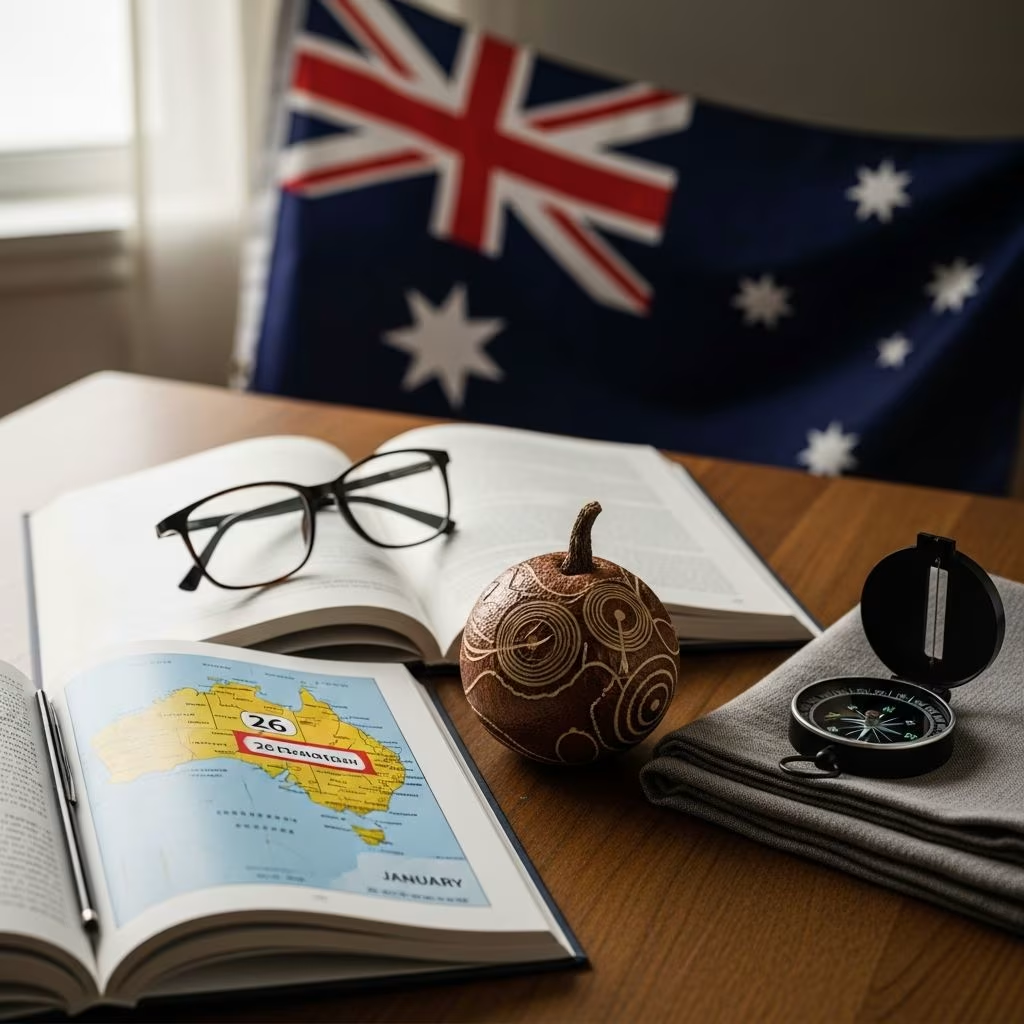
Australia Day, observed annually on January 26, serves as the nation’s official public holiday marking a pivotal moment in its colonial past. This date honors the arrival of the First Fleet in 1788, when Captain Arthur Phillip established the first European settlement at Sydney Cove, yet it also evokes profound division due to its impact on Indigenous communities.
The story of Australia Day traces back to late 18th-century Britain, when overcrowding in prisons prompted the establishment of a penal colony on the continent. In 1787, King George III authorized the voyage of 11 ships known as the First Fleet, carrying over 700 convicts, officers, and crew under Phillip’s command. Contrary to popular belief, the fleet first anchored at Botany Bay from January 18 to 20, 1788, but unfavorable conditions led them northward to Port Jackson, where they formally landed on January 26. There, Phillip raised the British flag, proclaiming British sovereignty and founding what would become Sydney.
Early references in Sydney almanacs dubbed this event ‘First Landing Day’ or ‘Foundation Day,’ reflecting colonial pride in establishing a foothold. The convicts faced sentences from seven years to life, enduring harsh labor in this new outpost designed to alleviate Britain’s penal burdens.
Public recognition of the date began modestly. The first informal gatherings occurred around 1808, but it was Governor Lachlan Macquarie who formalized it as a holiday in New South Wales in 1818. By 1838, on the 50th anniversary, organized festivities spread, including sporting events and dinners in emerging colonies.
The push for nationwide observance gained momentum in the late 19th century. Centenary events in 1888 fostered unity among colonies, downplaying the ‘convict stain’ to emphasize progress. However, full national adoption took decades; not until 1935 did all states celebrate January 26 uniformly, influenced by groups like the Australian Natives Association. Initially observed on the following Monday for convenience, it was fixed to the exact date as a public holiday in 1994.
| Milestone | Year | Key Development |
|---|---|---|
| First Fleet Arrival | 1788 | Settlement at Sydney Cove |
| Official Holiday in NSW | 1818 | Governor Macquarie’s proclamation |
| Centenary Celebrations | 1888 | Nationwide events for cohesion |
| All States Observe | 1935 | Uniform national recognition |
| Fixed Date Holiday | 1994 | Public holiday on January 26 |
Today, Australia Day embodies community-driven festivities that highlight the country’s diversity and achievements. Communities host barbecues, picnics, and outdoor gatherings, often featuring live music, markets, and family activities. Major cities like Sydney showcase spectacular fireworks over the harbor, regattas on the water, and citizenship ceremonies where new Australians pledge allegiance.
The National Australia Day Council coordinates efforts, promoting reflection on history while celebrating contemporary successes. Events underscore resilience, innovation, and multiculturalism.
While many embrace Australia Day as a source of national pride, for Aboriginal and Torres Strait Islander peoples, it represents dispossession and trauma. The 1788 landing initiated colonization, leading to land loss, population decline, cultural suppression, and systemic injustices. Indigenous groups view January 26 as Invasion Day or a Day of Mourning, protesting the narrative of celebration.
Resistance dates to 1938’s sesquicentenary, when about 100 Aboriginal protesters gathered in Sydney’s Australian Hall, demanding citizenship rights and equality amid official pageantry. This ‘Day of Mourning’ highlighted the seizure of lands and its devastating effects. Protests continued through the 1988 bicentenary, rebranded by some as a ‘Celebration of a Nation,’ but met with large demonstrations renaming it Invasion Day.
Today, protests, marches, and alternative events like survival day commemorations occur in cities, calling for truth-telling, treaty-making, and possibly changing the date to better include First Nations’ 65,000+ years of continuous culture.
The duality of Australia Day fuels ongoing discourse. Polls show divided opinions: some cherish it for fostering unity, others seek reform to acknowledge shared history. Proposals include shifting to a different date symbolizing all Australians’ contributions, such as Federation Day (January 1) or a post-invasion milestone.
Government responses vary by locality; some councils rebrand events as ‘Day of Recognition’ or pause citizenship ceremonies on the date. The National Australia Day Council emphasizes reconciliation, respecting Indigenous survival and resilience.
January 26 marks an important date in Australia’s history that has evolved over time, inviting reflection on our complete and complex past.
For international visitors, Australia Day offers immersion in local customs. Tourists flock to Sydney Harbour for Ferrython races and the iconic 9:30 PM fireworks. Regional areas host unique events like the Australia Day Long Weekend in Queensland or bush dances in rural towns. Respectful participation involves understanding dual narratives—join BBQs while learning about Indigenous viewpoints through museums or guided tours.
In 2026, expect heightened focus on inclusivity, with events promoting dialogue on national identity. Travelers should check local guidelines, as some areas adapt naming to foster harmony.
It commemorates the First Fleet’s arrival on January 26, 1788, establishing British settlement at Sydney Cove.
Indigenous Australians associate the date with the onset of colonization, land dispossession, and cultural disruption.
Yes, since 1994, it’s observed nationally on January 26, though regional events may vary.
Barbecues, fireworks, sports, citizenship ceremonies, and community festivals dominate celebrations.
Debates persist, with suggestions for a date honoring all Australians’ achievements, but no national change yet.
| Year | Event | Significance |
|---|---|---|
| 1788 | First Fleet lands | British flag raised; penal colony founded |
| 1818 | NSW public holiday | First official recognition |
| 1938 | Day of Mourning protest | Indigenous call for rights |
| 1960 | Australian of the Year begins | Honors national contributors |
| 1988 | Bicentenary protests | ‘Invasion Day’ gains traction |
