

Food & Culture Stays Travel Essentials Travel Guides Trip Ideas
Categories
From the Blog
Remy’s Ratatouille Adventure at EPCOT: Ride Review, Tips & 2D Update
Travel Essentials

Australia Drone Laws for Aerial Photography: Fly Safely and Legally

Comprehensive guide to drone photography in Australia: rules from CASA, state restrictions, best locations, gear tips, and safety practices for stunning aerial images.
Travel Essentials

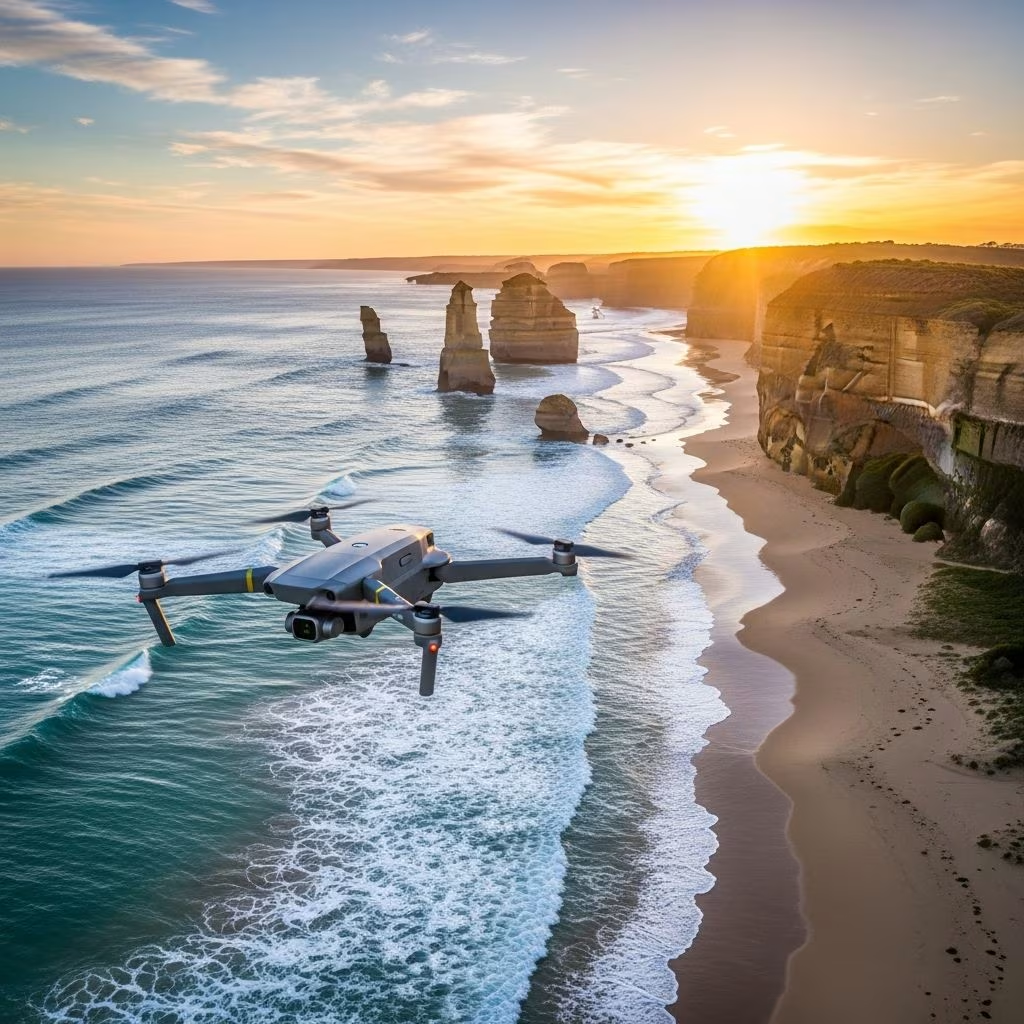
Australia’s vast landscapes—from rugged coastlines and ancient rainforests to the endless Outback—offer unparalleled opportunities for aerial photography. Drones provide a unique perspective, but operating one requires strict adherence to regulations enforced by the Civil Aviation Safety Authority (CASA). This guide equips you with everything needed to fly legally, capture epic shots, and avoid hefty fines up to AUD 10,500 or even jail time.

Understanding CASA’s Core Drone Regulations

The foundation of drone operations in Australia lies with CASA, which sets nationwide safety rules simplified under Part 101 of the Civil Aviation Safety Regulations. These apply everywhere, prioritizing safety for recreational users who don’t need licenses or registration for drones under 25kg.

  • Height Restriction: Never exceed 120 meters (400 feet) above ground level (AGL), not sea level. On elevated terrain like a 500m mountain, your ceiling rises accordingly, but structures don’t count toward height.
  • Visual Line of Sight (VLOS): Keep the drone visible at all times without relying solely on screens or binoculars; a spotter can assist.
  • Distance from People: Maintain at least 30 meters from uninvolved individuals and never fly directly over crowds, beaches, events, or populated areas.
  • Daylight Only: Fly solely during daylight; night operations demand special approval.
  • Single Drone Operation: Control only one drone simultaneously.
  • No-Fly Zones: Stay 5.5km from controlled airports (drones over 250g), avoid emergency operations like bushfires or police activities, and land immediately if spotting manned aircraft.

Violations carry penalties from AUD 1,050 to AUD 10,500 per offense, escalating for repeat or severe breaches. For commercial use—like selling photos or YouTube monetization—secure an aviation reference number, notify CASA, and potentially obtain Remote Pilot Accreditation (free online for small drones) or a full Remote Pilot Licence (RePL).

While CASA rules are uniform, states and territories impose additional restrictions, especially in sensitive areas like national parks and urban zones. Always cross-check local laws via Drones.gov.au.

State/TerritoryKey RestrictionsPermit Requirements
New South Wales (NSW)No drones in national parks without park manager approval; bans near Sydney Olympic Park and events.Consent from authorities for parks.
QueenslandNational parks prohibit recreational flights; environmental assessments often needed for permits.Strict permits required.
VictoriaStay 120m from correctional facilities; 30m from people/vehicles.Local council checks advised.
Northern TerritoryKakadu National Park bans drones to safeguard wildlife and Indigenous sites.No recreational access.
Australian Capital Territory (ACT)Restrictions near Parliament House and government buildings.Site-specific approvals.
Western Australia, South Australia, TasmaniaNational park bans; privacy and local council rules apply.Check on entry.

Urban hotspots like Sydney Harbour are complete no-fly zones, blocking iconic Opera House shots. Download CASA’s “Can I Fly There?” app for real-time mapping of restrictions—it covers national rules but not all state or privacy laws.

Finding Prime Locations for Aerial Shots

Australia’s size means ample legal spots await beyond cities. Prioritize remote areas with fewer overlays. Head to coastal fringes, rural expanses, or approved beaches during off-peak times.

  • Outback Wonders: Vast deserts like the Simpson or Strzelecki offer unobstructed skies for golden-hour sunsets over red dunes.
  • Coastal Escapes: Remote beaches in Tasmania or Western Australia’s Ningaloo Reef provide turquoise waters and cliffs without crowds.
  • Regional Parks: Lesser-known reserves in Victoria’s Grampians or Queensland’s hinterlands often permit flights after quick checks.
  • Island Getaways: Lord Howe Island or Kangaroo Island feature dramatic seascapes, but verify park rules on arrival.
  • Avoid Pitfalls: Wilderness doesn’t guarantee freedom—many parks limit to scientific or commercial ops only.

Scout via apps, arrive early, and engage rangers for the green light. Patience yields shots of wildlife migrations or wave-carved arches unmatched by ground-level views.

Gear Essentials and Travel Hacks

Packing smart ensures smooth adventures. Airlines ban lithium batteries in checked luggage—carry them in hand baggage with spares. Bring extra propellers, as replacements delay trips.

  • Drone Picks: Lightweight models under 250g (e.g., DJI Mini series) ease airport proximity rules and registration needs.
  • Accessories: ND filters combat harsh Aussie sunlight; gimbal stabilizers for smooth footage; high-capacity SD cards for 4K bursts.
  • Batteries: Pack multiples; charge via power banks. Expect 20-30 minute flights per charge.
  • Insurance: Recommended for commercial ops; covers liability in mishaps.

Weather vigilance is key: skip windy, rainy, or cloudy days to prevent crashes and comply with rules.

Safety Protocols and Etiquette Mastery

Beyond rules, responsible flying builds goodwill. Pre-flight checklists include battery checks, propeller inspections, and 360-degree scans for hazards.

  1. Assess weather via apps like Windy or BOM forecasts.
  2. Scan for power lines, birds, and animals—drones startle wildlife.
  3. Announce launches near others for awareness.
  4. Land promptly if issues arise; never chase subjects recklessly.

Privacy matters: Obtain consent before filming people to dodge legal woes. Respect Indigenous sites and eco-sensitive zones—no low hovers over sacred grounds or nesting birds.

Commercial vs. Recreational: Key Differences

Recreational flying skips certification, but profit flips the script.

  • Recreational: Fun snaps, no pay—no license needed.
  • Commercial: Selling images? Get RPA accreditation (online, free), ReOC for ops, and notify CASA. Real estate or tourism shoots demand RePL for drones over 2kg.

Apps like AirMap aid commercial planning with NOTAM filings.

Capturing Stunning Aerial Images: Pro Tips

Technical prowess elevates footage. Shoot in RAW for edits; use hyperlapse for dynamic paths over canyons.

  • Golden hour lighting flatters vast terrains.
  • Bracket exposures for high-contrast scenes like sunlit reefs.
  • Follow terrain for dramatic reveals—rise slowly over horizons.
  • Post-process in Lightroom for color pops on ochre soils or azure seas.

Practice reveals Australia’s scale: drone views compress distances, demanding composition focus on leading lines like rivers or roads.

Frequently Asked Questions (FAQs)

Do I need to register my drone in Australia?

No for recreational drones under 25kg, but commercial requires accreditation.

Can I fly at night?

Recreational no; approvals needed for night ops.

What’s the fine for breaking rules?

Up to AUD 10,500 per violation.

Are drones allowed in national parks?

Often restricted; check state rules and get permits.

How close to airports?

5.5km for drones over 250g.

Staying Updated and Compliant

Regulations evolve—monitor CASA’s DroneFlyer site and apps. Join communities for local intel, but verify with officials. Safe flying unlocks Australia’s aerial magic responsibly.

References

  1. Drone Safety and Etiquette in Australia: A Comprehensive Guide — CapturedU. 2023. https://www.capturedu.com.au/photography-tips-guide/drone-safety-and-etiquette-in-australia
  2. Drone photography in Australia: what you need to know — Lonely Planet. 2023. https://www.lonelyplanet.com/articles/drone-photography-in-australia-what-you-need-to-know
  3. Comprehensive Guide for Drone Laws in Australia 2025 — Uploadit. 2025. https://uploadit.com.au/comprehensive-guide-for-drone-laws-in-australia-2025/
  4. Drone rules — Civil Aviation Safety Authority (CASA). 2026. https://www.casa.gov.au/knowyourdrone/drone-rules
  5. Australian Drone Guide 2023/2024 – Buying and Flying — YouTube (Drone Valley). 2023. https://www.youtube.com/watch?v=kUq26OIoU5k
  6. State and territory rules — Drones.gov.au. 2026. https://www.drones.gov.au/drone-rules/state-and-territory-rules
SN
Sneha Tete
Sneha is a relationships and lifestyle…

Sneha is a relationships and lifestyle writer with a strong foundation in applied linguistics and certified training in relationship coaching. She brings over five years of writing experience to CultureTreker,  crafting thoughtful, research-driven content that empowers readers to build healthier relationships, boost emotional well-being, and embrace holistic living.Her writing and insights reflect the belief that beauty, happiness, and wellness begin from within, through the harmonious balance of the mind, body, and heart. With a background in instructional design and research writing, Sneha transforms complex topics into practical insights that are easy to understand and apply.Sneha has also self-published a novella on adolescent mental health, highlighting her ability to navigate emotionally layered topics with nuance and empathy. When she's not writing, you'll find her exploring storytelling through photography, diving into K-dramas, or enjoying quiet moments with her family and friends.

← Previous
The World’s Most Relaxing Travel Destinations
‹›
