

 Travel Essentials
 Travel Essentials

Explore the rugged beauty, ancient cultures, and thrilling experiences of Australia's Outback, from Uluru's sacred rocks to remote deserts and wildlife encounters.
 Travel Essentials
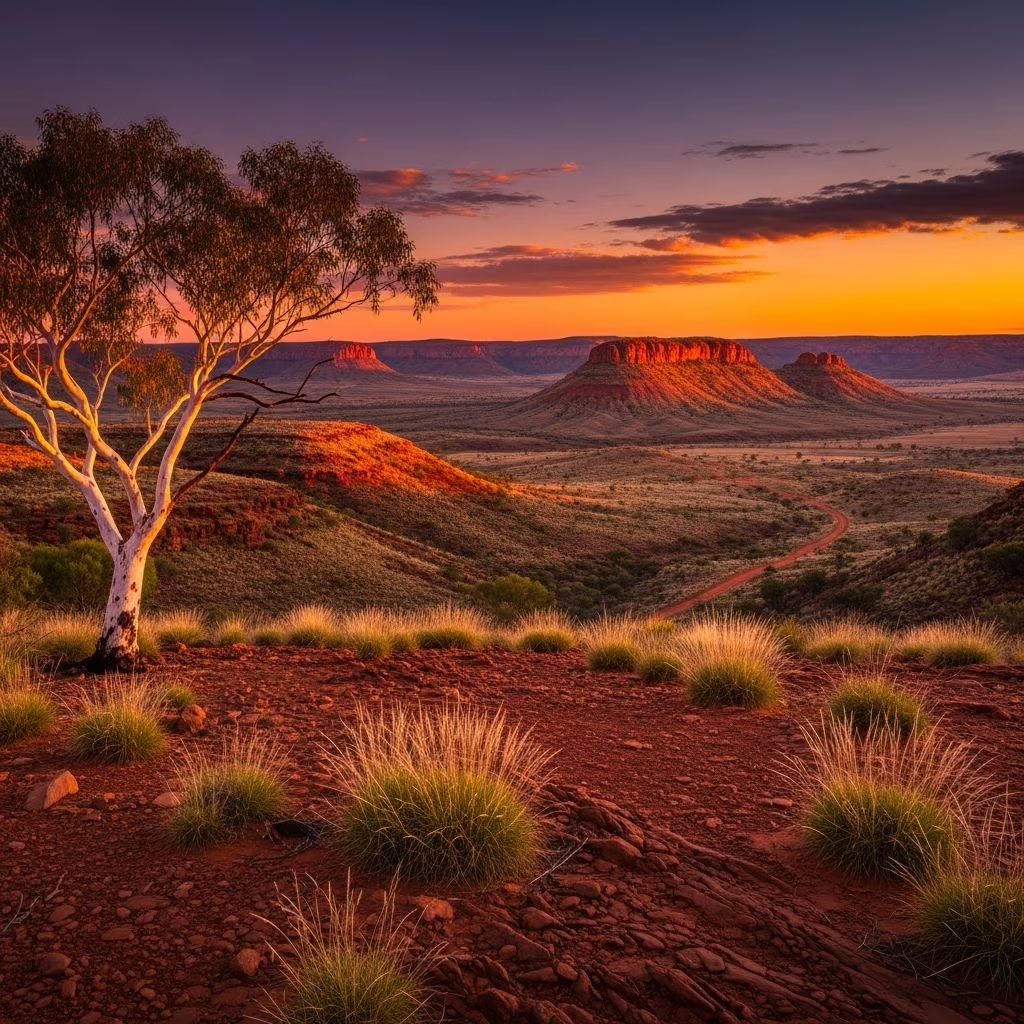
The Australian Outback represents one of the world’s most captivating wilderness areas, spanning millions of square kilometers of arid plains, towering rock formations, and ancient cultural sites. This immense region, often called the Red Centre or simply ‘the Outback,’ offers travelers a profound connection to nature, history, and Indigenous traditions unlike anywhere else on Earth.
Australia’s Outback is defined by its dramatic geology and extreme environments. Dominating the landscape are massive sandstone monoliths like **Uluru** (Ayers Rock), a UNESCO World Heritage site sacred to the Anangu people. Rising 348 meters high, Uluru shifts hues from deep red to fiery orange during sunrise and sunset, creating mesmerizing spectacles.
Nearby, **Kata Tjuta** (the Olgas) features 36 domed rock formations stretching over 10 kilometers. Hiking trails through its valleys provide intimate views of this spiritual landscape, where wind-sculpted rocks tell stories of creation from Aboriginal Dreamtime lore.
Further afield, **Kings Canyon** in Watarrka National Park boasts sheer 100-meter cliffs, lush palm-fringed gorges, and the iconic Rim Walk—a 6-kilometer loop trail offering panoramic vistas. For adrenaline seekers, the canyon’s rugged paths demand fitness and preparation.
| Iconic Natural Site | Location | Key Feature | Best Time to Visit |
|---|---|---|---|
| Uluru | Northern Territory | Sandstone monolith, color-changing sunsets | May–September (dry season) |
| Kata Tjuta | Northern Territory | Domed rock domes, hiking trails | May–September |
| Kings Canyon | Northern Territory | Cliff rim walks, gorges | May–October |
| West MacDonnell Ranges | Near Alice Springs | Gorges, waterholes like Ormiston Gorge | April–October |
The Outback is deeply intertwined with Australia’s First Nations peoples, whose 60,000-year-old cultures thrive here. At Uluru-Kata Tjuta National Park, Anangu guides lead tours sharing Dreamtime stories, bush tucker (native foods), and traditional healing practices. These experiences foster respect for sites closed to climbing since 2019 to honor cultural significance.
In **Alice Springs**, the cultural heart of the Red Centre, visit the Desert Park to explore desert habitats, nocturnal animals, and Aboriginal plant uses. Local galleries showcase dot paintings and artifacts reflecting Tjukurpa (creation law).
Venture to **Kakadu National Park** for ancient rock art galleries depicting hunts, ceremonies, and ancestral beings. Guided walks reveal layers of history spanning millennia.
Adventure defines Outback travel. **4WD road trips** along the Red Centre Way or Gibb River Road traverse dusty tracks, crossing cattle stations and revealing hidden gorges. Rent a sturdy vehicle with high clearance for safety on unsealed roads.
**Camel treks** near Uluru evoke pioneering days, while **helicopter flights** soar over Simpson Desert dunes. For hikers, the **Larapinta Trail**—a 230-kilometer path through the West Macdonnells—challenges with diverse terrain over 12 sections.
Stargazing under unpolluted skies reveals the Southern Cross and Milky Way in vivid clarity. The **Field of Light** installation at Uluru illuminates 50,000 glass spheres at dusk, blending art with desert magic.
Beyond natural icons, Outback towns pulse with character. **Coober Pedy**, the opal capital, features underground homes (dugouts), churches, and hotels dug into soft sandstone to escape 50°C summers. Tour mines and stay in a subterranean B&B for an otherworldly vibe.
**Broken Hill** in New South Wales blends mining heritage with artistic flair, gateway to Mungo National Park’s prehistoric lakes and Silverton’s cinematic desert.
In Queensland, **Winton** celebrates dinosaurs with fossil sites and ‘Waltzing Matilda’ lore, while **Birdsville** hosts legendary horse races amid Channel Country’s flood-prone plains.
**Karijini National Park** in Western Australia dazzles with fern-lined gorges and swimming holes, perfect for canyoneering.
Timing is crucial: Visit May to September for mild days (20–30°C) and cool nights, avoiding summer’s extreme heat and monsoonal rains. Wet season floods isolate areas, stranding vehicles.
Getting There: Fly into Alice Springs or Yulara (Uluru airport). The Ghan luxury train links Darwin, Alice Springs, and Adelaide, traversing stunning scenery.
Accommodation: Ranges from glamping at Longitude 131° with Uluru views to roadhouses and free campsites. Book ahead for parks.
Day 1: Arrive Alice Springs, explore Desert Park.
Day 2–3: Uluru sunrise/sunset, Kata Tjuta hike, cultural tour.
Day 4: Kings Canyon Rim Walk.
Day 5: Return via West Macs gorges.
Start in Alice Springs, loop Red Centre Way to Uluru/Kings Canyon, head to Coober Pedy, then Broken Hill. Extend to Flinders Ranges or Gibb River Road for remote waterfalls.
The Outback demands respect: Carry a satellite phone or EPIRB, as mobile coverage is spotty. Stay hydrated, apply sunscreen, and drive only daylight hours to avoid wildlife. Follow Leave No Trace principles—take rubbish out and stick to tracks to protect fragile ecosystems.
Support Indigenous-owned businesses for authentic experiences and economic empowerment.
Yes, with preparation. Join group tours if inexperienced; towns like Alice Springs offer safe bases.
Sunrise/sunset viewings, base walks, and Anangu-guided tours. Climbing is prohibited.
For major highways, no; for remote tracks, yes. Rentals available in Alice Springs.
May–September; book accommodations early.
Yes, in designated sites. Free camping common but follow biosecurity rules.
