

 Travel Essentials
 Travel Essentials

Explore the best locations for ancient Aboriginal rock art in Australia, including Kakadu, Murujuga, and the Kimberley, with details on history, access, and cultural significance.
 Travel Essentials
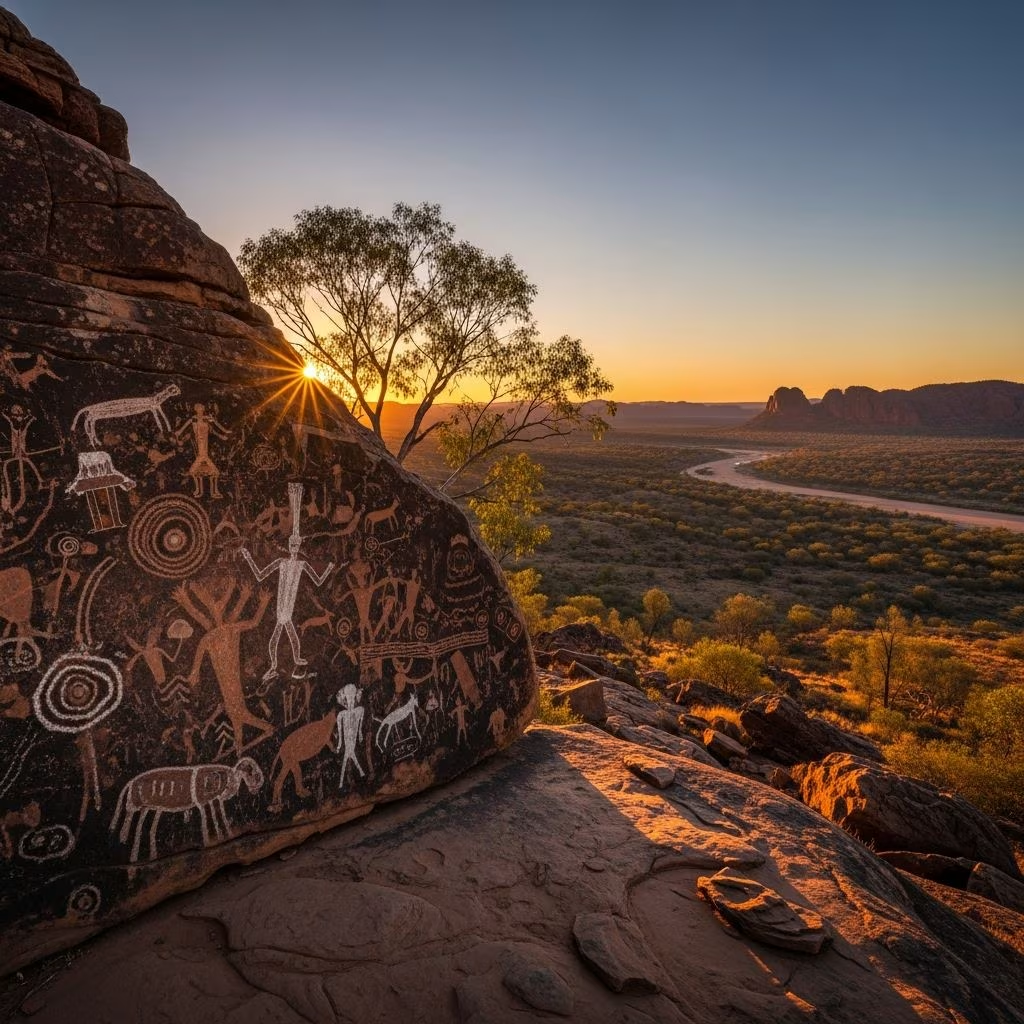
Australia’s landscape holds some of the world’s oldest continuous artistic traditions, with Aboriginal rock art spanning tens of thousands of years. These engravings and paintings offer profound insights into Indigenous knowledge, spirituality, and daily life, created by First Nations peoples using natural pigments and tools on rock shelters and cliffs. From dynamic petroglyphs to intricate X-ray style depictions, these sites are cultural treasures protected as World Heritage areas. This guide highlights premier destinations, their unique features, and practical visiting tips to help you experience this living heritage respectfully.
Aboriginal rock art serves as a visual chronicle of Australia’s First Peoples, documenting environmental changes, hunting techniques, ceremonies, and creation stories. Techniques vary regionally: petroglyphs involve pecking or abrading rock surfaces, while paintings use ochre, charcoal, and binders like blood or resin. Some artworks exceed 30,000 years in age, with tools found dating back nearly 50,000 years. In Kakadu National Park, art up to 20,000 years old illustrates the Bininj/Mungguy connection to Country. Recent scientific advances, such as optically stimulated luminescence dating, have pinpointed pieces like a 17,300-year-old kangaroo in the Kimberley as among the continent’s oldest. These sites are not mere relics but ongoing cultural landscapes where Traditional Owners maintain law and lore.
The Northern Territory boasts some of the densest concentrations of rock art, particularly in Kakadu National Park, a UNESCO World Heritage site comparable in size to Switzerland. Over 5,000 sites feature naturalistic animal figures, X-ray styles showing internal organs, and ancestral beings. Key spots include Nourlangie (Burrungkuy), with its imposing plateau covered in paintings of the Lightning Man—a storm-bringer—and edible animal guides like echidna diagrams. Ubirr’s Main Gallery displays barramundi, goannas, and the extinct Tasmanian tiger, best viewed en route to a sunset Arnhem Land lookout. Ranger-led talks enhance understanding, emphasizing the art’s role in seasonal calendars and spiritual heritage. Access is straightforward via short walks from parking areas, making it ideal for families and novices.
In Western Australia’s Pilbara region, Murujuga Cultural Landscape stands out with over one million petroglyphs on red-rock mounds across the Burrup Peninsula and Dampier Archipelago. Inscribed on the UNESCO World Heritage List in 2025, these etchings depict thylacines, emus, and marine life, reflecting a dynamic coastal environment predating sea-level rise. The site’s industrial proximity underscores preservation challenges, yet it remains a testament to Yaburara and Ngarluma peoples’ enduring presence. Further north, the Kimberley region’s rock art includes the Gwion Gwion (Bradshaw) figures—elegant, elongated human forms possibly 17,000 years old—and a dated 17,300-year-old jumping kangaroo painting. Diverse styles here range from beehive paintings to wandering spirits, created by multiple language groups over millennia. Boat tours and guided hikes provide access to remote galleries.
Carnarvon Gorge National Park in central Queensland rewards adventurers with world-class stenciled art. A 13-hour drive from Brisbane plus a 6km hike leads to the Art Gallery and Cathedral Cave, showcasing sophisticated ochre stencils of boomerangs, nets, and stencils made by blowing pigment through splayed fingers. These fragile works highlight Bidjara and Kaititj peoples’ ingenuity in an oasis amid arid plains. The site’s seclusion preserves its authenticity, with shaded rock overhangs protecting paintings from weathering.
The Grampians (Gariwerd) National Park holds southern Australia’s richest rock art collection, with around 200 sites among its sandstone ridges, 260km northwest of Melbourne. Jardwadjali and Djab Wurrung art includes the rare Bunjil painting—the great ancestor spirit—and a rediscovered Bunyip depiction. Five public sites are accessible via a two-day road trip, featuring engravings and paintings that continue to be discovered. This area’s art emphasizes regional mythology and biodiversity.
Visiting requires cultural sensitivity: always follow Leave No Trace principles, stick to trails, and book guided tours with Traditional Owners for authentic interpretations. Best times vary—dry season (May-October) for the north to avoid monsoons; spring for southern parks. Permits may be needed for remote areas like the Kimberley. Combine sites into itineraries: fly into Darwin for Kakadu, then Broome for Kimberley wandjinas.
| Site | Location | Key Features | Access Difficulty | Age Estimate |
|---|---|---|---|---|
| Murujuga | WA Pilbara | 1M+ petroglyphs, thylacines | Easy, guided | Up to 30,000+ years |
| Kakadu (Ubirr/Nourlangie) | NT | X-ray animals, Lightning Man | Short walks | Up to 20,000 years |
| Kimberley | WA | Gwion Gwion, kangaroo painting | Hikes/boat | 17,300 years |
| Carnarvon Gorge | QLD | Stencils, ochre nets | 6km hike | Thousands of years |
| Grampians/Gariwerd | VIC | Bunjil, Bunyip | Road trip | Ancient |
Rock art faces threats from climate change, tourism, and development. Ochre fades quickly, while petroglyphs erode from wind and salt. Governments and Indigenous groups collaborate on monitoring; Kakadu uses digital archiving. UNESCO status bolsters protection, as at Murujuga. Visitors contribute by reporting vandalism and supporting eco-tourism.
A 17,300-year-old kangaroo painting in the Kimberley holds the record for directly dated art, though sites may be older.
Recommended for context and respect; mandatory in some restricted areas.
Yes, contemporary artists add to sites under Traditional law, keeping traditions alive.
Dry season (June-August) for accessibility and ranger programs.
Typically prohibited to protect cultural sensitivity and wildlife.
Beyond viewing, engage through homestays, bush tucker tours, and art centers. These experiences deepen appreciation for art as part of holistic worldviews. As research evolves, new dating reveals even older works, affirming Australia’s place in global art history. Plan responsibly to honor custodians.
