

 Travel Essentials
 Travel Essentials

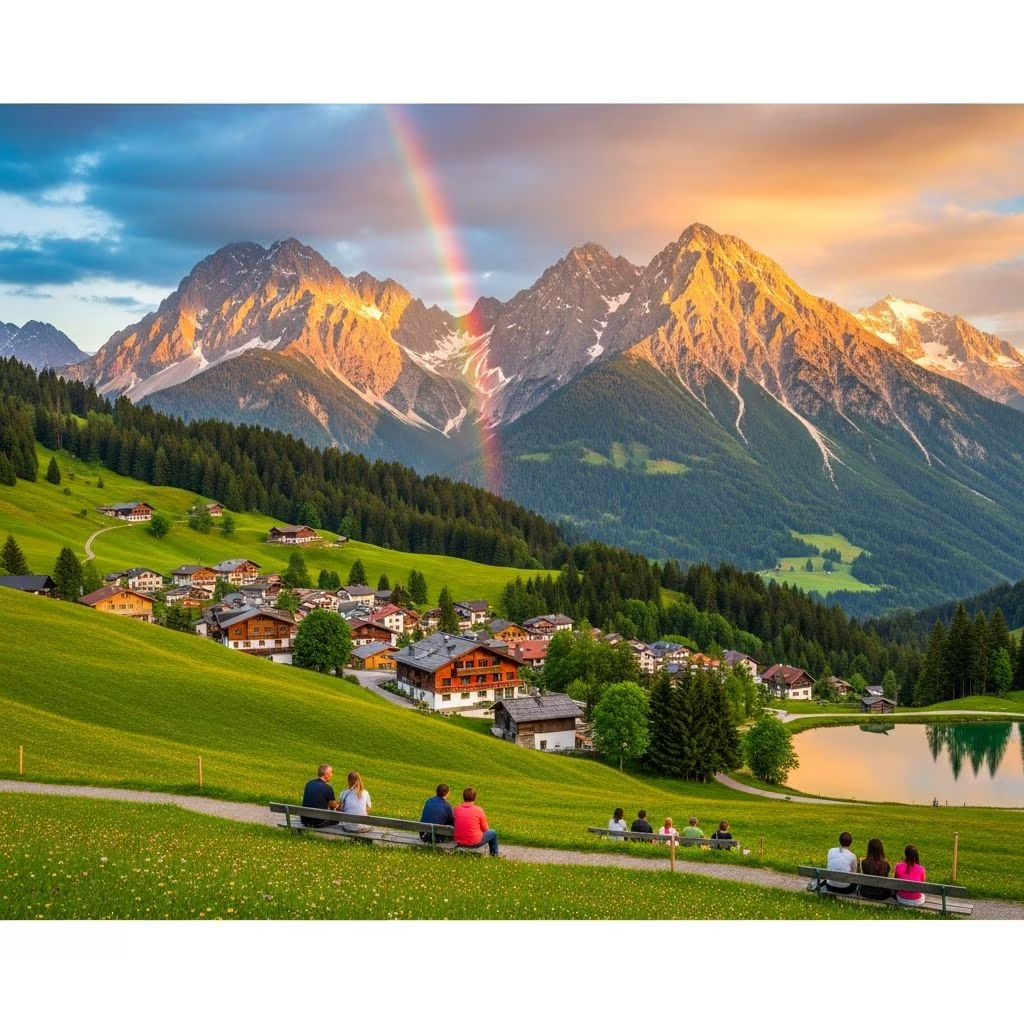
Austria claims the top spot in the latest World Happiness Report, surpassing Nordic nations with its mix of economic stability, top-tier healthcare, safety, and natural beauty.
 Travel Essentials
Austria has surged to the number one position in the most recent World Happiness Report, marking a significant shift from its previous rankings around 11th place. This alpine nation now outpaces traditional leaders like Finland, thanks to a potent combination of social welfare, economic prosperity, and environmental excellence that fosters widespread life satisfaction.
The World Happiness Report, published annually, evaluates countries based on self-reported life satisfaction data gathered from the Gallup World Poll. Key metrics include GDP per capita, social support networks, healthy life expectancy, freedom to make life choices, generosity levels, and perceptions of corruption. Austria’s ascent reflects strengths across these domains, particularly in social support and low corruption perceptions.
Unlike earlier years where Nordic countries dominated due to high trust and equality, Austria’s 2026 top ranking highlights its balanced approach. Researchers note that the report’s emphasis on sustained well-being captures Austria’s resilient systems post-economic challenges, blending urban sophistication with rural tranquility.
Austria’s robust economy underpins its happiness lead. With above-average income levels and low unemployment, citizens enjoy financial security that minimizes poverty. The country’s GDP per capita supports comfortable living standards, enabling investments in leisure and family time.
This economic foundation allows Austrians to prioritize experiences over mere survival, from skiing in the Alps to cultural festivals in Vienna.
Austria boasts one of Europe’s premier healthcare systems, universally accessible and renowned for efficiency. Public facilities provide high-quality care without excessive wait times, while private options cater to specialized needs. Healthy life expectancy remains elevated, directly boosting happiness scores.
| Healthcare Metric | Austria Ranking | Global Comparison |
|---|---|---|
| Access to Care | Top 5 in Europe | Universal coverage |
| Life Expectancy | 82 years | Above world average |
| Preventive Services | High investment | Low chronic disease rates |
Environmental factors like clean air further enhance health outcomes, with strict regulations preserving natural resources essential for physical and mental wellness.
Austria’s education system ranks among the continent’s best, featuring well-funded schools and universities that emphasize practical skills alongside academics. High literacy rates and vocational training programs ensure seamless transitions into the workforce, fostering a sense of purpose and achievement.
From kindergartens promoting outdoor play to universities like the University of Vienna producing Nobel laureates, the system instills lifelong learning. This educational strength correlates strongly with happiness, as informed citizens report higher life control and optimism.
Low crime rates define Austria’s streets, where residents walk safely day or night. A strong legal framework and community policing build trust in institutions, reducing fear and enhancing freedom—core happiness indicators.
This security allows families to thrive, with public spaces like parks and cafes serving as social hubs that strengthen interpersonal connections.
Austria’s commitment to green policies safeguards its 62% forested landscape, ensuring pristine air, water, and biodiversity. Alpine hikes, Danube cruises, and lake swims offer daily rejuvenation, directly linking nature access to elevated mood and health.
Global indices praise Austria’s environmental standards, from renewable energy adoption to waste management. Urban green belts in cities like Salzburg integrate nature into daily life, combating stress and promoting active lifestyles.
Vibrant arts scenes, classical music heritage, and festivals like Salzburg’s provide cultural nourishment. Austria excels in work-life balance, with ample vacation days and family-oriented policies encouraging hobbies and relationships.
Coffee house traditions and gemütlichkeit—a sense of cozy belonging—cultivate communal joy. These intangibles elevate subjective well-being beyond material metrics.
For expats, Austria offers seamless integration via language programs and job opportunities. Tourists flock to its UNESCO sites, thermal spas, and ski resorts, experiencing happiness firsthand. Visitor satisfaction mirrors resident bliss, with repeat trips common.
The blend of modernity and tradition creates an inviting atmosphere, where English proficiency and efficient transport ease exploration.
Despite its lead, Austria faces housing affordability in cities and an aging population straining services. Immigration integration poses hurdles, though policies evolve proactively. These issues underscore that no nation is perfect, yet Austria’s adaptive governance maintains its edge.
Austria exemplifies how integrated policies—economic prudence, social generosity, and ecological stewardship—breed happiness. Nations worldwide can emulate its model, prioritizing holistic metrics over GDP alone.
Superior social support, health, safety, and environment propelled Austria to the top, per the World Happiness Report’s life evaluation metrics.
Austria overtook Finland by excelling in economic stability and nature access, while maintaining comparable social strengths.
Yes, with excellent schools, healthcare, and safe communities ideal for raising children.
Hiking Alps, attending music festivals, and relaxing in thermal baths are popular mood elevators.
Skilled workers find pathways via EU mobility and targeted visas, supported by integration programs.
