

 Travel Essentials
 Travel Essentials

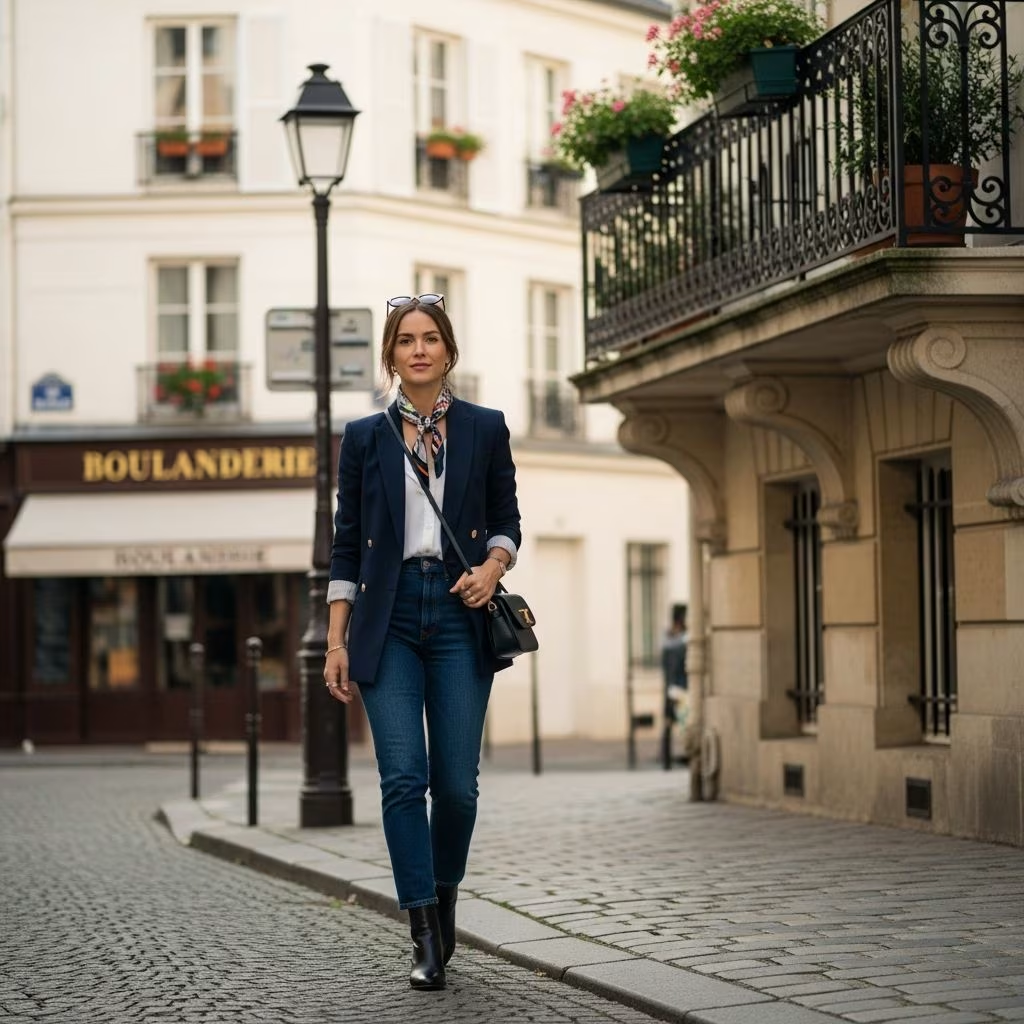
Learn how to embrace authentic French style by understanding key fashion principles and avoiding the excessive trends that define American casual wear.
 Travel Essentials
The romanticized notion of French style has captivated fashion enthusiasts worldwide for decades. However, the reality of how Parisians and other French women actually dress often diverges sharply from popular media portrayals and American interpretations of European elegance. Understanding the core principles of authentic French fashion requires moving beyond stereotypes and recognizing the philosophical differences that underpin how French women approach their wardrobes.
French fashion philosophy emphasizes restraint, quality over quantity, and the art of appearing effortlessly put-together without visible effort. This approach contrasts dramatically with trends toward maximalism, logo-heavy branding, and color-saturated outfits that often characterize contemporary fashion media representations. By examining common misconceptions and learning what genuinely constitutes refined French dressing, anyone can elevate their personal style.
French fashion rests upon a fundamentally different set of values than many Western fashion cultures. At its core, French style prioritizes timelessness over trendiness, favoring pieces that transcend seasonal fluctuations and maintain relevance across multiple years. This philosophy stems from both economic practicality and aesthetic preference—investing in quality basics that can be mixed and matched across numerous outfits represents both a sustainable and sophisticated approach to personal presentation.
The concept of “chic” in French culture cannot be overstated. True chic involves creating visual harmony through restraint and intentionality rather than accumulating numerous eye-catching pieces. A French woman carefully considers how each item in her wardrobe functions as part of a cohesive whole, ensuring that individual pieces complement rather than compete with one another. This deliberate curation distinguishes authentic French style from collections built around fleeting trends or novelty.
One of the most glaring errors in misinterpreting French fashion involves the misuse of color. While French style does incorporate color, the approach differs markedly from American maximalism. Rather than combining multiple bold hues within a single outfit, French women typically employ one statement color alongside neutral anchors. When multiple colors appear together, they harmonize through careful selection of complementary or analogous tones rather than clashing combinations.
The mistakes commonly observed include:
French women understand that restraint in color application creates elegance. A neutral base—typically black, white, cream, navy, or gray—serves as the canvas upon which carefully selected colored pieces play supporting roles. This approach maintains visual sophistication while allowing individual pieces to shine without overwhelming the overall presentation.
Denim represents a particularly instructive case study in the differences between French and American casual wear. Contrary to popular American fashion trends that celebrate various denim washes, styles, and distressing techniques, French women have historically favored dark-wash denim or black twill alternatives. The reasoning behind this preference extends beyond mere aesthetic—dark fabrics create a more elongating silhouette and project a polished appearance compared to lighter washes.
When French women wear denim, they pair it with intentional silhouettes and complementary pieces. The oversized t-shirt or fitted sweater worn with tailored denim creates visual balance through strategic proportioning. Men’s jackets worn over denim add an element of androgynous sophistication that has long characterized French casual elegance. The overall effect communicates effortless style without appearing careless or overly casual.
Additional considerations regarding denim in French style include:
Perhaps no aspect of French fashion generates more misunderstanding than the role of accessories. American interpretations often view accessories as opportunities to add visual interest and personality through bold jewelry, designer logos, and statement pieces. French women, conversely, employ accessories with surgical precision—each piece serves a functional or subtle enhancing purpose rather than dominating the overall presentation.
The antilogism of accessorizing in French style operates as follows: while accessories remain important elements of a well-constructed outfit, they should enhance rather than announce. A classic leather belt, understated jewelry with clean lines, a structured handbag in a neutral tone, and quality shoes form the backbone of French accessorizing. These pieces communicate taste and attention to detail without demanding the viewer’s immediate attention.
Common accessory mistakes to avoid include:
Arguably the most crucial—and most frequently overlooked—aspect of French fashion involves proper fit and proportional balance. French women understand that a well-fitting garment in a simple style outperforms an expensive or trendy piece that fits poorly. This principle explains why French women often appear effortlessly chic despite wearing seemingly basic components.
The concept of proportional dressing involves creating visual balance through strategic use of volume. When wearing a fitted top, French women pair it with roomier bottoms, or vice versa. This prevents the silhouette from appearing either overwhelming or overly revealing. Sleeve length, hemlines, and rise heights receive careful consideration to ensure every piece flatters the wearer’s specific body proportions.
Fit-related mistakes include:
French fashion embraces patterns, but with careful restraint and intentionality. Stripes, particularly Breton stripes, represent a classic French staple. However, the integration of patterns into outfits follows specific guidelines that distinguish sophisticated pattern mixing from chaotic combinations. When multiple patterns appear in a single outfit, they typically share similar color palettes and scale considerations that create harmony rather than visual discord.
Pattern mistakes commonly observed include overwhelming an outfit with multiple large-scale prints, combining patterns of wildly different scales without visual breathing room, or using patterns in ways that compete rather than complement. French women typically employ one pattern as the focal point, supporting it with solid-colored or subtly textured pieces.
Begin by investing in quality neutral basics in black, white, cream, navy, and gray. Gradually add carefully selected pieces in one or two signature colors. Focus on fit and fabric quality over quantity. Replace logo-heavy accessories with classic, understated alternatives. Gradually introduce Breton-striped pieces, classic blazers, and well-fitting dark denim as foundational elements.
French style prioritizes timelessness over trends, but this doesn’t mean complete trend rejection. The difference lies in selection—choosing trends that align with existing aesthetic principles rather than adopting fleeting fashions that conflict with established wardrobe foundations. A trend that emphasizes quality and timelessness may complement French style; one that emphasizes logos and novelty typically contradicts it.
Minimalism serves as the underlying philosophy rather than an extreme aesthetic. French style involves eliminating unnecessary elements while maintaining personality and elegance. This differs from strict minimalism, which eliminates color and pattern entirely. French minimalism specifically removes visual noise and excessive ornamentation while preserving refined, quality pieces.
Fabric quality represents one of the most critical differentiators between French style and other fashion approaches. High-quality fabrics drape better, maintain their appearance longer, and communicate care and consideration. French women prioritize investment pieces in superior materials over trendy garments in lower-quality fabrics, understanding that longevity and visual sophistication depend on material selection.
Transitioning toward authentic French style requires patience and intentionality. Rather than overhauling your entire wardrobe simultaneously, begin by identifying gaps and replacing problematic pieces gradually. Assess your current collection for excessive color combinations, logo-heavy accessories, and poorly fitting items. Remove these systematically, replacing them with timeless basics in neutral colors and quality materials.
Invest in foundational pieces that will serve as anchors for years to come: well-fitting dark jeans, classic white button-down shirts, neutral blazers, and quality leather accessories. These basics provide the infrastructure upon which seasonal variations and personal preferences can be built without sacrificing the core principles of French elegance.
Remember that French style ultimately communicates confidence and self-knowledge. Rather than appearing as though you’ve tried extensively to assemble your outfit, authentic French fashion creates the impression of having thrown together effortless elegance. This paradoxical appearance requires significant intentionality behind the scenes—careful selection, proper fit, quality materials, and restrained accessories working in concert to create the illusion of unstudied sophistication.
