

 Travel Essentials
 Travel Essentials

Explore Mexico’s textile heritage, from Oaxacan weaving to Zapotec rugs, and learn how to buy authentic, artisan-made pieces ethically.
 Travel Essentials
Mexico’s textile tradition spans millennia, representing one of the hemisphere’s most sophisticated and visually stunning craft traditions. The country’s diverse regions each maintain distinct weaving practices, color palettes, and design philosophies that reflect centuries of cultural evolution and indigenous knowledge. From the mountain villages of Oaxaca to the colonial towns of Mexico State, textile artisans continue practicing techniques passed down through generations, creating pieces that tell stories of their communities and ancestral heritage.
Mexican textile production reaches back to ancient times, with archaeological evidence suggesting sophisticated fabric creation as far back as 1400 BCE. Early weavers utilized abundant natural materials found throughout the region, including cotton, yucca, palm fibers, and stinging nettle. These plant-based materials provided the foundation for centuries of textile development before Spanish contact transformed the industry.
The arrival of Spanish conquistadors in the 16th century introduced significant shifts in Mexican textile production. European preferences for finer, wider fabrics prompted the importation of wool and silk, along with revolutionary technologies like foot-pedal looms. By the late 1500s, Mexico had become renowned for wool and silk production, eventually exporting textiles throughout the colonial world. Despite this external influence, indigenous communities adapted these new materials and techniques while maintaining their distinctive aesthetic traditions and symbolic language.
Two Mexican states have emerged as primary custodians of the textile tradition: Oaxaca and Mexico State. Each region specializes in particular garment types and techniques, shaped by local geography, available materials, and cultural practices.
Oaxaca stands as Mexico’s most celebrated textile-producing region, supporting countless artisan communities across its mountain villages and colonial towns. The state’s prominence reflects both its indigenous population’s deep cultural commitment to weaving and the region’s access to quality materials and traditional knowledge systems.
The Oaxaca city center houses The Textile Museum, occupying a former monastery called San Pablo. This institution preserves approximately 4,000 textile pieces, offering visitors comprehensive insight into regional weaving traditions, historical techniques, and the evolution of Oaxacan fiber arts. The museum serves as both educational resource and cultural archive, documenting the techniques and designs that continue shaping contemporary artisan practice.
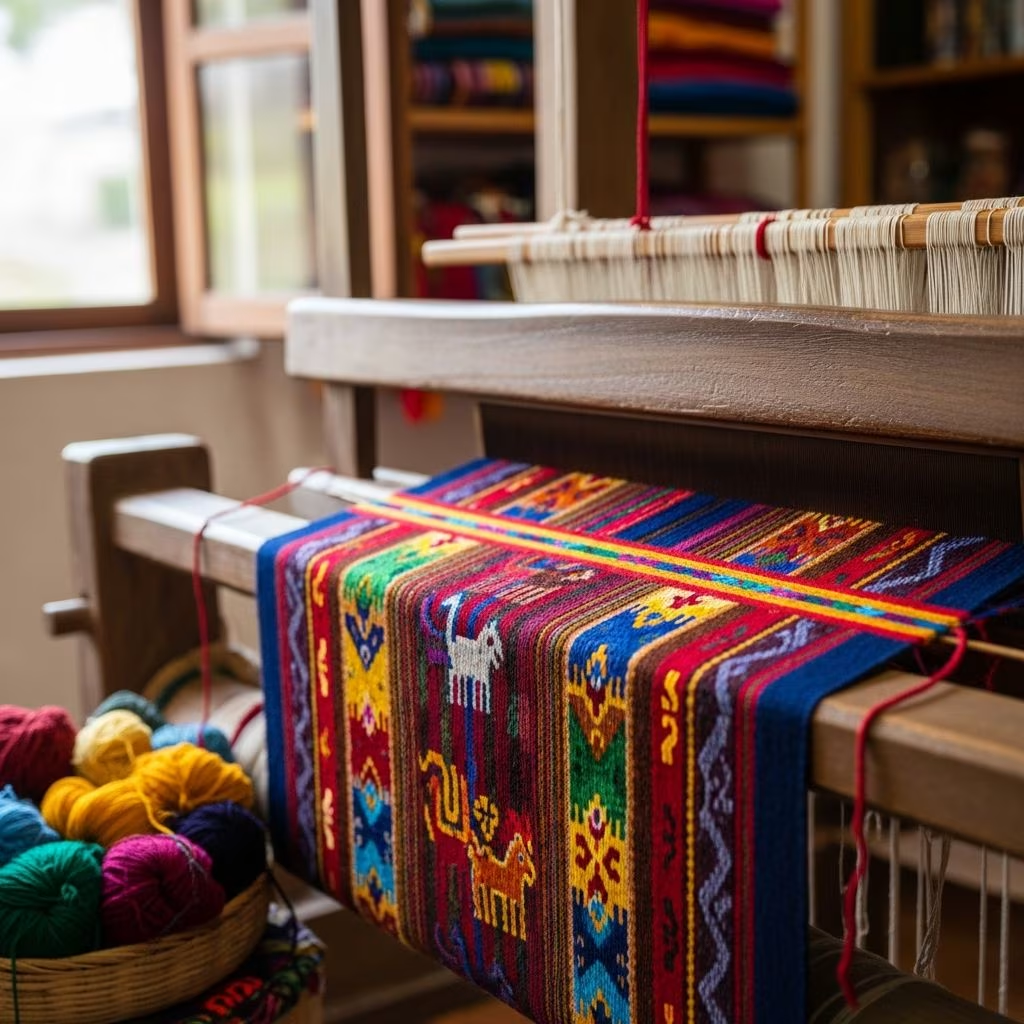
Oaxaca’s weaving centers utilize both backstrap looms—ancient technology operated by hand—and foot-pedal looms for producing diverse textile types. This combination of traditional and adapted technologies allows artisans to create everything from narrow decorative bands to large tapestries and functional household textiles.
Mexico State has maintained dominance in rebozo production since the colonial period, with Tenancingo recognized as the premier center for these traditional shawls. Rebozos represent more than decorative accessories; they function as practical garments, cultural symbols, and indicators of regional identity. The distinctive construction and draping techniques associated with Mexican rebozos emerged from centuries of refinement within these specific communities.
Beyond rebozos, Mexico State produces extensive arrays of textiles for both domestic and commercial purposes. Cities including Jiquipilco, Tejupilco de Hidalgo, Temascaltepec de González, Temoaya, Valle de Bravo, Zacazonapan, Toluca, and Tenancingo collectively manufacture napkins, tablecloths, sheets, kitchen linens, clothing, and decorative rugs. This diversity reflects the region’s entrepreneurial textile sector and the adaptability of traditional techniques to contemporary market demands.
Mexican textile production encompasses numerous distinct garment types, each carrying cultural significance and technical distinctiveness:
Zapotec rug production represents perhaps Mexico’s most internationally recognized textile tradition, combining pre-Hispanic design aesthetics with Spanish colonial loom technology. The practice traces directly to pre-Hispanic times, making it one of the Western Hemisphere’s oldest continuous artistic traditions.
Teotitlán del Valle serves as the primary center for Zapotec rug production. Visiting this small village offers opportunities to observe master weavers operating enormous foot-pedal looms that extend across entire rooms, transforming undyed wool into elaborate patterned textiles. The looms themselves represent technological achievements, incorporating mechanical systems that coordinate hundreds of individual threads.
Zapotec weavers employ natural dyes derived from indigenous plants and insects. Indigo produces deep blues, lime creates yellows, and cochineal bugs yield rich purples and reds—materials ancient Mexican cultures utilized centuries before synthetic dyes existed. This continued reliance on natural dyestuffs maintains ecological connections to the landscape while producing colors of unparalleled depth and complexity.
Neighboring communities also participate in rug production, including Mitla, Santa Ana del Valle, and Tlacocula de Matamoros. These villages maintain distinct design traditions while sharing fundamental production techniques and philosophical commitments to quality craftsmanship.
Puebla state contributes significantly to Mexico’s textile diversity, particularly through the tradition of huipil production. The small village of Cuetzalan hosts an annual Coffee and Huipil festival celebrating this essential garment. The festival brings together local artisans, cultural practitioners, and international visitors interested in understanding the symbolic significance and construction techniques of traditional huipils.
The festival context allows visitors to observe skilled embroiderers completing intricate needlework, learn about the natural dyes that color traditional threads, and understand how specific design elements communicate information about the wearer’s family, community, and social status. This educational approach supports cultural preservation while generating economic opportunities for artisan communities.
Contemporary textile appreciation increasingly emphasizes direct relationships between consumers and artisan producers. Several organizations have developed models that ensure weavers receive fair compensation while maintaining artistic control over their work.
Artesanas Ancestrales Yooita, based in San Juan Colorado, Oaxaca, represents a collective approach where indigenous women weave Mixtec designs using backstrap looms, organic materials, and natural dyes. Direct consumer support strengthens both individual artisans and their broader communities. Similarly, Coyuchi San Juan Colorado focuses on rescuing and preserving wild coyuchi cotton, supporting indigenous women who spin and weave using traditional methods.
Organizations like Fabrica Social operate as intermediary platforms connecting international consumers with indigenous artisans across Mexico. With fourteen years of operational experience, Fabrica Social encourages artistic experimentation while maintaining cultural authenticity, promoting pieces that simultaneously honor tradition and explore contemporary design possibilities.
Additional respected vendors include La Monarca, operating from San Pedro Cholula, Puebla, with international shipping capabilities. These enterprises collaborate with artisans throughout Mexico, offering diverse products from leather huaraches to pre-Hispanic-inspired garments, functioning as cultural ambassadors while providing sustainable income for textile producers.
Authentic Mexican textiles prioritize natural, sustainable materials reflecting centuries-old ecological relationships. High-quality artisan producers continue utilizing organic cotton, wild fibers, and naturally derived dyes. This commitment to sustainable practices differentiates authentic artisan textiles from industrial production, creating products with environmental integrity and superior durability.
Nakawe Trading exemplifies this commitment, producing 100% handmade textiles from natural, sustainable fibers through partnerships with Oaxaca-based artisans. Such enterprises emphasize both environmental responsibility and economic justice, ensuring that textile production benefits the communities maintaining these traditions.
Travelers and collectors seeking authentic Mexican textiles should prioritize direct relationships with artisan communities and vendors demonstrating genuine commitment to fair compensation and cultural preservation. Consider these strategic approaches:
| Approach | Advantages | Best Locations |
|---|---|---|
| Direct artisan workshops | Observe production, verify authenticity, maximum artist compensation | Teotitlán del Valle, San Juan Colorado, Tenancingo |
| Community organizations | Support collective enterprises, ethical production verified | Cuetzalan, Puebla and Oaxaca villages |
| Reputable cooperatives | Curated selection, production standards, artist partnerships | Regional cultural centers and established shops |
| Museums and cultural centers | Educational context, verified quality, cultural mission | Oaxaca Textile Museum and regional institutions |
Authentic textiles demonstrate hand-execution evidence including slightly irregular patterns, natural dye color variations, and hand-tied knots. Request information about the artisan, production location, and materials. Reputable vendors provide documentation and artist attribution. Examine weave consistency and fiber quality, which distinguish handmade from industrial production.
Quality handwoven textiles require weeks to months of skilled labor. Authentic pieces typically range from moderate to premium pricing, reflecting material costs, artist expertise, and production time. Significantly underpriced textiles likely involve industrial production or inadequate artisan compensation. Direct vendor transparency about pricing justification indicates ethical business practices.
Peak textile production aligns with tourist seasons and holiday demand. Visiting during off-season months may provide quieter workshop access and increased artisan availability for conversation. Festival seasons like Cuetzalan’s annual celebration combine optimal purchasing with educational and cultural immersion.
Hand wash using cool water and gentle soap, avoiding chlorine and synthetic chemicals that damage natural fibers and dyes. Air dry away from direct sunlight to preserve natural color depth. Store textiles in breathable containers, protecting from moisture and pests. Proper care extends these textiles across generations.
Mexican textile traditions represent more than aesthetic achievements; they embody indigenous knowledge systems, environmental practices, and cultural continuity spanning centuries. By purchasing from authentic artisan sources, visitors and collectors directly support communities maintaining these irreplaceable traditions while acquiring textiles of unmatched quality, authenticity, and cultural significance. Each handwoven piece carries stories of its maker, region, and the sophisticated traditions from which it emerged—making the purchase itself an act of cultural preservation and international solidarity.
