

 Travel Essentials
 Travel Essentials

Explore the Autism Nature Trail at Letchworth State Park, the first U.S. path designed for autism spectrum needs, featuring sensory stations for all abilities in a stunning natural setting.
 Travel Essentials
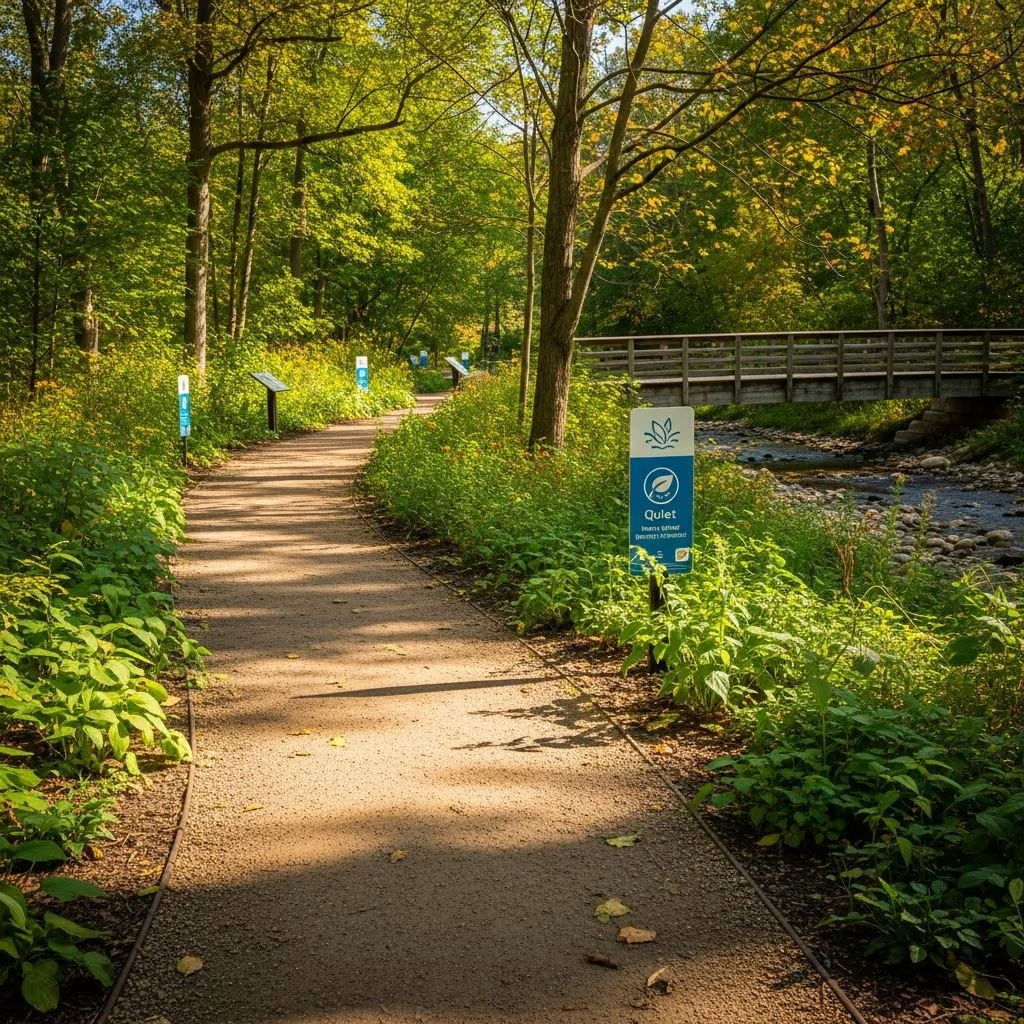
The Autism Nature Trail (ANT) at Letchworth State Park stands as a pioneering initiative in outdoor recreation, offering a dedicated space for individuals with autism spectrum disorder (ASD) and varying abilities to connect with nature. This one-mile looped path, surfaced with stone dust for accessibility, integrates eight distinct sensory stations that stimulate different senses using natural elements, fostering skill development and joyful exploration for visitors of all ages.
Conceived over six years ago, the ANT emerged from a collaboration between dedicated volunteers, autism experts, and New York State Parks. The project addressed a critical gap: while nature provides therapeutic benefits, traditional trails often overwhelm those with sensory processing challenges common in ASD. By designing stations that engage auditory, visual, tactile, vestibular, and proprioceptive senses, the trail creates controlled, supportive experiences.
Funding came primarily from private donations, raising $3 million toward a $3.7 million goal to sustain programming. Construction began in winter, leading to the official opening on October 1, 2021. New York State Parks Commissioner Erik Kulleseid highlighted its role in providing ‘direct and accepting engagement with nature’ for lifelong benefits.
Nestled near the Humphrey Nature Center at Letchworth’s Castile entrance, the ANT is ADA-compliant, suitable for wheelchairs, walkers, and strollers. Its flat stone dust path ensures smooth navigation, with 38 stone markers shaped like vertical ants guiding visitors. Limited cell service encourages disconnection from digital distractions, enhancing immersion.
Each station targets specific sensory inputs, using wood, stone, plants, and other natural materials to build skills like coordination, creativity, and emotional regulation. Here’s a breakdown:
| Station Name | Sensory Focus | Activities & Features |
|---|---|---|
| Sensory Station | Tactile & Olfactory | Platforms with leaves, moss, fossils, acorns, animal fur for touching and smelling. |
| Sunshine Slope | Vestibular & Proprioceptive | Gentle maze, cocoons, gliders, ‘Alone Zone’ for quiet reflection. |
| Music Circle | Auditory | Pine grove with nature-inspired instruments like wooden chimes and drums. |
| Meadow Run & Climb | Gross Motor | Paths for running, jumping, balancing on beams, obstacle course. |
| Curiosity Corner / Design Zone | Visual & Cognitive | Manipulate trail-found materials into patterns and structures. |
| Playful Path | Tactile Variety | Twisting paths with gravel, log rounds, sand for foot sensation. |
| Reflection Knoll / Caroline’s Nook | Calm & Social | Spaced seating under canopy for quiet time or small group interaction. |
| Celebration Station | Expressive | Area for drawing, writing reflections on the trail experience. |
These stations progress from quiet engagement to active play, culminating in self-expression, ensuring a balanced journey.
For children with ASD, the trail mitigates sensory overload while promoting integration. Natural tools encourage fine and gross motor skills, social interaction in low-pressure settings, and emotional outlets like the Alone Zone for overwhelm. Families report increased confidence and nature appreciation, with features like cuddle swings supporting vestibular input vital for many.
The ANT welcomes all visitors, making it ideal for siblings, caregivers, and able-bodied explorers. Its inclusivity extends to those with other developmental differences, turning Letchworth—a park famed for gorges and waterfalls—into a model for universal design.
Getting There: Enter via Castile at 6787 County Rd 38, Castile, NY 14427, off NYS Route 39/19A. Park at Humphrey Nature Center lot; trail entrance is midway up the sidewalk.
Best Times: Year-round, but autumn leaf-peeping enhances visuals. Early mornings avoid crowds.
What to Bring:
Tips: Follow ant markers; allow 1-2 hours. Download maps from official sites for station details.
The ANT sets a precedent, inspiring similar projects nationwide. By proving private-public partnerships can fund innovative accessibility, it advocates for neurodiversity in parks. Statistics show 1 in 36 U.S. children have ASD; such spaces address their underrepresentation in outdoor activities. (Note: ASD prevalence from CDC data, cross-referenced with trail context.)
New York State Parks’ involvement underscores commitment to diverse visitors, blending conservation with equity. Volunteer-led maintenance ensures longevity, with ongoing programming planned.
Yes, entry follows Letchworth State Park vehicle fees: $10 NY residents, $14 non-residents per car. No additional trail fee.
The main path is ADA-compliant and wheelchair-friendly; some stations like Meadow Run have optional rugged elements.
Designed for all ages, with scalable activities from toddlers to adults.
Check Humphrey Nature Center for programs; self-guided is standard.
Stations target sensory processing, reducing overload and building skills via nature-based therapy.
Yes, weather permitting; stone dust holds up well, but check park alerts.
Letchworth, dubbed the ‘Grand Canyon of the East,’ amplifies the ANT with its 14,000 acres of forests, Genesee River gorges, and wildlife. Post-trail, explore nearby trails or the Nature Center’s exhibits, creating full-day outings.
This integration positions the ANT not as an isolate but part of immersive park ecology, benefiting mental health through biophilic design—proven to lower stress in neurodiverse individuals.
