

 Travel Essentials
 Travel Essentials

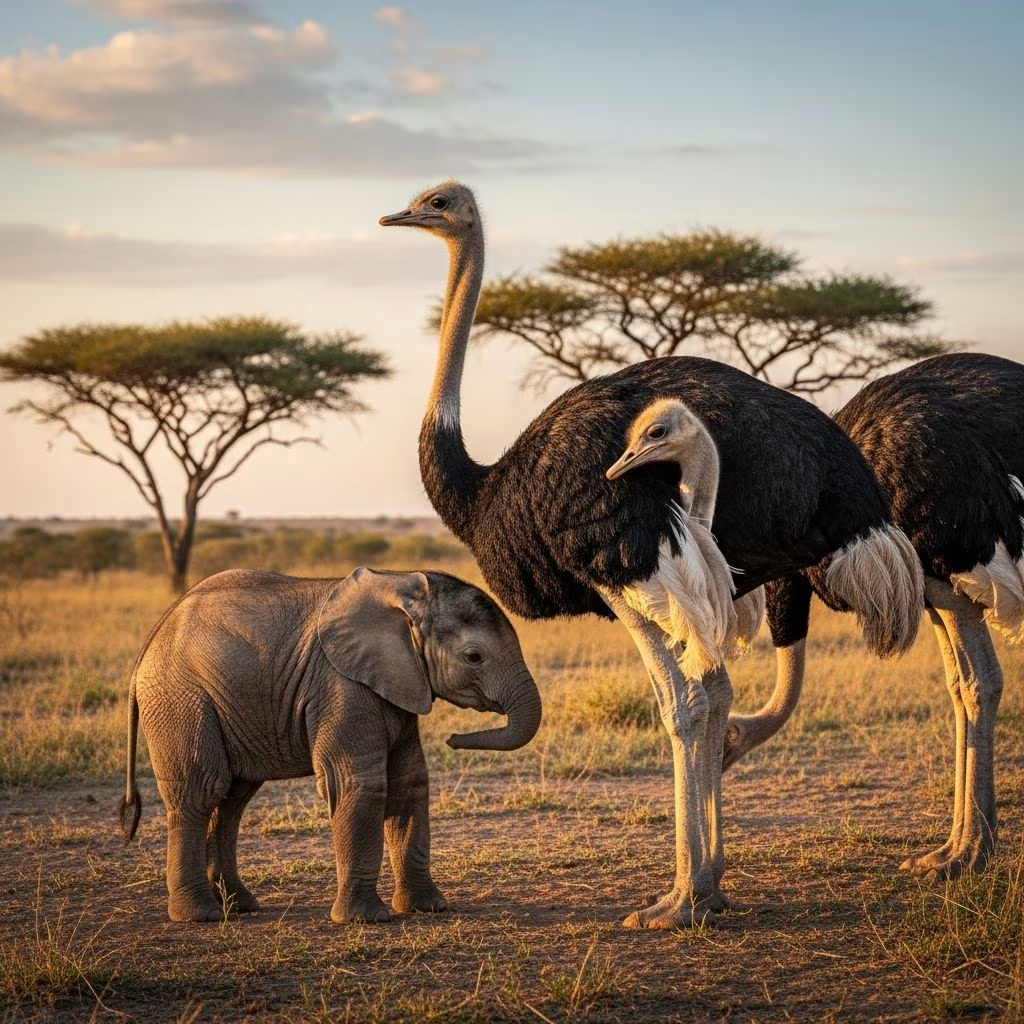
A baby elephant orphaned and rescued in Kenya forms an extraordinary bond with two ostrich chicks at a wildlife nursery, showcasing interspecies friendship and conservation efforts.
 Travel Essentials
In the vast savannas of Kenya, where survival hinges on swift action and compassion, a dramatic rescue unfolded involving a tiny elephant calf and two fluffy ostrich chicks. This event not only saved three young lives but also sparked an endearing interspecies friendship that captured global attention. At the heart of this story is the David Sheldrick Wildlife Trust, a beacon of hope for orphaned wildlife.
Picture a sweltering day in Kenya’s rugged terrain. A baby elephant, barely weaned and separated from its mother, wanders alone, vulnerable to predators and dehydration. Such scenarios are tragically common in regions plagued by poaching, drought, and human-wildlife conflict. The calf, later named Jotto, was spotted in dire straits, prompting an urgent call to rescuers.
Elephant calves like Jotto rely heavily on their mothers for milk, protection, and guidance for years. Without this support, their survival rate plummets. The David Sheldrick Wildlife Trust, renowned for its expertise, mobilized immediately. Their teams, experienced in high-stakes operations, assessed the situation: the calf was weak, dehydrated, and at risk from hyenas and lions prowling nearby.
What started as a single rescue mission quickly expanded. While preparing to extract the elephant, rescuers discovered two young ostrich chicks nearby, also orphaned and struggling. Ostriches, the world’s largest birds, face their own threats—egg poaching, habitat loss, and predation leave chicks defenseless without parents.
The operation required precision. A helicopter was deployed for an airlift, a method perfected by the Trust for remote areas inaccessible by road. The elephant was sedated, secured in a sling, and lifted skyward. The ostrich chicks, named Pea and another companion, were gently crated and transported alongside. This ‘bumper rescue’—as dubbed by observers—highlighted the Trust’s commitment to all vulnerable species.
Upon landing at the Nairobi nursery, the trio underwent medical checks. Jotto received rehydration fluids and nutrient-rich milk formula tailored for elephants. The chicks were provided with warmth, food, and a safe enclosure. Recovery was swift; within days, they were interacting playfully.
In the controlled yet nurturing environment of the Trust’s nursery, something magical happened. Jotto, still adjusting to orphanage, sought comfort from the ostrich chicks. Videos and photos emerged showing the elephant nuzzling the birds, trunk gently stroking their feathers, while the chicks pecked curiously at Jotto’s ears.
This wasn’t mere coincidence. Orphaned animals often form attachments to fill emotional voids. The ostriches, with their long necks and lively strides, became Jotto’s playmates. They shared space in the enclosure, with Jotto shielding the chicks from dust storms and the birds keeping the elephant entertained during feeds. Such bonds demonstrate animals’ capacity for empathy across species barriers.
| Animal | Primary Threats | Rehabilitation Focus | Trust Success Rate |
|---|---|---|---|
| Baby Elephant | Poaching, separation | Milk formula, socialization | 80%+ survival |
| Ostrich Chicks | Predation, habitat loss | Heat lamps, insects/seeds | High fledging rate |
Founded by Daphne Sheldrick in memory of her husband David, the Trust has rescued over 2,000 elephants since 1977. Their Nairobi nursery is a state-of-the-art facility with stockades, pools, and veterinary care. Airlifts, funded by donations, are crucial—over 100 orphans are airlifted annually.
The Trust’s ethos emphasizes minimal human imprinting, ensuring animals retain wild instincts. Jotto’s story exemplifies this: his friendship with the ostriches aids natural socialization.
Kenya’s ecosystems face mounting pressures. Elephant populations have rebounded somewhat due to anti-poaching laws, but calves remain at risk. Ostriches, though numerous, suffer from bushmeat trade and farming expansion. Rescues like this strain resources—each airlift costs thousands, relying on public support.
Climate change exacerbates issues, with droughts forcing animals into risky areas. The Trust collaborates with Kenya Wildlife Service, using GPS collars and community education to prevent orphans.
Jotto, Pea, and their feathered friend went viral, amassing millions of views. Social media clips of the elephant ‘hugging’ the ostrich symbolized resilience and unity in conservation. Donations surged, funding more missions.
Today, Jotto thrives, nearing release stages. The ostriches have fledged, but their time with him left indelible memories. This tale reminds us: in conservation, compassion bridges divides between species—and humans.
Stories like this underscore broader imperatives:
By learning from Jotto’s journey, we reinforce wildlife corridors and anti-trafficking efforts.
They were airlifted from danger in Kenya to the David Sheldrick Wildlife Trust nursery, where they recovered and bonded.
Orphaned animals seek comfort and stimulation, leading to natural attachments in shared enclosures.
Donate to trusted orgs, avoid ivory products, and support eco-tourism.
The Trust reports over 80% survival and successful wild reintegration.
Less so than elephants, but habitat threats make them necessary.
