

 Travel Essentials
 Travel Essentials

Explore China's Silk Road from Xi'an to Kashgar: top routes, must-see sites like Mogao Caves and Jiayuguan Fort, practical tips for budget travel, visas, and safety.
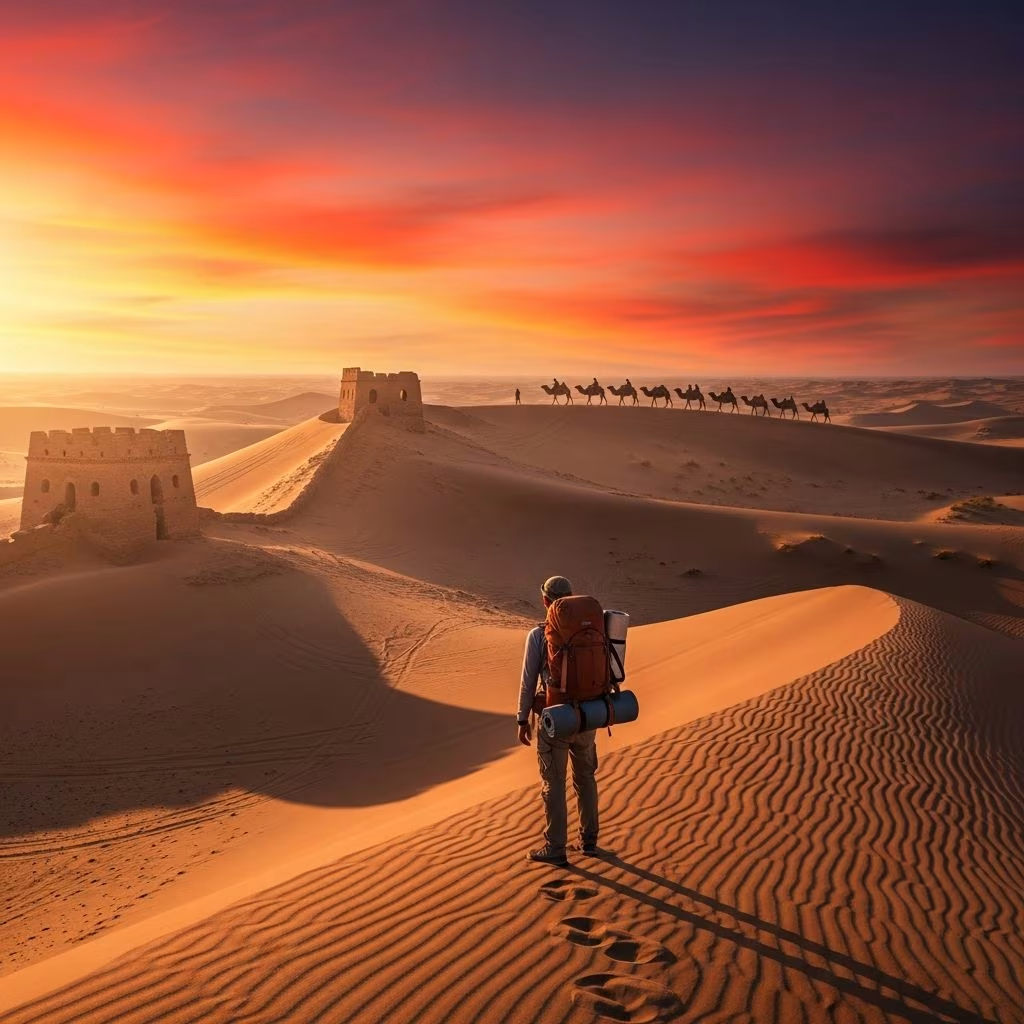 Travel Essentials
China’s portion of the ancient Silk Road stretches over 4,000 kilometers from the bustling eastern city of Xi’an westward through arid deserts and towering mountain passes to the oasis town of Kashgar in Xinjiang. This iconic trade route, once vital for exchanging silk, spices, and ideas between East and West, now beckons modern backpackers with its blend of UNESCO World Heritage sites, ethnic diversity, and raw natural beauty. Traversing it offers a deep dive into China’s multicultural heritage, from Han Chinese heartlands to Uyghur-dominated frontiers.
The core path follows the Hexi Corridor, a narrow fertile strip flanked by the Qilian Mountains and the relentless Gobi Desert. Key stops include Lanzhou for its riverfront vibes, Zhangye’s rainbow-hued mountains, the imposing Jiayuguan Fortress, Dunhuang’s spiritual Mogao Caves, Turpan’s scorching basin, and finally Kashgar’s labyrinthine old town. This journey typically spans 10-21 days for backpackers, blending overnight trains, buses, and shared taxis for an authentic, low-cost experience.
Backpackers often start in Xi’an, home to the Terracotta Army—a vast underground necropolis guarding Emperor Qin Shi Huang’s tomb since 210 BCE. From there, the route pushes west, crossing vast expanses where camel caravans once trudged. Expect scorching days above 40°C in summer and biting winds below freezing in winter, demanding versatile gear and strategic timing.
Tailor your trip based on time and ambition. Here’s a breakdown of popular durations:
| Duration | Key Stops | Highlights | Transport Mode |
|---|---|---|---|
| 7 Days | Lanzhou – Zhangye – Jiayuguan – Dunhuang | Hexi Corridor essence: Danxia landforms, Great Wall end, desert dunes | Overnight trains, buses |
| 10-14 Days | Xi’an – Lanzhou – Dunhuang – Turpan – Urumqi – Kashgar | Terracotta Warriors, Mogao Caves, Flaming Mountains, Id Kah Mosque | High-speed rail + sleeper trains |
| 15+ Days | Extend to Kuqa, Aksu, or side trips to Qinghai Lake | Taklamakan Desert edge, Kizil Caves, Tibetan monasteries | Shared taxis, domestic flights |
For a classic overland push, hop off at Irkeshtam Pass toward Kyrgyzstan, linking to broader Central Asian adventures. Budget 50-100 CNY daily for dorms, street eats like hand-pulled noodles (lamian) and roast lamb skewers (yangrou chuanr), excluding big-ticket entries.
Visas: Most nationalities need a tourist (L) visa; apply via Chinese embassies. Xinjiang requires no extra permits for standard routes, but check for updates. 30-60 day validity suits most trips.
Getting Around: High-speed trains link Xi’an-Lanzhou (~6h); sleeper trains cover longer hauls like Lanzhou-Dunhuang (12h). In Xinjiang, opt for buses or Didi rideshares. Domestic flights shave time from Urumqi-Kashgar (~1.5h, ~500 CNY).
Costs Breakdown (per day, USD equivalent):
ATMs are plentiful in cities; carry cash for rural spots. Apps like Alipay/WeChat simplify payments.
Prime time: May-June or September-October for mild weather (15-25°C). Summers scorch deserts; winters bury passes in snow. Altitude hits 3,000m+ near mountains—acclimatize gradually.
Packing List:
Water: Boil or filter tap; bottled is safe but plastic-heavy.
China’s Silk Road pulses with Uyghur, Kazakh, Hui, and Tibetan influences. Join homestays in Kashgar for plov (rice pilaf) feasts or Turpan grape harvests. Respect mosque customs: remove shoes, cover shoulders/knees. Bargain at bazaars—start at half price. Learn basics: ‘Salam aleikum’ (hello), ‘Rahmat’ (thanks).
Challenges: Language barriers (use Pleco app/translation), occasional checkpoints in Xinjiang. Solo female travelers report safety but advise modest dress and group taxis at night.
Standard vaccines; altitude sickness rare but monitor. Air pollution dips west; masks optional. Stick to busy eateries to dodge tummy troubles.
For eco-travel: Avoid single-use plastics, support local guides, trek responsibly. Xinjiang’s fragility—desertification threatens oases—means minimal trace camping.
Yes, with standard precautions. Tourist areas are policed; monitor travel advisories for Xinjiang.
Minimal—apps bridge gaps; English signs grow in cities.
Hostels in Xi’an/Dunhuang (~50 CNY); guesthouses in Kashgar (~100 CNY).
Absolutely—Kashgar to Osh via Irkeshtam Pass; visa runs needed.
Yes, via Trip.com; peak seasons sell out.
Venture to Kuqa’s Kizil Caves (oldest in China) or Hotan for jade/carpet crafts. Loop via Qinghai Lake’s turquoise expanses or Xiahe’s Labrang Monastery, Tibetan Buddhism’s hub. Combine with Beijing-Shanghai rail for full China immersion.
This route isn’t just travel—it’s time travel, connecting millennia of human endeavor across unforgiving terrain.
