

 Travel Essentials
 Travel Essentials

Discover what backpacking really means, from budget travel to wilderness treks, plus essential gear, tips, and benefits for every adventurer.
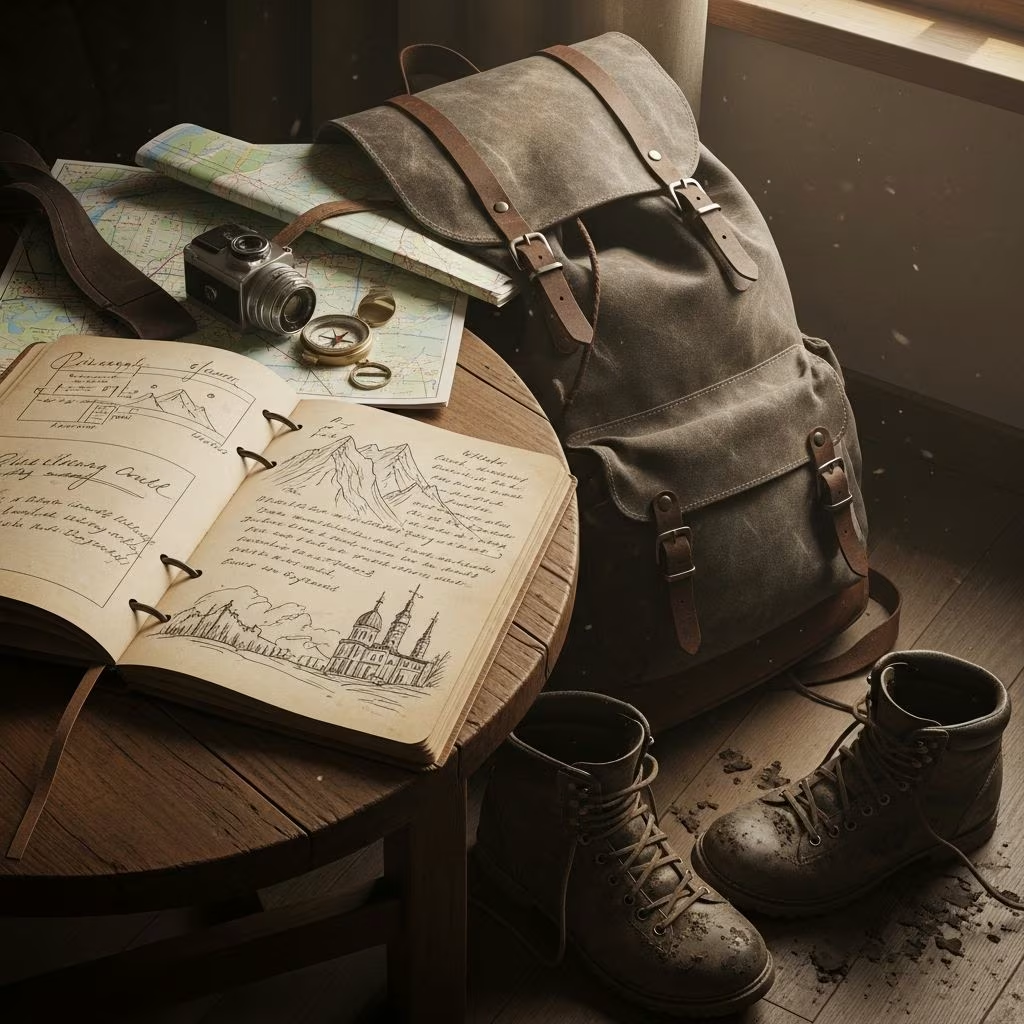 Travel Essentials
Backpacking represents a versatile form of exploration that emphasizes self-reliance, minimalism, and immersion in new environments, whether through urban journeys or wilderness trails. This approach to adventure has transformed from a survival necessity into a celebrated lifestyle choice for diverse travelers seeking authenticity and growth.
At its core, backpacking splits into two primary realms: travel-oriented journeys across cities and countries, and outdoor expeditions involving hikes and campsites. Travel backpacking focuses on extended, budget-conscious trips where individuals navigate public transport, hostels, and local eateries while carrying all possessions in a single pack. In contrast, outdoor backpacking demands physical endurance, as adventurers haul tents, food, and gear through remote landscapes for multi-day treks.
These distinctions allow flexibility; a single trip might blend both, such as hopping buses between trailheads before pitching a tent under the stars. This adaptability makes backpacking accessible to various fitness levels and budgets, evolving beyond its rigid origins.
Backpacking’s origins trace back centuries, initially tied to necessity—nomads and migrants carried essentials on their backs for survival during migrations or explorations. By the early 20th century, the term solidified in the U.S., describing hikers toting packs for wilderness outings. The 1960s counterculture boom popularized it as recreational travel, aligning with youth quests for freedom amid societal shifts.
Today, it has mainstream appeal. What began as a fringe activity for the resource-poor now draws gap-year students, retirees, digital nomads, and professionals on sabbaticals. Technology aids this shift: apps for ride-sharing, booking hostels, and navigation reduce barriers, while social media inspires narratives of spontaneous discovery.
Backpacking hinges on several hallmarks that set it apart from conventional tourism:
These elements cultivate resilience, as backpackers adapt to discomforts like delayed trains or rainy campsites, building character through improvisation.
Success demands thoughtful packing. For travel backpacking, prioritize lightweight clothing, a quick-dry towel, universal adapter, and secure money belt. Outdoor enthusiasts need durable boots, a freestanding tent, sleeping pad, water filter, and multi-tool.
| Category | Travel Backpacking | Outdoor Backpacking |
|---|---|---|
| Backpack | 40-50L, anti-theft features | 50-70L, padded hip belt |
| Shelter | Light sleeping bag liner | 2-3 person tent |
| Clothing | Merino wool layers, rain jacket | Thermal base layers, gaiters |
| Navigation | Offline maps app | Compass, topographic maps |
| Kitchen | Reusable bottle | Stove, fuel, pot |
A packing list should weigh under 10-15% of body weight to avoid strain. Test gear on short trips to refine choices.
No single demographic dominates. While often linked to 18-30-year-olds on gap years, backpacking spans ages and backgrounds. Families test it with kid-sized packs; seniors rediscover vitality on gentle trails; remote workers blend gigs with jaunts.
Motivations vary: youth chase adventure post-education, mid-lifers escape routines, retirees savor unhurried paces. Digital nomads fuse work and wanderlust, leveraging laptops in cafes or co-working spaces. This inclusivity democratizes exploration.
Backpacking yields profound rewards. Financially, it slashes costs—hostels at $10-30/night versus hotels at $100+. Environmentally, minimalism curbs footprints by favoring trains over flights where possible.
Psychologically, it sharpens problem-solving amid uncertainties, boosts confidence through solo navigation, and enhances empathy via cultural exchanges. Physically, hikes build stamina; socially, global friendships endure. Many report transformative growth, reevaluating priorities post-trip.
Not without hurdles: fatigue from lugging packs, isolation in remote spots, or budget overruns from emergencies. Theft risks in crowds demand vigilance—use locks and avoid flashing valuables.
Mitigate with preparation: secure travel insurance covering evacuations, learn basic phrases, monitor health with vaccinations. For outdoors, check weather, inform contacts of itineraries, and follow Leave No Trace principles to preserve nature.
Budget havens like Southeast Asia (Thailand, Vietnam) offer cheap visas, vibrant hostels, and island hops. Europe’s interrail passes enable multi-country trains; South America’s Inca Trail combines culture and hikes.
For wilderness: U.S. national parks like Yellowstone demand permits; New Zealand’s Great Walks provide huts. Urban explorers thrive in Tokyo’s capsule hotels or Berlin’s alternative scenes.
Begin small: a weekend hike or regional bus loop builds skills. Research visas, costs, and safety via official advisories. Pack once, unpack mindset—embrace flexibility as the true companion.
Document via journals or photos, not just social posts, to internalize lessons. Ultimately, backpacking redefines freedom: not destination-bound, but journey-driven.
No, it suits all ages. Retirees and families participate, adapting pace and gear to needs.
$20-50 in developing regions, $50-100 elsewhere, covering food, lodging, transport.
Hiking often means day trips; backpacking involves overnight gear for multi-day immersion.
No, start with guided tours or short trips to gain confidence.
Yes, with precautions like sharing locations and sticking to populated areas initially.
