

 Travel Essentials
 Travel Essentials

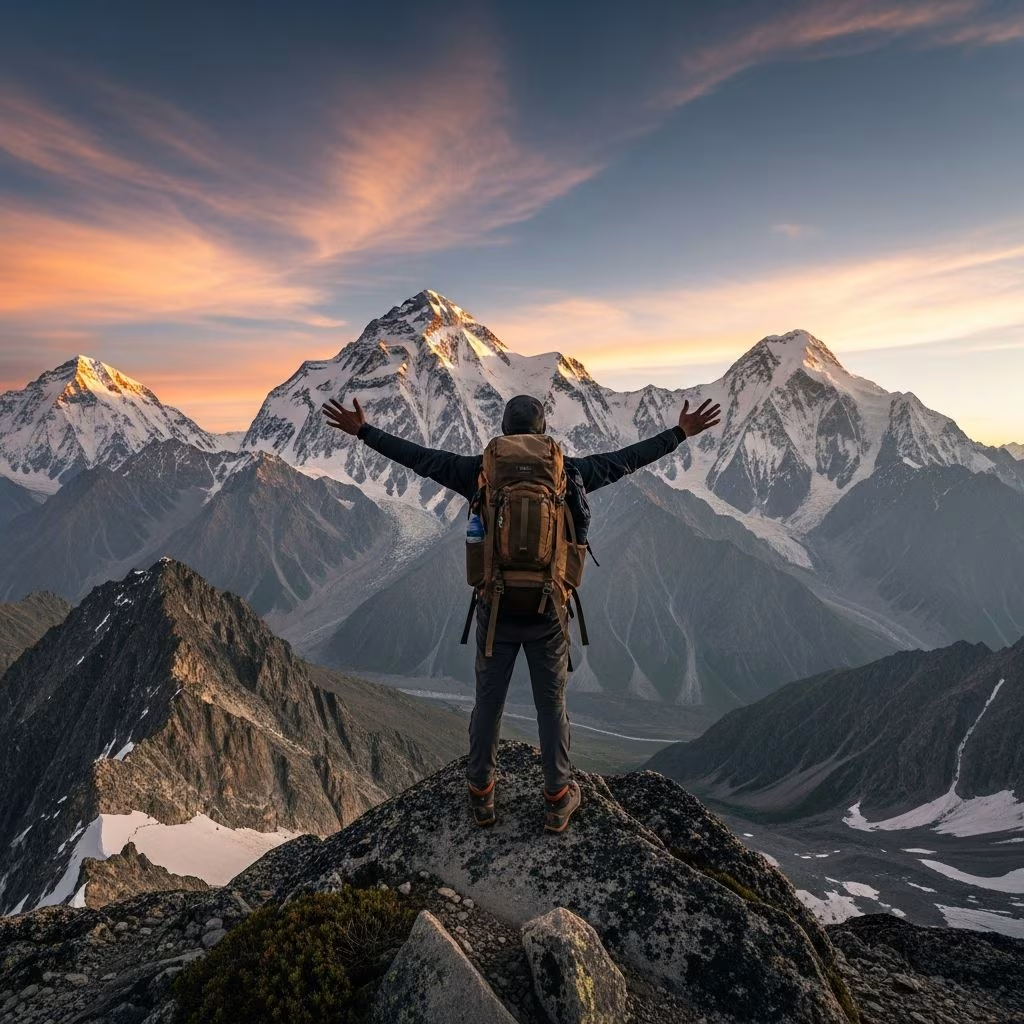
Pakistan leads global backpacking rankings with stunning mountain scenery, affordable travel, legendary highways, and welcoming communities for adventure seekers.
 Travel Essentials
In recent years, Pakistan has emerged as the world’s premier destination for adventurous backpackers, ranking first among the planet’s most exciting travel destinations for independent travelers. This recognition reflects a dramatic shift in global travel perceptions, as Pakistan transforms its international image through its unparalleled combination of natural wonders, authentic cultural experiences, and traveler-friendly infrastructure. The country’s ascension to the top of backpacking rankings represents not merely a tourism statistic, but a testament to the transformative power of adventure travel and cross-cultural discovery.
The British Backpacker Society, an authoritative voice in adventure travel circles, recently compiled comprehensive rankings of the world’s twenty best backpacking destinations. In this prestigious evaluation, Pakistan secured the coveted first position, surpassing established favorites such as Russia, India, Turkey, and Kyrgyzstan. This ranking acknowledges Pakistan’s exceptional appeal to travelers seeking authentic experiences beyond conventional tourist circuits.
The factors contributing to Pakistan’s top ranking are multifaceted. The country combines dramatically varied landscapes—from some of Earth’s highest mountains to remote desert plateaus—with remarkably affordable travel costs. Additionally, Pakistan offers what many consider the world’s most spectacular overland journey: the legendary Karakoram Highway. When these elements merge with genuinely warm local hospitality and increasingly robust backpacker infrastructure, the result is an irresistible destination for adventurers seeking transformative travel experiences.
Pakistan possesses some of the planet’s most breathtaking mountain terrain, hosting five of the world’s fourteen peaks exceeding 8,000 meters elevation. The country’s northern regions, collectively known as Gilgit-Baltistan, contain landscapes so spectacular that many backpackers consider them among Earth’s most beautiful territories.
The geographic diversity creates endless exploration possibilities. Within a relatively compact area, travelers encounter pristine alpine valleys, turquoise glacial lakes, ancient fortress ruins, and remote desert ecosystems. This geographic diversity means that backpackers with varying interests—whether mountaineers, cultural enthusiasts, photography devotees, or simply nature lovers—discover compelling reasons to visit.
The mountain regions present extraordinary trekking opportunities. Skardu functions as a crucial hub for high-altitude expeditions and serves as the gateway to K2, the world’s second-highest mountain. From Skardu’s base, backpackers access numerous trekking routes, each offering distinctive challenges and rewards. The surrounding landscape includes the Sarfaranga Desert—one of the world’s highest desert plateaus—alongside crystalline lakes and Buddhist archaeological sites.
Hunza Valley represents perhaps Pakistan’s most iconic destination for mountain lovers. This northern region combines dramatic Himalayan peaks with accessible hiking trails, allowing backpackers of varying fitness levels to experience mountain landscapes. The valley’s residents maintain a reputation for exceptional longevity and wellness, adding cultural significance to the region’s natural attractions.
The Karakoram Highway (KKH) stretches approximately 1,300 kilometers, connecting Pakistan to western China through arguably the world’s most dramatic mountain pass route. Rather than serving merely as transportation infrastructure, the highway functions as a destination unto itself, offering backpackers an unforgettable overland experience through some of Earth’s most remote and beautiful terrain.
Traveling the KKH means traversing narrow valleys carved by glacial rivers, passing through mountain settlements that seem suspended between sky and earth, and encountering indigenous communities maintaining centuries-old traditions. The highway provides access to numerous stopping points, each revealing different aspects of Pakistan’s natural and cultural heritage.
Karimabad, the valley’s principal settlement, occupies a breathtaking location nestled within steep mountain terrain. The town serves as an ideal base for exploring Hunza’s attractions. The 700-year-old Baltit Fort crowns a hillside above Karimabad, offering panoramic valley views while providing insight into the region’s historical importance. Nearby Altit Fort offers similar historical significance with distinct architectural features.
Eagle’s Nest, a 360-degree viewing platform accessible via hiking trails from Karimabad, reveals dramatic vistas of surrounding peaks including Rakaposhi, Diran, and the distinctively shaped Lady Finger mountain. Visitors report that sunset from Eagle’s Nest creates truly unforgettable photographic opportunities and meditative moments.
Attabad Lake represents an unexpected triumph emerging from geological tragedy. In 2010, a catastrophic landslide blocked the Hunza River, gradually creating this startling turquoise-blue lake. Today, the lake’s otherworldly coloration and mountain setting make it one of Pakistan’s most photographed locations. Backpackers can arrange boating excursions, kayaking adventures, or simple contemplative time along the shoreline.
Skardu functions as Gilgit-Baltistan’s primary tourism hub, providing access to high-altitude trekking, mountaineering expeditions, and archaeological sites. The surrounding region includes ancient Buddhist rock carvings, majestic mountain fortresses, and crystalline alpine lakes. Backpackers with limited trekking experience find accessible day hikes in surrounding valleys, while experienced mountaineers launch expeditions toward major peaks.
Pakistan’s major cities offer essential transition points and cultural immersion opportunities. Islamabad, the capital, provides a controlled introduction to Pakistan’s contemporary urban culture. The city features the magnificent Faisal Mosque, one of the Islamic world’s largest places of worship, alongside the Margalla Hills offering accessible hiking trails mere kilometers from downtown. The historic Saidpur Village preserves pre-Partition architecture and Hindu temples, adding cultural depth to urban exploration.
Lahore, Pakistan’s cultural capital, presents a more chaotic but richly authentic urban experience. The city’s bazaars, historical monuments, and vibrant street food scenes provide sensory immersion into Pakistani daily life.
A crucial factor elevating Pakistan’s backpacking appeal involves remarkably low travel costs. Accommodation, meals, and local transportation remain significantly less expensive than comparable destinations across South Asia. Backpackers report comfortable guesthouse stays for under $20 daily, while restaurant meals cost $2-5.
This affordability allows extended travel periods on modest budgets, enabling deeper cultural immersion and more comprehensive geographic exploration than higher-cost destinations permit. Budget-conscious backpackers can undertake month-long adventures spending less than they would for two-week trips elsewhere.
Beyond physical landscapes, Pakistan’s greatest appeal emerges through genuine human connections. Pakistani communities, particularly in remote regions, maintain warm hospitality traditions toward visitors. Backpackers frequently describe encounters marked by unexpected kindness, spontaneous invitations to family meals, and genuine curiosity about their home countries.
This authentic cultural exchange distinguishes Pakistan from more heavily touristed destinations. Rather than encountering tourism-jaded populations, backpackers interact with communities for whom international visitors remain noteworthy, creating reciprocal cultural learning opportunities.
Pakistan’s backpacking infrastructure has expanded dramatically in recent years. Dedicated hostels catering specifically to international travelers now operate in major destinations, providing budget-friendly accommodation alongside communal spaces facilitating traveler connections. The Couchsurfing community has grown substantially, offering alternative accommodation options and local connections.
Transportation networks have improved considerably, with reliable bus services connecting major towns and private jeep operators offering specialized mountain transportation. Mobile connectivity has expanded even into remote regions, allowing backpackers to stay connected while maintaining access to modern communications technology.
Pakistan caters to diverse adventure preferences through varied activities:
| Destination | Primary Appeal | Best Season | Duration |
|---|---|---|---|
| Hunza Valley | Mountain scenery, trekking, cultural immersion | May-September | 5-7 days |
| Skardu | High-altitude adventures, K2 gateway | June-September | 4-6 days |
| Karakoram Highway | Epic overland journey, mountain passes | May-October | 3-5 days |
| Islamabad | Urban culture, Margalla Hills hiking | October-April | 2-3 days |
| Gilgit | Transportation hub, gateway to Baltistan | May-September | 1-2 days |
Pakistan’s extreme geography creates significant seasonal variations. Summer months (May-September) offer optimal conditions for northern mountain exploration, with high mountain passes remaining accessible and weather patterns relatively stable. Winter transforms mountain regions into snow-covered landscapes, making traditional trekking impossible but creating different photographic opportunities.
Spring (March-May) brings blooming alpine flowers, moderate temperatures, and exceptional visibility. Autumn (September-November) offers crisp air, clear skies, and comfortable trekking conditions without summer crowds.
Pakistan has experienced remarkable security improvements, particularly in tourist areas. While certain regions warrant caution, primary backpacking destinations maintain robust security infrastructure and welcoming local populations. Travelers should monitor current government travel advisories and follow local guidance regarding safe travel practices.
May through September provides optimal conditions for northern mountain exploration. October through November and March through April offer excellent weather with fewer crowds. Winter months suit lower-altitude destinations but restrict high-altitude access.
Budget backpackers report daily expenses of $15-30, including accommodation, meals, and local transportation. This affordability allows extended travel periods compared to neighboring countries.
Sturdy hiking boots, layered clothing for temperature variations, sun protection, water purification tablets, and comprehensive travel insurance represent critical items. Respect for local customs requires modest clothing in conservative areas.
Bus services connect major towns reliably, while private jeep operators specialize in mountain transportation. The Karakoram Highway provides dramatic but somewhat challenging travel corridors.
Pakistan’s emergence as the world’s premier backpacking destination reflects broader transformations within global adventure travel. The country presents an extraordinary combination of natural majesty, cultural authenticity, economic accessibility, and genuine hospitality that proves irresistible to travelers seeking transformative experiences beyond conventional tourism.
For backpackers contemplating their next adventure, Pakistan offers an opportunity to traverse landscapes as dramatic as any on Earth while connecting meaningfully with communities maintaining distinctive cultural traditions. The mountain valleys, ancient fortresses, and legendary highways await those brave enough to venture beyond predetermined tourist routes, discovering a destination that fundamentally rewires assumptions about travel, adventure, and human connection.
