

 Travel Essentials
 Travel Essentials

Uncover the Baltic Trails: 2,000+ km routes through forests, bogs, and beaches in Estonia, Latvia, and Lithuania. Plan your multi-country hike with tips on routes, gear, and highlights.
 Travel Essentials
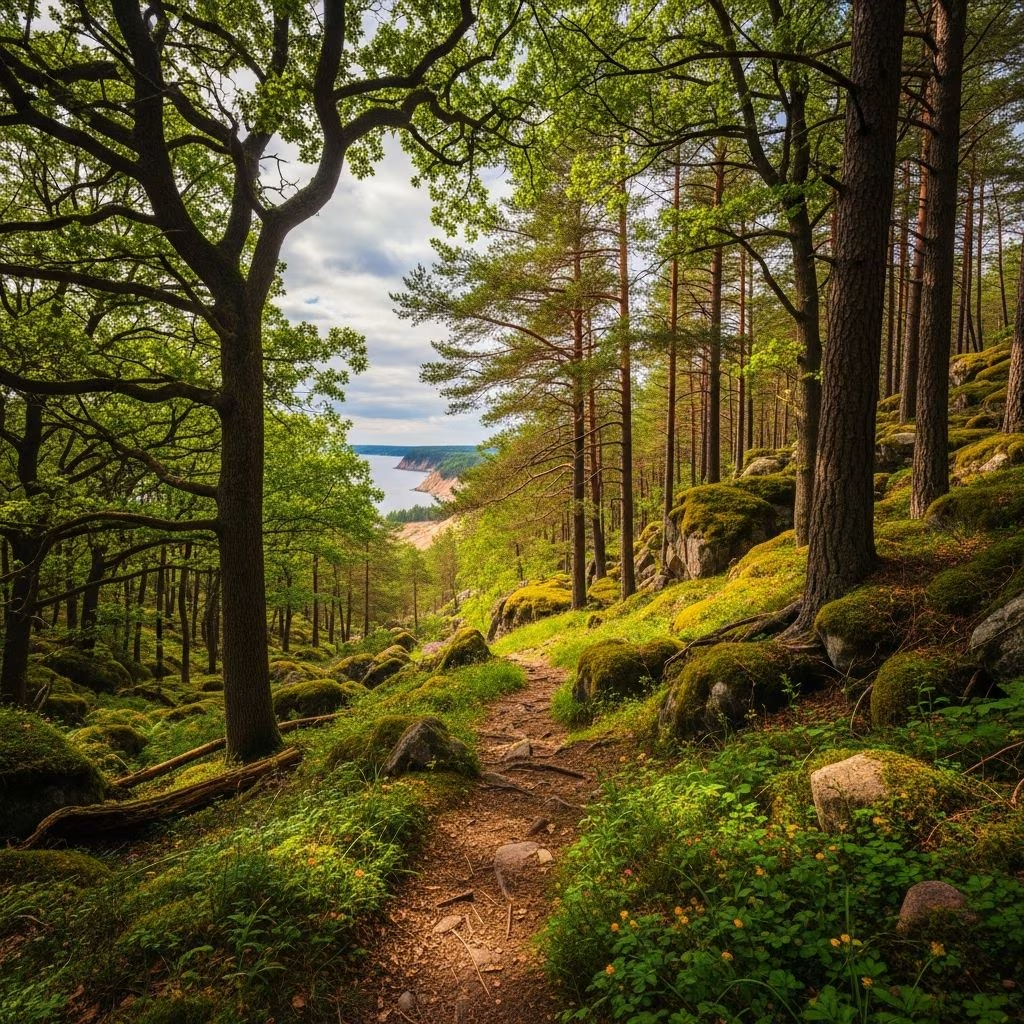
The Baltic region offers some of Europe’s most rewarding long-distance hiking experiences, with trails that wind through dense forests, expansive bogs, and rugged coastlines across Lithuania, Latvia, and Estonia. These paths challenge hikers with their sheer length rather than steep ascents, providing a serene escape into nature’s quiet beauty.
Two primary trails dominate the Baltic hiking scene: the extensive Forest Trail and the scenic Coastal Trail. The Forest Trail spans approximately 2141 km, starting near the Polish border in Lazdijai, Lithuania, and concluding in Tallinn, Estonia. It traverses the heart of the region’s woodlands, passing through national parks and rural landscapes. In contrast, the Coastal Trail covers about 1419-1420 km along the Baltic Sea, beginning in Nida on Lithuania’s Curonian Spit and ending in Tallinn. Both can be hiked in either direction, offering flexibility for planners.
These routes form part of larger European paths: the Forest Trail aligns with E11, while the Coastal Trail connects to E9. They are segmented into daily stages of 20-25 km, making them accessible for steady walkers averaging 20 km per day. Completing the full Forest Trail might take 100-114 days, with breakdowns of 36-38 days in Lithuania (747 km), 31-38 days in Latvia (674 km), and 35-38 days in Estonia (720 km).
The Baltic Trails showcase diverse terrains unique to northeastern Europe. Forests dominate, covering over half of Latvia and Estonia, and a third of Lithuania, featuring birch and pine stands typical of the region. Bogs and wetlands add intrigue, especially in Estonia and Latvia, where prehistoric formations demand specialized footwear for traversal.
The Forest Trail’s highest point, Suur Munamägi in Estonia at 318 meters, provides a modest summit with panoramic views, while coastal sections feature sandy dunes and sea lagoons. Cultural gems include UNESCO-listed old towns in Riga and Tallinn, plus Orthodox churches and castles like Alatskivi.
Summer (June-August) is prime time for Baltic hiking, with long daylight hours (up to 18 hours) and mild temperatures of 15-25°C. However, this peak season brings crowds at coastal accommodations, so early booking is essential. Spring (May) and early fall (September) offer fewer hikers, vibrant foliage, and berry-picking opportunities, though cooler nights (5-10°C) and potential rain require preparation.
Winter hikes are possible but demanding due to snow and ice on flat terrains. Mosquitoes peak in wetlands during July-August, necessitating repellents. Always check forecasts, as Baltic weather shifts quickly from sun to showers.
Flat but lengthy trails emphasize endurance gear over mountaineering equipment. Prioritize lightweight, waterproof items for bogs and rain.
| Category | Recommended Items | Why Essential |
|---|---|---|
| Footwear | Waterproof hiking boots, gaiters, bog shoes or sandals for dunes | Handles mud, bogs, sand; prevents blisters on long days |
| Clothing | Layered thermals, rain jacket/pants, quick-dry layers, hat/gloves | Variable weather; mosquito protection |
| Backpack & Sleep | 40-60L pack, lightweight tent or hammock, sleeping bag (0-10°C rating) | Wild camping options; remote sections |
| Navigation & Safety | GPS app (e.g., via baltictrails.eu), maps, headlamp, first-aid kit, power bank | Marked trails but remote areas; bear spray optional |
| Misc | Water filter, stove, insect repellent, trekking poles | Purify streams; stability on uneven ground |
Total pack weight should stay under 12-15 kg for comfort over multi-week treks.
Break the trails into stages using official resources like baltictrails.eu, which detail accommodations, transport, and services every 20-25 km. Public buses and trains connect major points (e.g., Vilnius, Riga, Tallinn), ideal for section hiking or resupply.
For full traverses, budget €30-50/day for food and stays (hostels, farm guesthouses, campsites). Visas are unnecessary for EU/Schengen visitors; others check 90-day rules. Health insurance covering evacuations is advised.
Options range from wild camping in designated areas to B&Bs, hostels, and agritourism farms. Coastal spots fill fast in summer, but forests offer more solitude. Many stages end near villages with saunas—a Baltic tradition for post-hike recovery.
Local cuisine features rye bread, smoked fish, potatoes, and wild berries. Resupply via markets or foraged mushrooms/berries (with guides). Water from streams needs filtering.
Beyond trails, detours enrich the journey:
Follow Leave No Trace: stick to paths to protect bogs, pack out waste. Respect private land and Old Believer customs. Trails promote sustainability through national park fees supporting conservation.
Moderate: flat terrain, but long distances test endurance. No technical skills needed.
Yes, with signage, apps, and websites. Some remote sections require GPS.
Sections yes, but full trails suit experienced long-distance hikers. Join groups for safety.
Low risk: moose, birds; ticks/mosquitoes main issues. No large predators.
€3,000-5,000 including gear, food, transport (100+ days).
Visit baltictrails.eu for itineraries, GPX downloads, and updates. Local tourism boards in each country offer stage maps. Train in endurance hikes beforehand to savor this cross-border odyssey.
