

 Travel Essentials
 Travel Essentials

Explore the Banda Islands, once the world's sole source of nutmeg, now a remote haven of volcanic beauty, rich history, and world-class diving amid Indonesia's Maluku archipelago.
 Travel Essentials
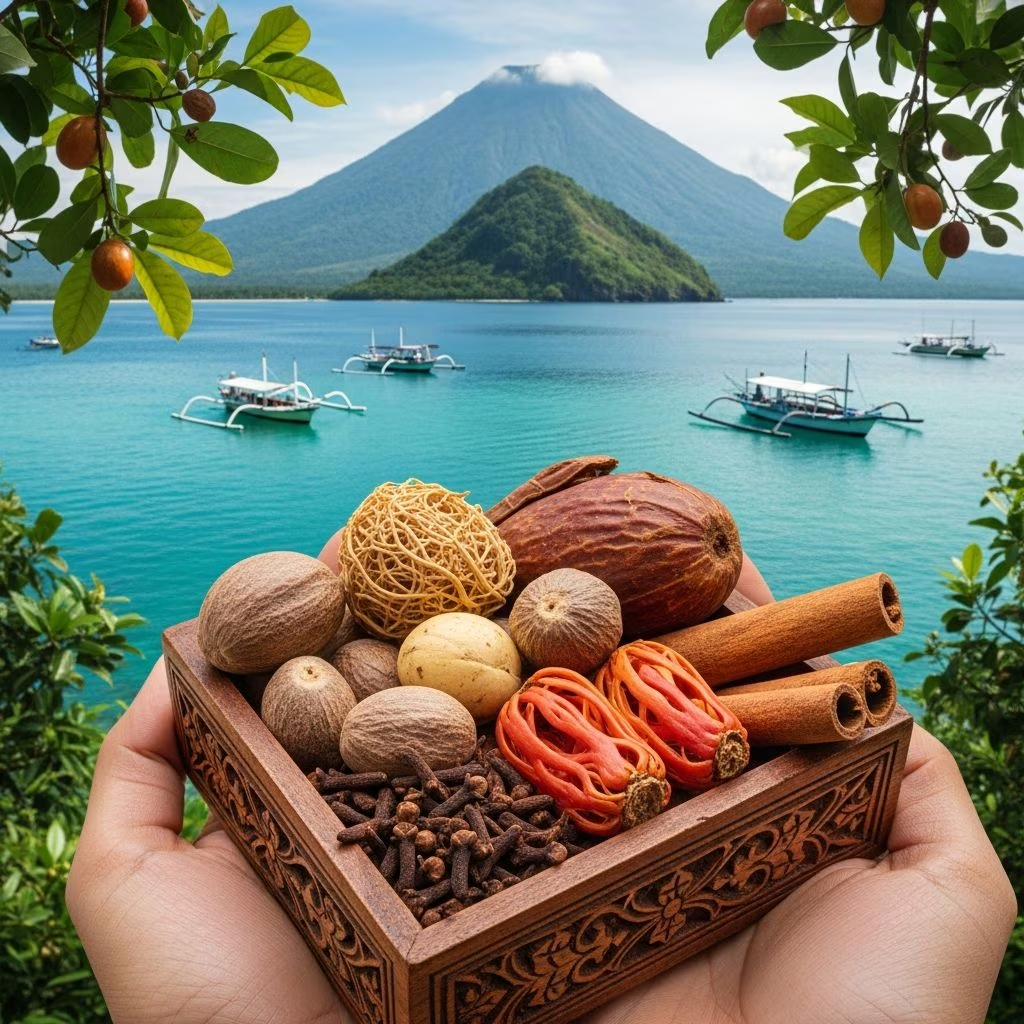
The Banda Islands, a remote cluster in Indonesia’s Maluku province, hold a storied past as the exclusive home of nutmeg, the spice that ignited centuries of global trade and conflict. Nestled in the vast Banda Sea, these volcanic gems transitioned from a battleground of empires to a serene escape for divers and history enthusiasts.
Nutmeg, derived from the seed of the Myristica fragrans tree, and its lacy outer covering mace, flourished uniquely in the Banda Islands, making them the epicenter of the ancient spice trade. For Europeans, this aromatic kernel was prized not just for flavor but for its reputed medicinal powers, from warding off plagues to easing digestive woes. Arab, Indian, and Southeast Asian traders had long navigated these waters, integrating the Bandanese into vast regional networks long before Western ships arrived.
The islands’ isolation—tiny specks amid endless ocean—only amplified their mystique. Nutmeg trees thrived in the fertile volcanic soil, yielding a commodity so valuable it outpriced gold in European markets. This scarcity fueled intense rivalries among Portuguese, English, and Dutch explorers in the 16th and 17th centuries.
The arrival of Europeans transformed the Bandas from independent trading outposts into pawns in imperial games. The Bandanese operated an oligarchic system led by wealthy orang kaya (rich men), fiercely guarding their monopoly through savvy diplomacy and navigation skills. However, the Dutch East India Company (VOC), under Governor-General Jan Pieterszoon Coen, sought total control.
In 1621, Coen’s forces launched a brutal campaign, massacring elites, enslaving survivors, and decimating the population from around 15,000 to a fraction, forcing many to flee into hills or sea. This event, recognized as genocide, obliterated Bandanese civilization to enforce Dutch monopoly, importing Java slaves to work plantations. Forts like Belgica and Nassau on Banda Neira stand as stark reminders of this violent era.
Pulau Run’s tale epitomizes colonial absurdity: traded by Britain to the Dutch for Manhattan in 1667, it symbolizes how spices reshaped world maps. These forts, now crumbling relics, whisper of a time when control of a few trees dictated global economics.
The Banda archipelago comprises about 10 main islands, each offering distinct landscapes and histories. Here’s a breakdown:
These islands blend volcanic drama—active Gunung Api looms dramatically—with lush interiors, creating a hiker’s and photographer’s dream.
Beneath the waves, the Bandas rival the world’s best dive spots. Pristine coral reefs host manta rays, sharks, turtles, and macro critters in currents rich with nutrients. Sites around Pulau Keraka and Hatta boast 30-meter visibility and vibrant biodiversity, largely unspoiled due to remoteness.
| Dive Site | Highlights | Difficulty |
|---|---|---|
| Batu Kapal | Drift dives, turtles, reef sharks | Intermediate |
| Pulau Karaka | Mantas, soft corals | Advanced |
| Hatta South | Wall dives, nudibranchs | Beginner |
Snorkelers can access shallow reefs from beaches, while liveaboards unlock deeper secrets. Conservation efforts protect these ecosystems from overfishing and climate threats.
Today’s Bandanese blend resilience with tradition, speaking a mix of Bahasa Indonesia and local tongues. Pre-colonial Bahasa Tana, a sacred language sung in rituals, survives fragments despite cultural erasure. Chinese diaspora remnants, from traders who settled centuries ago, maintain fragile communities amid forgotten graves.
Post-independence, the islands endured isolation, exacerbated by 1990s Maluku conflicts, leading to a ‘second forgetting’. Now, eco-tourism revives fortunes, with homestays serving fresh seafood and kenari nuts. Festivals celebrate nutmeg harvests, keeping heritage alive.
Reaching the Bandas demands adventure: fly from Ambon to Banda Neira (30 minutes), then ferries or speedboats link islands. Best season is April-November for calm seas. Stay in boutique guesthouses or dive resorts; budget $50-150/night.
Permits aren’t needed, but support local guides to sustain communities.
Climate change erodes coasts, while tourism risks overcrowding these fragile isles. Initiatives promote sustainable diving and spice farming, honoring the Bandas’ dual legacy of bounty and bloodshed. As global interest grows, balancing preservation with accessibility remains key.
Yes, with certified operators; currents can be strong, so choose experience levels wisely.
Dry season (May-October) offers optimal weather and visibility.
No, remoteness keeps visitor numbers low—perfect for off-grid escapes.
Absolutely; many active groves on Banda Besar allow tours and tastings.
It underscores Indonesia’s spice trade role in shaping national identity and economy.
