

 Travel Essentials
 Travel Essentials

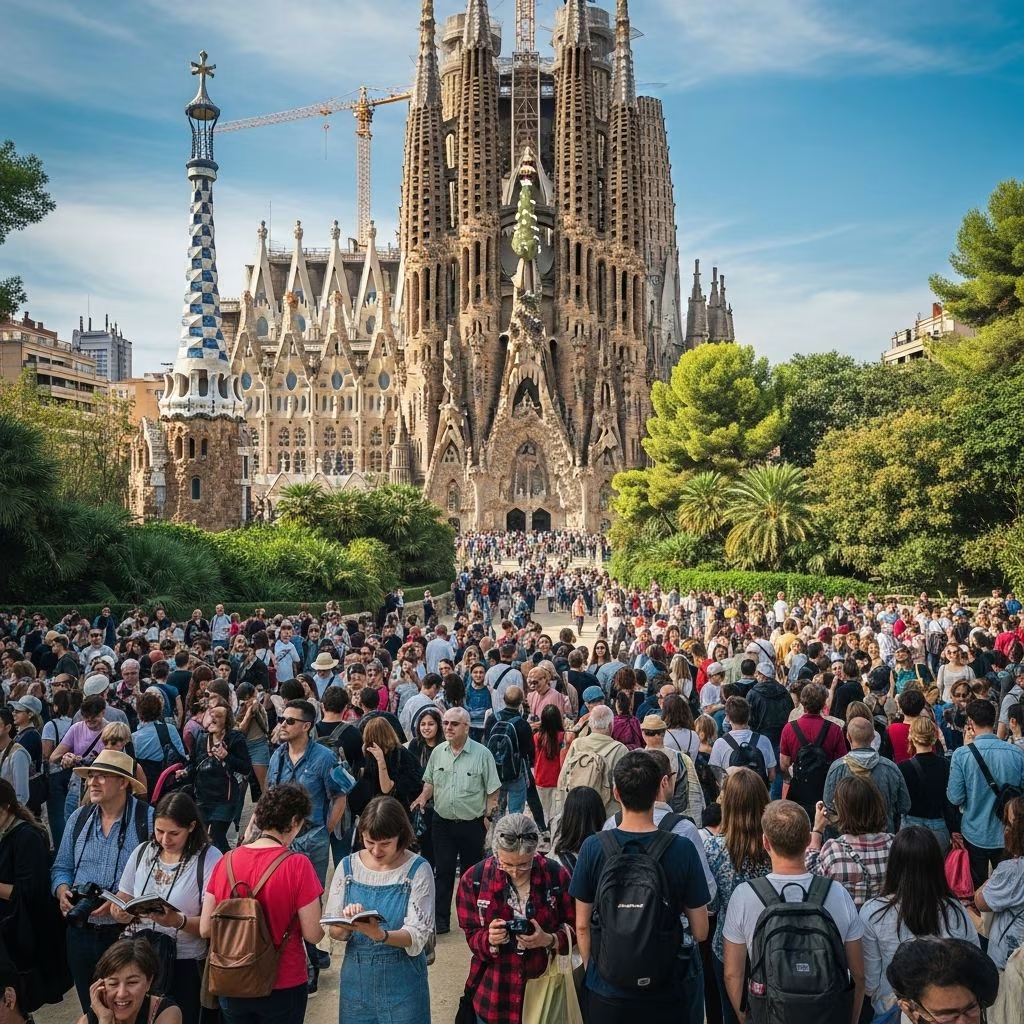
Barcelona faces significant overtourism challenges with millions of annual visitors. Discover the impact on residents, infrastructure, and the city's response strategies.
 Travel Essentials
\n\n
\n\n
Barcelona has become one of Europe’s most popular destinations, attracting an enormous influx of international travelers each year. The sheer volume presents a unique paradox: while tourism generates substantial economic benefits, it simultaneously creates significant pressure on the city’s infrastructure, housing market, and quality of life for residents. Understanding the scope of this challenge requires examining both the numbers and the underlying dynamics that have created the current situation.
\n\n
The city, which is home to approximately 1.6 million people, received around 26 million visitors in 2023, a dramatic increase from 16 million in 2017. This explosive growth reflects Barcelona’s appeal as a cultural destination, but it also reveals the unsustainable trajectory the city has experienced. The concentration of visitors during peak seasons creates bottlenecks that strain public services, transportation systems, and community spaces.
\n\n
\n\n
A critical aspect of Barcelona’s overtourism problem extends beyond total visitor numbers to the temporal clustering of arrivals. Approximately half of annual visitors are day-trippers, including substantial cruise ship passengers who spend only a few hours in the city before departing. This pattern differs fundamentally from traditional tourism, as these visitors concentrate their activities within specific high-traffic zones rather than dispersing throughout Barcelona.
\n\n
The cruise ship industry exemplifies this concentration. Major ports can disgorge up to 20,000 passengers daily, creating sudden surges that overwhelm popular attractions. These visitors typically follow predictable itineraries, focusing on iconic landmarks like La Rambla, Sagrada Familia, Parc Güell, and La Boqueria Market. This clustering generates a “tidal wave” effect described by tourism scholars, where tens of thousands of people converge on narrow streets and historic quarters simultaneously, fundamentally altering the experience for both residents and other travelers.
\n\n
\n\n
Perhaps the most devastating consequence of unchecked tourism growth has been the transformation of Barcelona’s housing market. The proliferation of short-term rental platforms has fundamentally altered property economics, making it significantly more profitable for owners to rent apartments to tourists rather than to long-term residents. In 2017, Barcelona had 125,000 legally registered tourist accommodation beds, supplemented by an estimated 50,000 illegal beds in private apartments.
\n\n
This supply-side shift has created a severe housing shortage for residents. Rental prices have surged dramatically, pricing out middle-income families and forcing longtime inhabitants to relocate beyond the city limits. Mayor Ada Colau has articulated the gravity of this issue, noting that overtourism affects not merely residents’ quality of life but their fundamental ability to remain in their own city. The 2015 Barcelona authorities consultation documented widespread concerns about rising antisocial behaviors and a pervasive sense of lost community identity.
\n\n
\n\n
While tourism comprises approximately 12 percent of Barcelona’s economy, the distribution of revenue has proved deeply inequitable. Much of the economic benefit concentrates in major chains and souvenir establishments rather than supporting local businesses or providing quality employment. Day-trippers, in particular, contribute minimal economic value, as they spend money primarily at high-margin tourist cafes and souvenir vendors rather than supporting diverse local commerce.
\n\n
Moreover, the jobs generated by tourism expansion frequently offer poor compensation, limited benefits, and precarious employment conditions. The consultation highlighted concerns that the city had prioritized visitor volume over tourism quality, resulting in economic structures that benefit external investors rather than local communities.
\n\n
\n\n
Barcelona’s physical geography exacerbates overtourism challenges. The compact historic center, particularly the Barri Gòtic with its labyrinthine medieval streets, concentrates visitor flows into narrow passageways ill-suited for modern volumes. La Sagrada Familia illustrates this vividly, with approximately 4.7 million visitors annually visiting or circumnavigating Gaudí’s architectural masterpiece, concentrated within a relatively small geographic area.
\n\n
Public transportation systems, waste management infrastructure, and water supply networks face mounting pressure. The concentration of pedestrian traffic creates safety concerns, blocks emergency vehicle access, and accelerates deterioration of historic streets and structures. Environmental degradation extends beyond crowding to encompass cruise ship emissions, increased air pollution, and strain on waste disposal capacity.
\n\n
\n\n
Rising frustration among Barcelona residents has occasionally erupted into visible protest. Notably, summer 2026 saw headlines generated when residents deployed water pistols against tourists on La Rambla, capturing international attention and reflecting deeply felt community grievances. While such incidents involve only small numbers of participants, they symbolize broader resident resentment toward authorities perceived as prioritizing visitor volume over resident welfare.
\n\n
This resistance reflects a fundamental philosophical disagreement. Rather than opposing tourism itself, protesters typically object to the lack of regulatory frameworks and government policies that have facilitated unchecked commercialization of residential neighborhoods. The grievances center on institutional failures rather than individual travelers.
\n\n
\n\n
Barcelona authorities have recently implemented significant policy reforms acknowledging that previous growth-at-all-costs approaches proved unsustainable. These interventions represent a strategic pivot toward managing tourism quality rather than maximizing visitor quantities.
\n\n
\n\n
Perhaps the most transformative initiative involves eliminating short-term tourist apartment rentals. By late 2028, all 10,000 licensed private tourist rentals will be phased out, with plans to remove many illegal operations simultaneously. The city council has halted new accommodation licenses for hotels and restricted short-term private lettings. Spain’s national government has additionally implemented regulatory frameworks targeting platforms like Airbnb, complementing Barcelona’s local restrictions.
\n\n
\n\n
Recognizing cruise passengers’ disproportionate impact, Barcelona relocated bulk cruise operations away from the city center to peripheral piers in late 2023. This decision addresses both environmental concerns and community quality-of-life issues. Authorities have additionally threatened passenger number reductions and increased fees for cruise passengers.
\n\n
\n\n
Barcelona has implemented innovative crowd-management techniques including:
\n\n
\n
\n
\n
\n
\n\n
\n\n
The city council’s Strategic Plan for Tourism 2020 represents an ideological departure from previous strategies. Rather than perpetually promoting Barcelona as a destination, the plan emphasizes governance frameworks ensuring tourism sustainability. New marketing narratives focus on dispersing visitor pressure across neighborhoods beyond the historic center, improving job quality in tourism sectors, and mitigating environmental impacts.
\n\n
\n\n
Tourism generates revenue essential for municipal services, cultural preservation, and employment. However, Barcelona’s experience demonstrates that uncontrolled expansion creates net negative returns when accounting for infrastructure wear, environmental degradation, housing market distortions, and quality-of-life costs to residents. The city’s Strategic Plan attempts to identify an equilibrium point where tourism contributes meaningfully to economic vitality without undermining community wellbeing.
\n\n
\n\n
Emerging evidence suggests some natural market corrections are occurring. Growing numbers of travelers actively seek authentic experiences rather than standardized tourist attractions, reducing demand for mass-tourism itineraries. Additionally, visitor fatigue regarding crowded destinations has begun shifting some demand toward less-saturated alternatives. Barcelona’s 2023 visitor count of 26 million, while elevated compared to pre-pandemic levels, represents stabilization rather than continued explosive growth, with some reports documenting declines since 2023.
\n\n
\n\n
Barcelona’s experience offers valuable insights for other cities confronting overtourism challenges. The case demonstrates that unchecked tourism growth, even when economically significant, creates unsustainable social and environmental consequences. Early intervention through regulatory frameworks addressing accommodation, transportation, and visitor distribution proves more effective than reactive measures implemented after community cohesion deteriorates.
\n\n
The Barcelona model prioritizes quality tourism emphasizing cultural depth, heritage appreciation, and sustainable practices over maximizing visitor volumes. This approach requires political will to resist short-term revenue pressures and accept reduced visitor numbers in pursuit of long-term community sustainability.
\n\n
\n\n
Barcelona appears positioned to transition from a cautionary example of unchecked tourism expansion toward a model demonstrating sustainable destination management. The combination of accommodation restrictions, cruise ship management, urban design innovations, and strategic marketing reform creates conditions for achieving tourism that benefits residents alongside visitors.
\n\n
Success requires maintaining political commitment despite inevitable pressure from tourism industry stakeholders favoring volume-based strategies. The recognition by Barcelona authorities that the city’s appeal ultimately depends on preserving the authentic character and livability that attract visitors in the first place represents crucial ideological clarity.
\n\n
Interestingly, Barcelona’s efforts received symbolic endorsement through an unexpected source when a prominent sports figure was named the United Nations World Tourism Organization’s Ambassador for Responsible Tourism, highlighting international recognition of the city’s commitment to sustainable approaches.
\n\n
\n
\n
\n
\n
\n
\n
\n
\n
