

 Travel Essentials
 Travel Essentials

Barcelona slashes cruise terminals from 7 to 5 by 2030, cutting daily passengers by 16% to fight overtourism. Explore the plan, impacts, and European trends reshaping Mediterranean ports.
 Travel Essentials
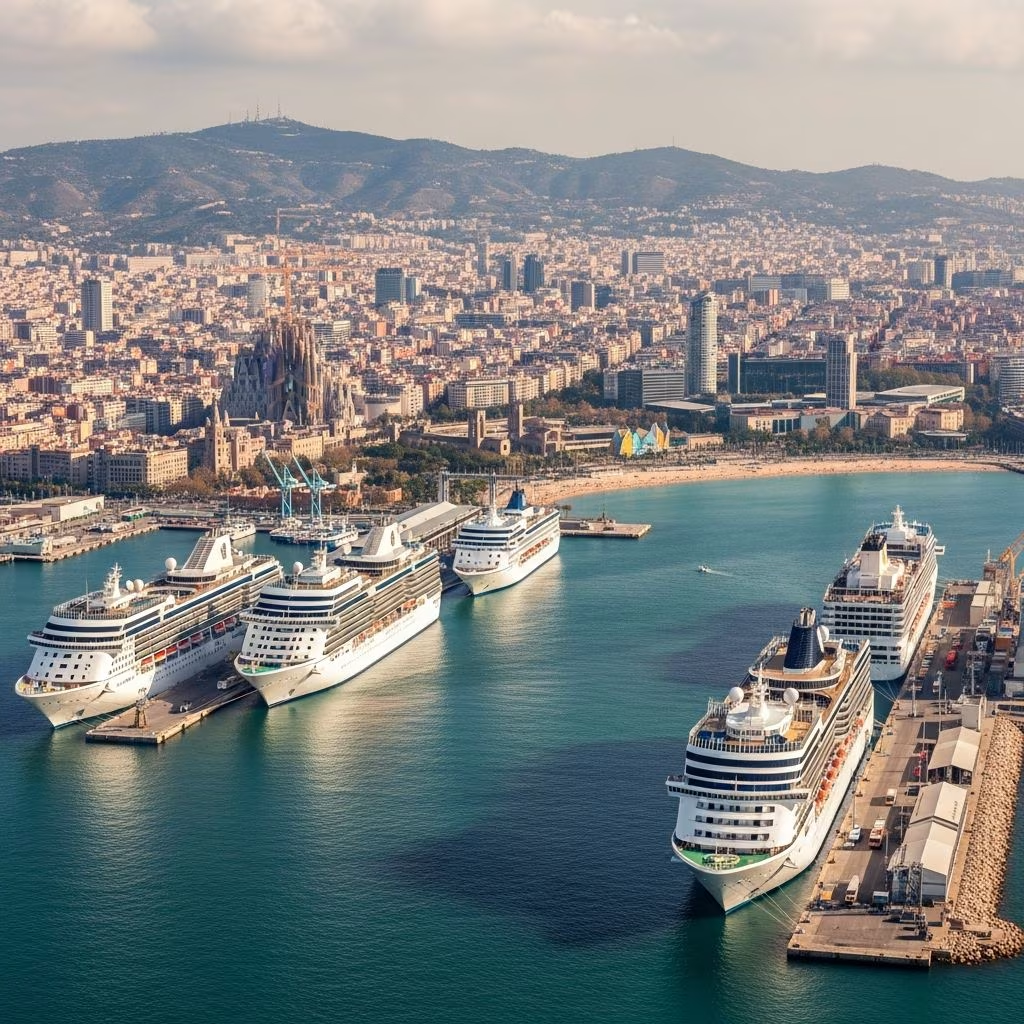
Barcelona, Europe’s busiest cruise port, is implementing groundbreaking measures to curb the influx of cruise passengers starting in 2026. By consolidating terminals and imposing capacity limits, the city aims to reduce daily visitors from 37,000 to 31,000, a 16% drop, prioritizing local quality of life over unchecked tourism growth.
Cruise arrivals in Barcelona have skyrocketed, with passenger numbers jumping 20% between 2018 and 2024, reaching 3.65 million last year alone. The first five months of 2025 saw a further 21% rise in ship calls and 20% in passengers, totaling 1.2 million. This boom has strained the city’s infrastructure, public transport, and iconic sites, fueling resident protests against overtourism.
Local complaints focus on overcrowded streets, especially near landmarks like La Rambla, where day-trippers from brief port stops exacerbate congestion. Mayor Jaume Collboni has championed these reforms, declaring, “For the first time in history, a limit is being placed on the growth of cruises in the city.” The strategy balances the €2.5 billion annual economic boost from cruises with sustainable urban living.
The agreement between Barcelona City Council and the Port of Barcelona outlines a phased overhaul of the Adossat wharf, home to most cruise facilities. Here’s a breakdown:
This consolidation streamlines operations, reduces waterfront sprawl, and eases pressure on surrounding neighborhoods.
Sustainability drives the reforms. The new setups will feature onshore power supply, allowing ships to plug into the grid and slash emissions from idling engines, in line with EU mandates. Additional €90 million will expand the Porta d’Europa bridge by 2027, adding bike lanes and pedestrian paths to separate tourist flows from local traffic.
These changes promise fewer simultaneous ship arrivals, particularly on peak summer days, with staggered schedules to minimize shuttle and taxi bottlenecks.
| Aspect | Current (2025) | Post-2030 | Impact |
|---|---|---|---|
| Terminals | 7 | 5 | Streamlined ops |
| Daily Capacity | 37,000 pax | 31,000 pax | -16% reduction |
| Key New Feature | – | Onshore power | Lower emissions |
| Bridge Expansion | Existing | 610m upgraded | Better mobility |
Cruise lines face itinerary tweaks: priority for turnaround (start/end) voyages over quick stopovers, reducing day-only visits. Fewer overlapping docks mean steadier regional distribution, boosting ports like Marseille, Palma de Mallorca, and Civitavecchia.
Smaller ships and homeporting vessels gain favor at the public terminal, potentially attracting boutique lines while giants adjust schedules.
This port plan complements wider initiatives: doubling the tourist tax by 2029, banning short-term rentals, and refocusing marketing on cultural depth over mass visits. Earlier moves, like closing the central North Terminal in 2023, relocated operations seaward but couldn’t halt growth—now addressed head-on.
Barcelona joins a continental wave. Venice banned large ships from its lagoon in 2021; Palma limits simultaneous docks; Santorini caps arrivals; Amsterdam relocated cruises from the center. These steps reflect post-COVID reevaluations, prioritizing resident harmony and environmental health over volume.
Monterey Bay, California, even halted servicing to deter visits. The Mediterranean trend emphasizes capacity controls, greener tech, and better passenger dispersal.
For cruisers, longer stays could encourage deeper exploration, from Gothic Quarter tapas to Montserrat hikes.
Not all applaud. Cruise operators worry about revenue dips and rerouting costs, though many welcome modern facilities. Logistics firms anticipate smoother operations with fewer berths. Critics question if a 16% cut suffices amid 20%+ growth rates.
Enforcement relies on port authority coordination, with phased rollout mitigating disruptions: demolitions end 2026, new terminal opens 2028.
By 2030, Barcelona envisions a balanced port: efficient, eco-friendly, and less burdensome. Success could inspire global hubs, proving tourism can thrive without overwhelming hosts. Travelers should book early for peak seasons, opting for extended itineraries to maximize value.
Phased from 2026, with full effects by 2030 including five terminals and a 31,000 daily cap.
Maximum daily drops 16% from 37,000 to 31,000, targeting peak overcrowding.
Unlikely; itineraries will adapt with staggered calls and regional shifts. Check with your line.
Onshore power and quay upgrades cut emissions, aligning with EU standards.
Yes—Venice, Amsterdam, Palma, and Santorini have similar caps and bans.
Possible rises from taxes and rerouting, but better experiences may offset.
