

 Travel Essentials
 Travel Essentials

Explore lesser-known Barcelona barrios offering genuine local experiences, cultural attractions, and peaceful spaces away from crowded tourist destinations.
 Travel Essentials
Barcelona captivates millions of visitors annually, drawn to its architectural wonders, Mediterranean coastline, and vibrant energy. However, the city’s most famous attractions—La Sagrada Familia, La Rambla, and the Gothic Quarter—often overflow with tourists seeking the same experiences. For travelers desiring authentic encounters with Barcelona’s character and culture, venturing into quieter residential neighborhoods offers a refreshing alternative. These barrios reveal how locals actually live, work, and socialize, providing insights into Catalan traditions while allowing visitors to move freely without navigating endless queues and crowds.
Barcelona’s lesser-known neighborhoods possess distinct personalities shaped by local history, architecture, and community traditions. Unlike commercial tourist zones where prices inflate and experiences become commodified, these residential areas maintain authenticity through independent businesses, neighborhood traditions, and genuine social interactions. Visitors exploring these spaces encounter real Barcelona—street markets frequented by locals, family-run restaurants serving traditional cuisine, and public squares where residents gather after work. The narrower streets and local-focused infrastructure create an intimate atmosphere impossible to find in congested central areas.
These neighborhoods also showcase Barcelona’s remarkable architectural diversity beyond Gaudí’s celebrated modernist masterpieces. Residential areas feature distinctive building styles reflecting different historical periods, from medieval structures to early 20th-century apartment buildings with characteristic balconies and decorative elements. Walking through these streets reveals urban design patterns, neighborhood-specific aesthetics, and the layered history embedded in Barcelona’s urban fabric.
Characteristics: El Born blends artistic energy with gastronomic sophistication, creating an environment where creativity and food culture intertwine seamlessly. The neighborhood’s narrow, winding streets encourage exploration and spontaneous discovery, while its compact size makes navigation manageable despite the atmospheric labyrinth quality.
The neighborhood functions as a cultural hub featuring significant museums including the Picasso Museum and contemporary art venues alongside independent galleries and artisan boutiques. This concentration of cultural institutions attracts art enthusiasts without overwhelming the streets with tour groups typical of major attractions. Street-level shops sell vintage clothing, handmade jewelry, and locally-designed merchandise, allowing visitors to discover unique souvenirs while supporting independent merchants.
El Born’s culinary reputation extends beyond casual dining into the realm of traditional Spanish food culture. Historic bodegas hidden within narrow passages serve wine and traditional tapas to regular customers who’ve patronized these establishments for decades. The neighborhood maintains several excellent restaurants serving contemporary interpretations of Catalan cuisine alongside classic preparations. Parc de la Ciutadella provides green space and respite, offering opportunities for leisurely picnics, rowing boat rentals, and peaceful afternoon recreation.
Key Streets: Passeig del Born and Carrer de la Princesa function as the neighborhood’s social spine, where bars, cafés, and restaurants create a vibrant but manageable social scene distinct from La Rambla’s chaotic energy.
Character: Gràcia represents Barcelona’s most authentically residential neighborhood, where locals vastly outnumber visitors and community traditions remain deeply rooted. The district was historically an independent village before Barcelona’s expansion, and this autonomous character persists in its identity and social structures.
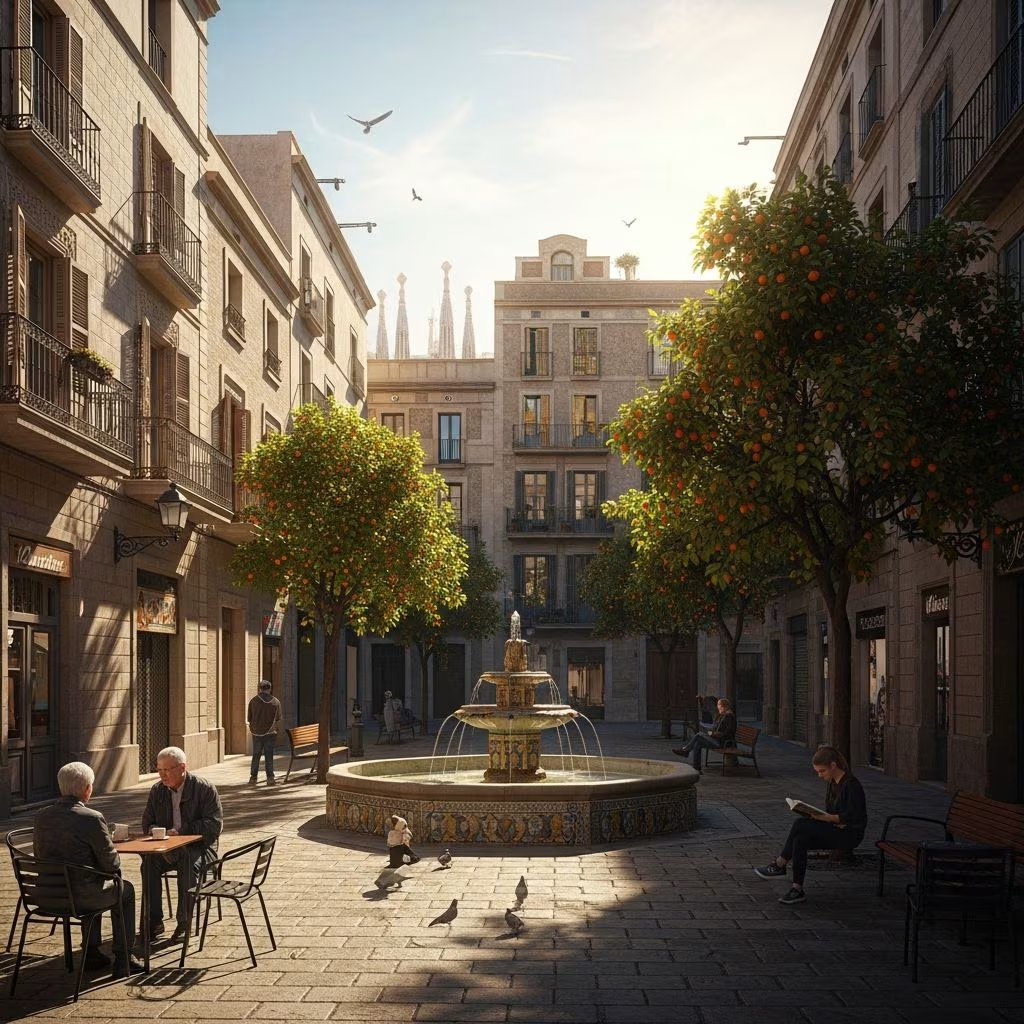
The neighborhood centers around Plaça del Sol and surrounding plazas, where residents congregate for after-work socializing over caña (small glasses of beer) and casual conversation. These squares capture genuine Barcelona social life, where locals gather not for tourist experiences but for daily community interaction. The surrounding alleyways contain independent boutiques, non-chain cafés, and small restaurants serving neighborhood regulars rather than transient visitors.
Gràcia maintains cultural distinctiveness through its retention of Catalan traditions and resistance to commercialization. Neighborhood festivals, local associations, and community initiatives shape social life more than tourism infrastructure. This creates an environment where visitors become temporary observers of authentic urban community rather than central figures in consumption-focused experiences.
Visiting Tips: Allocate time for unhurried exploration, spending afternoons in plazas observing neighborhood rhythm rather than rushing between tourist sites. Independent cafés serve excellent coffee and local pastries, providing comfortable spaces for extended leisure time.
Sarrià occupies the city’s western hills, creating physical and psychological distance from central Barcelona’s intensity. The neighborhood’s topography shapes its character, with streets following natural contours rather than rigid grid patterns, producing unexpected corners, viewpoints, and intimate public spaces. This organic urban layout encourages wandering and chance discoveries, transforming street exploration into an unstructured adventure.
The Mirador de Sarrià (also called Mirador dels Xiprers) represents one of Barcelona’s most serene viewpoints, nestled within gardens and positioned to capture panoramic vistas encompassing the Collserola hills, Mediterranean Sea, and urban skyline. This elevated perspective differs fundamentally from central viewpoints accessed by elevator, offering instead earned vistas achieved through walking and natural exploration.
Sarrià’s residential character emphasizes quality of life over tourism infrastructure. Local markets, neighborhood restaurants, and community spaces reflect residents’ needs rather than visitor expectations. Walking through Sarrià provides genuine insights into Barcelona’s middle-class residential life, contrasting sharply with tourist-focused commercial areas.
Poblenou underwent dramatic transformation from industrial manufacturing center into cultural and residential destination without losing its distinctive character. The neighborhood’s history as a working-class industrial district created architectural patterns and street layouts distinct from Barcelona’s medieval or planned modernist areas.
Contemporary Poblenou combines emerging cultural energy with working-class history, creating unique urban authenticity. La Rambla de Poblenou (the neighborhood’s main thoroughfare, distinct from La Rambla downtown) features cafés, galleries, and cultural spaces occupying refurbished industrial buildings. This transformation preserved historical structures while introducing creative uses, appealing to artists, young professionals, and culturally-engaged residents.
The neighborhood’s ongoing development offers visitors opportunities to observe urban regeneration processes firsthand, seeing how cities evolve beyond their original economic functions. Visiting Poblenou provides perspective on Barcelona’s diversified urban economy and cultural evolution.
El Raval represents Barcelona’s most ethnically diverse neighborhood, shaped by immigration patterns and contemporary urban change. The district’s demographics reflect global migration to Spain, creating multicultural food culture, diverse religious spaces, and varied perspectives on urban life.
Despite its complex reputation requiring standard urban travel precautions, El Raval contains cultural institutions, independent businesses, and genuine neighborhoods beyond stereotypical descriptions. The district’s authentic, unglamorous character appeals to visitors seeking unfiltered Barcelona experience rather than curated tourist narratives. This reality-focused perspective offers valuable context for understanding contemporary European cities and urban diversity challenges.
The Collserola mountain range bordering Barcelona’s northern edge provides dramatic contrast to urban areas, offering natural spaces where visitors experience metropolitan areas within forest environments. Walking trails wind through pine forests, revealing unexpected viewpoints capturing sweeping cityscapes framed by natural vegetation.
Collserola functions as Barcelona’s escape valve—a space where residents access nature without traveling far from home. The range contains numerous trails accommodating different fitness levels and time commitments, from brief casual walks to ambitious hiking excursions. These trails pass through genuine natural environments, where urban infrastructure recedes from perceptual dominance, providing genuine nature experiences within metropolitan boundaries.
Barcelona contains numerous viewpoints beyond the overcrowded observation decks characterizing major tourist attractions. Mirador del Turó de la Rovira’s side access in the Carmel neighborhood provides near-equivalent perspectives without the crowds found at popular bunker viewpoints. Stone walls and clearings accessed via neighborhood streets capture panoramic cityscapes while maintaining tranquility suitable for contemplation and photography.
Montjuïc Hill functions as a local favorite combining accessibility with escape from central tourist concentration. The hill contains multiple attractions including panoramic gardens, underrated museums like Museu Nacional d’Art de Catalunya and Fundació Joan Miró, and Montjuïc Castle, an historic military fortress offering small-fee exploration.
While Barceloneta Beach dominates visitor consciousness, quieter coastal alternatives provide more peaceful seaside experiences. Platja de Bogatell and Platja Mar Bella attract local residents for volleyball, surfing, and dog walking, maintaining neighborhood beach character rather than evolving into tourism destinations. These beaches offer authentic recreational environments where visitors mingle with locals engaged in regular activities rather than formal tourism.
Extending further along the coast toward Sant Martí provides even greater distance from central Barcelona, accessing less-developed beaches serving primarily residential populations. These alternatives require short transportation investments but reward visitors with dramatically reduced crowds and coastal experiences reflecting local recreation patterns.
Beyond La Boqueria’s tourist-oriented market environment, Barcelona contains numerous neighborhood markets where locals conduct actual shopping rather than participating in tourism activities. These markets feature price structures reflecting genuine commerce, diverse product selections matching neighborhood needs, and social dynamics centered on regular customer relationships rather than transient visitor transactions.
Visiting neighborhood markets provides multilayered cultural immersion—observing neighborhood demographic composition, understanding local dietary preferences and seasonal eating patterns, and interacting with vendors and shoppers engaged in authentic commerce rather than performance for tourists.
Residential neighborhoods maintain food and beverage establishments reflecting community preferences rather than tourism marketplaces. Authentic bodegas continue traditions unchanged for decades, where regular customers drink wine and eat tapas alongside community members. Contemporary restaurants in neighborhoods like El Born and Gràcia serve creative reinterpretations of Catalan cuisine alongside classic preparations, appealing to educated local palates rather than tourist preferences for simplified, familiar flavors.
Coffee culture in neighborhoods emphasizes leisurely consumption within social contexts, contrasting with rushing tourists seeking rapid caffeine intake. Cafés function as informal social spaces where locals work remotely, read, or engage in extended conversation. Visiting these spaces provides opportunities for genuine relaxation aligned with Mediterranean lifestyle values rather than tourism industry time pressures.
Barcelona’s efficient public transportation network enables easy access between neighborhoods without requiring vehicular transportation. Metro connections serve most residential areas, while bus routes provide alternatives for less central neighborhoods. Walking between adjacent areas reveals transitional zones where neighborhood characters overlap, providing comprehensive urban understanding beyond discrete neighborhood visits.
Language: Catalan represents the neighborhood language preference, though Spanish and English communication remains possible in commercial contexts. Learning basic Catalan phrases demonstrates respect and facilitates smoother interactions with residents.
Cultural Sensitivity: Residential neighborhoods function primarily as community spaces rather than visitor entertainment venues. Respectful behavior—maintaining reasonable noise levels, shopping from established businesses rather than treating neighborhoods as attractions—maintains community relationships and supports local continuity.
Safety: Most residential neighborhoods maintain safety standards comparable to similar European urban areas. Standard urban travel precautions—situational awareness, valuables security, avoiding isolated areas after dark—apply appropriately without requiring excessive concern.
Barcelona’s neighborhoods experience noticeable seasonal shifts in character. Summer months see increased tourism concentration in central areas, creating relatively greater peace in residential neighborhoods. Winter months feature reduced overall tourism while increasing neighborhood social activity as residents spend more time in local bars and cafés. Spring and autumn offer temperate weather supporting extended outdoor exploration.
Barcelona’s most memorable experiences often emerge not from rushing between famous monuments but from unhurried neighborhood exploration revealing how residents actually inhabit their city. El Born’s artistic energy, Gràcia’s authentic social life, Sarrià’s hillside tranquility, Poblenou’s cultural transformation, and Collserola’s natural escape collectively present Barcelona beyond tourism industry narratives. These spaces reward curious visitors with genuine cultural understanding, peaceful experiences, and memorable encounters reflecting authentic urban life rather than consumption-focused tourism performances. Prioritizing neighborhood exploration over monument collection fundamentally transforms Barcelona visits from exhausting itinerary completion into enriching cultural immersion.
