

 Travel Essentials
 Travel Essentials

Uncover Bath's UNESCO-listed wonders, from steaming Roman Baths to honey-stone crescents, plus top eats, stays, and day trips for an unforgettable escape.
 Travel Essentials
Bath stands as a timeless treasure in southwest England, where ancient Roman engineering meets exquisite Georgian design. This compact city, framed by rolling hills, draws visitors with its thermal springs, literary legacy, and walkable charm, offering an ideal blend of history and relaxation.
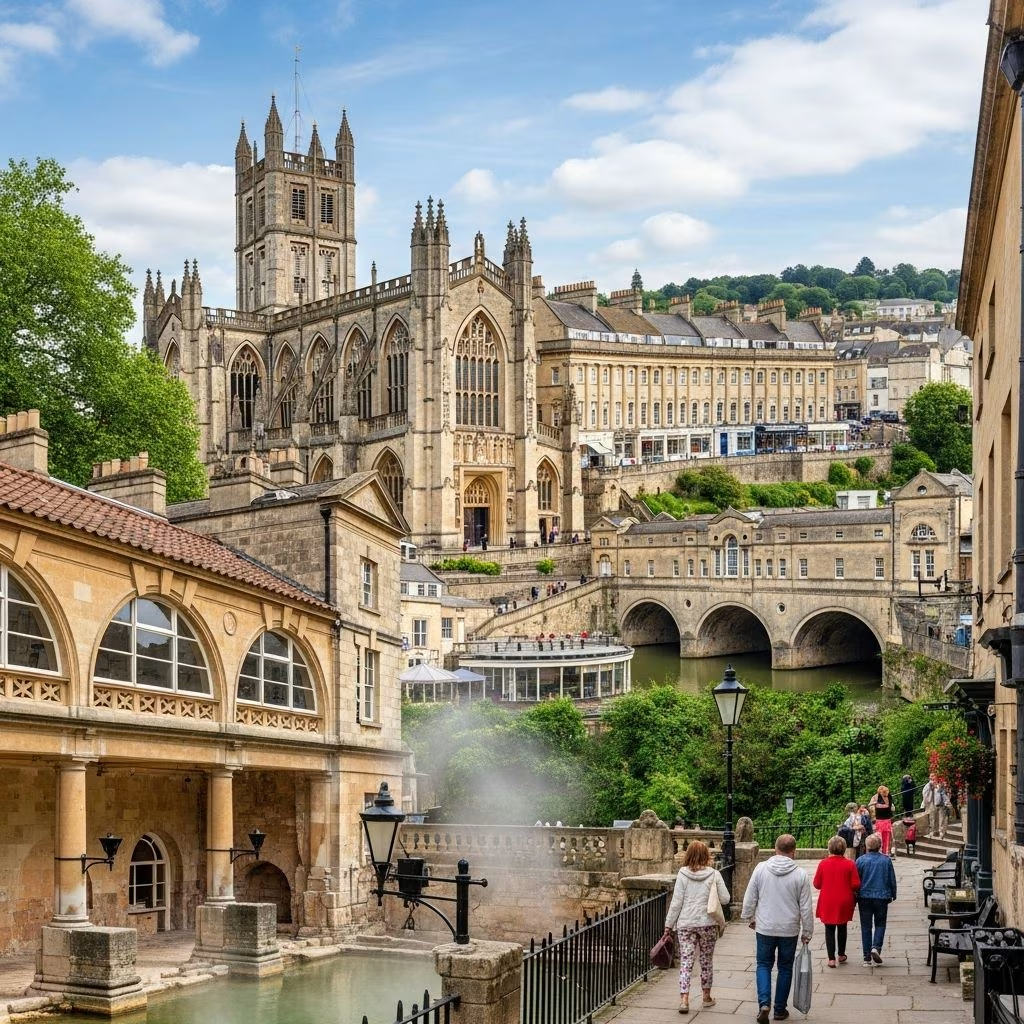
The city’s origins trace back over 2,000 years to when Romans harnessed its natural hot springs, constructing a sophisticated bathing complex that remains remarkably intact today. This site, central to Bath’s identity, features a vast network of ruins including the iconic Great Bath, filled with steaming, mineral-rich waters that glow an ethereal green. Visitors can wander elevated walkways, peering into the sacred spring where priests once conducted rituals, while an engaging museum narrates the site’s evolution through artifacts like curse tablets and altars dedicated to the goddess Sulis Minerva.
Interactive displays bring the past alive, from audio guides detailing daily Roman life to reconstructions of underfloor heating systems. In peak summer months, extended evening tours illuminated by torchlight add a magical touch, accompanied by live performances that echo ancient festivities.
Bath’s skyline is dominated by Bath Abbey, a soaring Gothic masterpiece from the late medieval era. Its towering facade, adorned with intricate stone carvings of angels climbing ladders to heaven, captivates at first glance. Inside, fan-vaulted ceilings and vibrant stained-glass windows create a serene ambiance, while a small heritage exhibit chronicles its Saxon roots, Norman reconstructions, and recent restorations.
Nearby, the Circus and Royal Crescent exemplify 18th-century Georgian opulence. The Circus forms a perfect circular ensemble of townhouses, unified by honey-colored Bath stone that glows warmly in sunlight. Just a short stroll away, the Royal Crescent’s sweeping curve of 30 identical facades overlooks lush lawns, evoking the grandeur of high society promenades. No. 1 Royal Crescent museum offers an intimate peek into period furnishings, servant quarters, and the refined lifestyles of the elite.
| Landmark | Key Feature | Best Time to Visit |
|---|---|---|
| Roman Baths | Ancient thermal pools & museum | Summer evenings for torchlit tours |
| Bath Abbey | Gothic vaulting & tower views | Morning for fewer crowds |
| Royal Crescent | Palladian terrace & park | Afternoon for picnics |
Jane Austen enthusiasts find Bath irresistible, as the city profoundly influenced her novels like Pride and Prejudice and Persuasion. Guided history trails weave through locations tied to her life, including her former residences and the Assembly Rooms where characters danced. The Jane Austen Centre immerses guests in Regency-era costumes, tea rooms, and waxwork displays that vividly recreate her world.
Beyond literature, Pulteney Bridge stands out as one of the world’s few fully shop-lined bridges, its elegant arches spanning the River Avon amid boutique stores and cafes. Prior Park Landscape Garden provides a tranquil contrast, with Palladian follies, cascading weirs, and manicured lawns perfect for contemplative walks.
Bath’s therapeutic waters continue to soothe in contemporary settings. Thermae Bath Spa, the only natural thermal facility in Britain open to the public, features rooftop pools with panoramic city views, steam rooms infused with lavender, and open-air vitality pools bubbling at 92°F. Treatments draw on mineral-rich waters proven to ease ailments since Roman times.
For leisurely floats, prosecco boat cruises glide along the Avon, pairing sparkling drinks with scenic vistas of weirs and wildlife. These outings offer a relaxed way to absorb Bath’s riverside beauty.
Bath’s strategic location facilitates enriching escapes. Wells Cathedral, England’s smallest yet most picturesque, pairs with the Bishop’s Palace moat gardens. The Mendip Hills lead to Cheddar Gorge for dramatic cliffs and cheese tastings. Avebury’s massive stone circles rival Stonehenge in prehistoric allure, while the Cotswolds’ quaint villages like Tetbury offer thatched cottages and artisanal markets. Salisbury Cathedral houses a Magna Carta original, complementing regional history hunts.
Trains from London Paddington whisk you to Bath Spa station in 90 minutes, with frequent services. The city center is pedestrian heaven—no car needed for core sights. Buses radiate to outskirts and day-trip spots. For countryside jaunts, consider organized tours to bypass parking hassles.
Bath’s dining scene marries tradition with innovation. Georgian tearooms serve cream teas amid Pump Room elegance. Walcot House delights with farm-fresh tasting menus in an intimate setting. Pubs like The Star offer ciders, ales, and live folk sessions. Independent eateries emphasize Somerset produce: think venison from nearby estates or artisan cheeses.
Luxury seekers gravitate to Royal Crescent Hotel & Spa, where Georgian suites overlook private gardens. Budget options cluster near the station, blending boutique B&Bs with chains. Self-catering Georgian townhouses provide authentic immersion.
| Stay Type | Highlights | Price Range (per night) |
|---|---|---|
| Luxury Hotel | Spa, historic views | £300+ |
| Boutique B&B | Personal service, breakfast | £150-250 |
| Hostel/Airbnb | Affordable, central | £50-120 |
Spring bursts with the Bath Literature Festival, drawing authors to panel discussions. Summer hosts music extravaganzas in abbey cloisters. Autumn’s food festival showcases regional bounty, while winter markets twinkle with mulled wine and crafts. Year-round theater at the Theatre Royal stages intimate productions.
Two to three days suffice for highlights, plus extras for day trips.
Yes—parks, boat rides, and interactive museums engage all ages.
Join a small-group half-day tour for seamless transport and insights.
No, but Thermae Bath Spa offers safe modern bathing.
Moderate—expect £150-250 daily including meals and attractions.
