

 Travel Essentials
 Travel Essentials

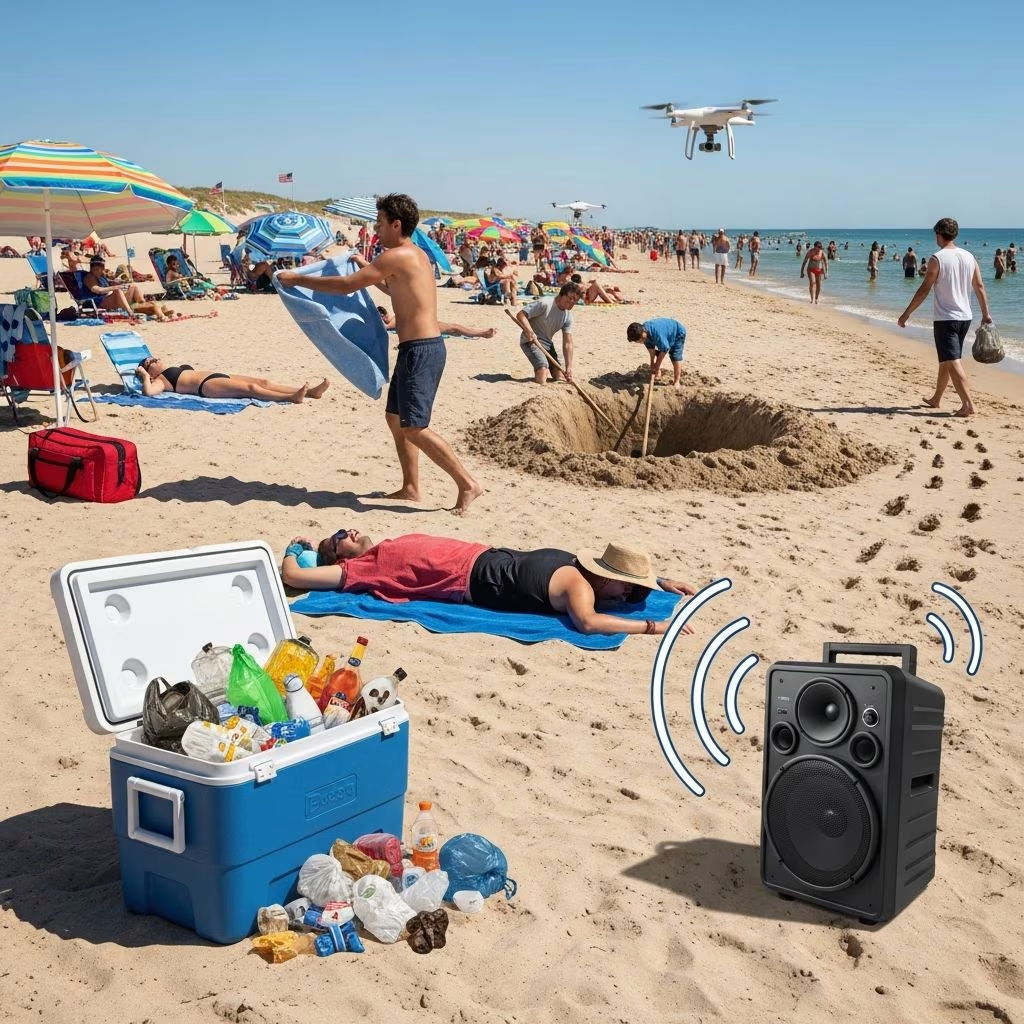
A deep dive into America's most common beach missteps, backed by surveys showing 92% admit to bad habits despite claiming perfect etiquette. Explore fixes for littering, space hogging, and more.
 Travel Essentials
America’s coastlines draw millions each summer, promising relaxation under the sun. Yet, surveys reveal a stark irony: while 93% of beachgoers rate their own manners highly, 92% confess to at least one faux pas, averaging three per person. This gap highlights unspoken rules often broken, from environmental damage to personal space invasions. Understanding these trends helps everyone enjoy cleaner, calmer shores.
Beaches are public treasures, fragile ecosystems shared by families, surfers, and wildlife. Poor habits erode this balance—literally, as sand pilfering contributes to erosion, and waste pollutes marine life. Recent data from over 1,000 U.S. adults shows 96% endorse etiquette ideals, but actions lag, with 19 in 20 witnessing violations. Prioritizing respect preserves these spots for future visits.
Key drivers include overcrowding at popular sites like Miami or Malibu, where competition for space amplifies tensions. Alcohol, banned in many areas, fuels impulsivity, while anonymity in crowds encourages secrecy. Awareness campaigns from coastal authorities emphasize ‘leave no trace’ principles, yet personal accountability remains key.
Surveys pinpoint behaviors people admit freely because few find them bothersome. These ‘shameless’ acts top confession lists, revealing cultural blind spots.
These persist as low-stakes thrills, but cumulative impact threatens biodiversity. For instance, shell removal disrupts crab spawning, per NOAA studies.
Not all slips are forgiven. Annoyances severe enough to sour vacations cluster around cleanliness and courtesy, outranking even ocean urination.
| Rank | Behavior | % Finding Annoying | Why It Bugs |
|---|---|---|---|
| 1 | Littering | 82% | Pollutes water, harms wildlife; beats peeing in polls. |
| 2 | Not picking up after pets | 61% | Fouls sand, spreads bacteria; leash laws ignored. |
| 3 | Sitting too close | 54% | Invades privacy in crowded areas. |
| 4 | Loud music | 54% | Disrupts peace; Bluetooth speakers culprits. |
| 5 | Shaking sand near others | 43% | Grimy intrusion on towels. |
Littering reigns supreme, with plastic bags and bottles lingering post-storm. Pet waste introduces E. coli, risking swimmer health, as flagged by EPA beach monitoring.
Perception exceeds admission. Over 80% believe most pee in water, 67% think alcohol sneaks are rampant, and 67% assume shell theft is universal—higher than self-reports. This projection fosters judgment, yet mirrors personal guilt. Women report fewer confessions (e.g., 60% peeing vs. men’s 80%), hinting at social pressures.
Beyond top sins, spatial aggressions grate. Saving spots with chairs (13-18% admit) sparks ‘chair wars,’ while kids or pets roaming (5-30%) trample setups. Loud talk or music (30%) shatters serenity; 90% prefer quiet, per polls.
Smoking/vaping (25-39%) wafts fumes; feeding wildlife (23%) conditions animals to humans, endangering both.
Bad habits hit hard ecologically. Sand removal accelerates erosion—U.S. beaches lose 2 feet yearly, per USGS. Shells shelter species; their absence cascades food webs. Litter, especially microplastics, enters fish via ingestion, reaching human plates. Alcohol containers add to this debris. Pet waste nitrates fuel algal blooms, closing beaches. NOAA urges ‘pack in, pack out’ to counter this, with volunteer cleanups removing 10M lbs yearly.
Habits shift by shore. East Coast (e.g., Jersey Shore) sees more litter/partying due to density. Florida’s party beaches amplify alcohol (60%+ confessions). West Coast enforces stricter no-alcohol, but shell-taking rises near scenic spots. Hawaii leads eco-awareness, fining sand thieves $1,000+. Southern beaches battle pet issues amid dog-friendly policies. Urban vs. remote: cities hog space, wilder spots suffer feeding wildlife.
Younger crowds (18-34) confess more peeing (75%) and music (40%), prioritizing fun. Over 55s hate litter (90%) but admit shells (45%). Men out-confess women on alcohol (55% vs. 42%). Parents juggle kid invasions, worsening annoyances.
Turn insight into action:
Report issues to lifeguards, not neighbors—32% ignore to avoid drama.
Littering, at 82%, tops lists—clean up everything.
70% do it, few mind, but pollution concentrates near shore; use facilities.
No—38% do, but it harms ecosystems; fines apply in protected areas.
54% hate crowding; aim for 15 feet minimum.
Keep it low or private—loud blasts annoy 54%.
Embracing these shifts elevates beach culture. Surveys prove intent is good; execution needs nudge. Next trip, lead by example for ripple-effect respect.
