

 Travel Essentials
 Travel Essentials

Comprehensive guide to Belgium's top destinations, attractions, local experiences, and practical travel tips for an unforgettable European adventure.
 Travel Essentials
Belgium occupies a unique position within Europe, serving as a crossroads between multiple cultures and nations. This small yet strategically important country offers visitors an exceptionally diverse range of experiences within a relatively compact geography. The nation combines centuries-old medieval architecture with contemporary European sophistication, making it an ideal destination for travelers seeking both historical depth and modern amenities.
The cultural landscape of Belgium reflects its complex history, with Flemish and French influences creating distinct regional characteristics. Belgian identity extends far beyond its borders—the country serves as home to numerous international institutions and hosts millions of visitors annually who seek authentic European experiences.
Belgium’s efficient transportation network makes traveling throughout the country straightforward and accessible. The nation’s railway system connects major cities seamlessly, with frequent departures and reasonable travel times between destinations. For visitors arriving internationally, Brussels serves as the primary gateway, featuring direct flights from major world cities and excellent ground transportation options.
Within cities, walking remains the most practical and rewarding way to explore. Belgium’s urban centers feature pedestrian-friendly streets and well-marked routes connecting historical sites, museums, and local establishments. For longer distances between towns, trains offer an economical alternative to rental cars, with tickets readily available at station counters or through mobile applications.
Belgium’s capital represents far more than an administrative center; it embodies European heritage and contemporary dynamism. Brussels functions as headquarters for the European Union, hosting thousands of international professionals while maintaining strong connections to Belgian traditions and artistic expression. The city’s architectural landscape ranges from Gothic town halls to Art Nouveau residential buildings, creating visual layers that reflect centuries of development.
Visitors should allocate multiple days to experience Brussels comprehensively. The Grand-Place, recognized by UNESCO as a World Heritage Site, presents stunning medieval and Renaissance architecture surrounding a central square that served as the city’s economic and social hub for centuries. The historic Town Hall dominates the plaza’s architecture, featuring elaborate Gothic Revival design completed in the fifteenth century.
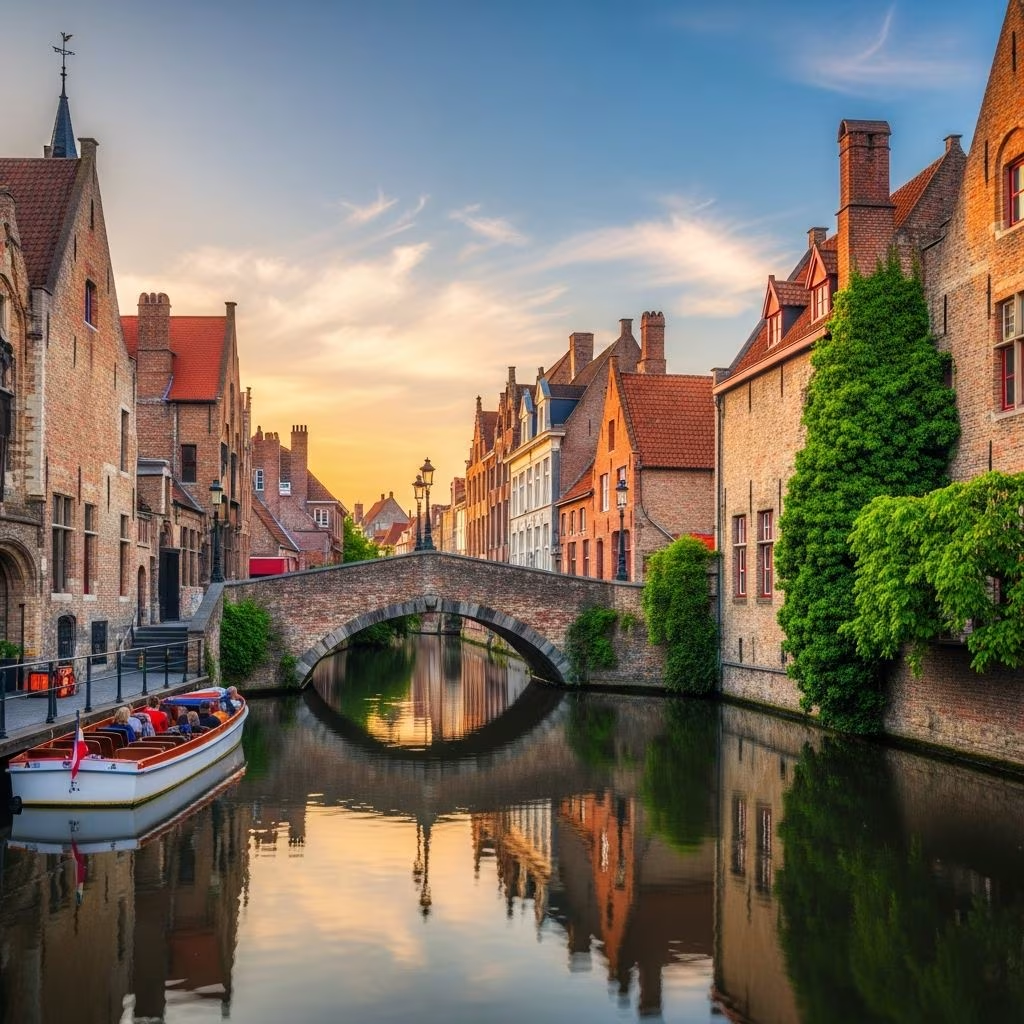
Often described as one of Europe’s most intact medieval cities, Bruges captivates visitors through its harmonious blend of historic architecture, tranquil waterways, and cultural richness. The city’s canal system, developed during medieval times for commerce, now creates scenic pathways that showcase centuries-old buildings reflected in still water. Street-level exploration reveals hidden courtyards, artisan shops, and small museums celebrating various aspects of Flemish culture.
Water-based exploration offers perspectives unavailable from streets, allowing visitors to view secret gardens and historic building facades from unique angles. Local boatmen provide guided tours explaining architectural styles, historical events, and cultural practices that shaped the city’s character.
Frequently overlooked by travelers focused exclusively on Brussels and Bruges, Ghent deserves dedicated attention as a thriving university city balancing medieval charm with contemporary vitality. The city’s harbor district showcases dramatic illuminated guild houses reflecting in the water, while narrow streets wind through residential neighborhoods offering authentic glimpses of daily life beyond tourist-focused areas.
The Cathedral of Sint-Baafs contains one of Northern Europe’s most celebrated artworks—the Ghent Altarpiece created by Hubert and Jan van Eyck in the fifteenth century. This masterpiece spans multiple panels depicting religious narratives with revolutionary realism and technical sophistication.
Belgium’s second-largest city has undergone significant transformation, evolving from an industrial port into a creative hub renowned for fashion design, contemporary art, and trendy dining establishments. The city attracts young professionals and creative entrepreneurs, resulting in vibrant neighborhoods mixing working-class authenticity with upscale new development.
Antwerp’s fashion district rivals established European centers, hosting design studios, boutiques, and fashion schools where emerging and established designers present innovative collections. The city’s museums house important works spanning diverse periods and artistic movements, complementing its contemporary creative scene.
Belgium hosts fifteen UNESCO World Heritage Sites, recognizing the country’s exceptional cultural and historical significance. These designations reflect centuries of artistic achievement, architectural innovation, and preservation efforts protecting irreplaceable heritage from irreversible damage or loss.
| UNESCO Site | Location | Significance |
|---|---|---|
| Grand-Place | Brussels | Architectural ensemble showcasing medieval civic design |
| Historic Center of Bruges | Bruges | Preserved medieval urban layout and buildings |
| Flemish Béguinages | Multiple cities | Religious communities reflecting medieval social structures |
| Flanders Fields | Ypres region | World War I battlefields and commemorative sites |
| Town Halls of Belgium | Various locations | Civic gothic architecture and municipal heritage |
Belgian cuisine represents a refined culinary tradition encompassing distinctive techniques, exceptional ingredients, and centuries-old recipes passed through generations. The country’s gastronomic heritage extends beyond famous chocolate and beer to encompass sophisticated preparation methods and regional specializations.
Belgian frites, often incorrectly attributed to France, represent a culinary icon served with various sauces and toppings in casual street establishments and upscale restaurants alike. The preparation technique—cutting potatoes to precise dimensions and frying twice at different temperatures—produces exterior crispiness combined with creamy interiors.
Chocolate production in Belgium reflects centuries of refinement, with artisan chocolatiers combining superior cocoa with traditional methods to create confections prized by consumers worldwide. Belgian breweries produce exceptional beers in numerous styles, from Trappist ales brewed by monastic communities to contemporary craft interpretations of traditional recipes.
Belgium’s climate presents distinct seasonal characteristics influencing visitor experience and availability of specific activities. Summer months offer warm temperatures suitable for canal exploration, beach visits, and outdoor festival participation. Spring and autumn provide moderate weather with fewer crowds, making these periods ideal for travelers prioritizing authentic local experiences over festival attendance.
The biennial Flower Carpet transforms Brussels’ Grand-Place into an extraordinary floral display created entirely from begonias arranged in intricate patterns. This spectacular event attracts international visitors and requires viewing from elevated positions to fully appreciate the detailed mosaic design.
Ghent’s summer festival, known as Gentse Feesten, ranks among Europe’s largest cultural outdoor events, featuring music performances, theatrical productions, food vendors, and street entertainment spanning multiple weeks. This festival transforms the city into a celebration of Flemish culture and contemporary artistic expression.
Belgium’s location made it a central theater for multiple European conflicts, particularly World War I. The Flanders Fields near Ypres preserve battlefields, trenches, memorials, and cemeteries representing one of history’s bloodiest conflicts. The landscape transformation from industrial battle zone to peaceful countryside creates contemplative spaces for reflection on conflict consequences.
The Battle of Waterloo, fought in 1815, fundamentally altered European political structures and concluded the Napoleonic Wars. The historical site remains accessible to visitors seeking to understand this pivotal military engagement’s strategic importance and lasting geopolitical consequences.
Belgium’s museums house exceptional artistic collections spanning medieval manuscripts to contemporary installations. The Royal Museums of Fine Arts in Brussels showcase paintings by Bruegel and Magritte alongside works by Flemish masters who established traditions defining Northern European artistic achievement.
Medieval altarpieces represent particular strengths within Belgian museum collections, reflecting the region’s historical importance as an artistic center during the Renaissance. These monumental religious works demonstrate technical mastery, compositional sophistication, and theological complexity characteristic of Northern European religious art.
Belgium offers diverse accommodation options accommodating various budgets and preferences. Luxury hotels in city centers provide five-star amenities and convenient locations near major attractions. Mid-range establishments offer comfortable rooms with good value, while budget hostels and guesthouses suit cost-conscious travelers and facilitate social connections with other visitors.
Booking accommodation near central train stations provides strategic advantages, allowing visitors to efficiently drop luggage upon arrival and immediately begin exploration without backtracking through residential neighborhoods.
Belgium rewards visitors with layered experiences combining architectural brilliance, culinary excellence, artistic achievement, and historical significance. The country’s compact size facilitates comprehensive exploration within moderate timeframes, while its rich cultural heritage justifies extended stays permitting deeper engagement with Belgian traditions and contemporary culture. Whether visitors prioritize medieval architecture, world-class museums, exceptional cuisine, or memorable conversations with locals, Belgium consistently delivers authentic European experiences exceeding initial expectations.
