


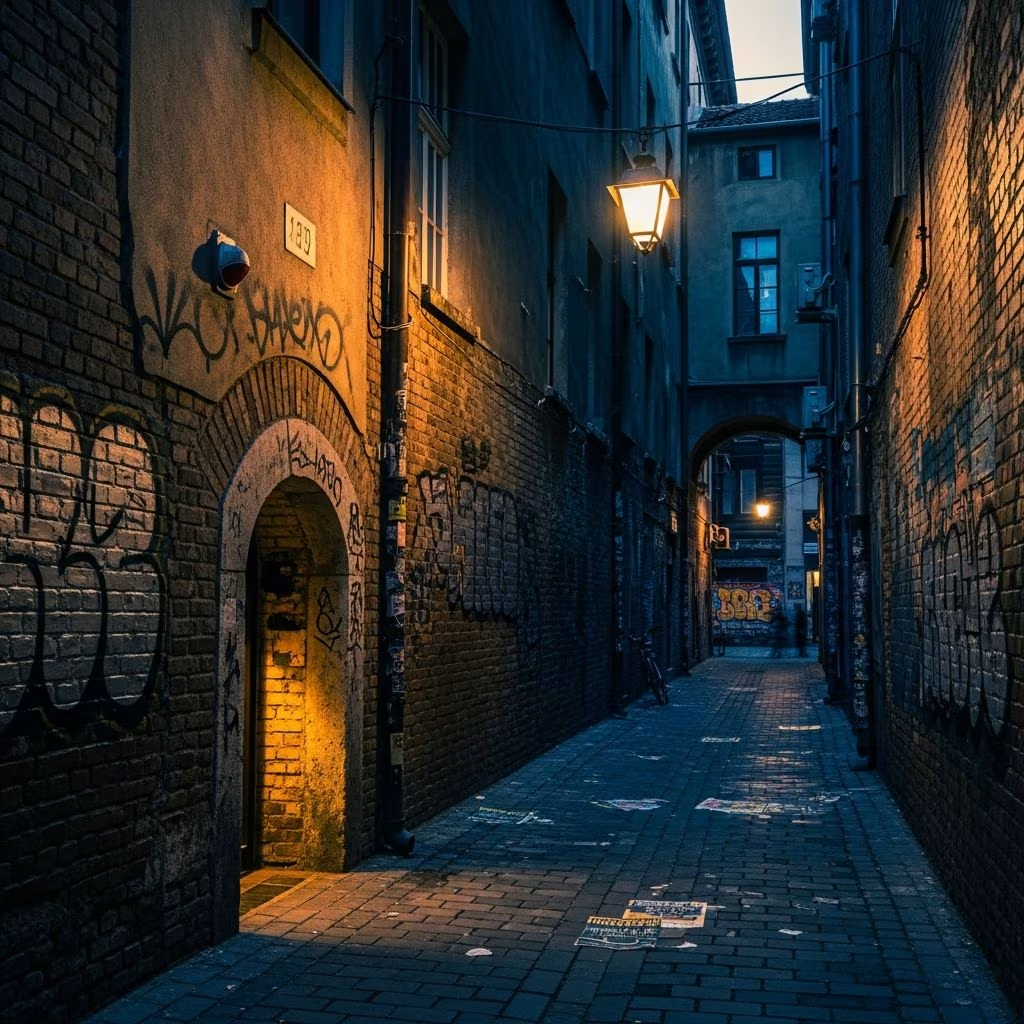
Belgrade pulses with an energy that extends far beyond its famous fortress and well-known attractions. Beneath the surface of this vibrant Balkan capital lies a thriving ecosystem of alternative spaces, independent galleries, and intimate gathering spots where artists, musicians, and creative minds congregate. These venues represent the authentic heartbeat of contemporary Belgrade—places where the city’s cultural transformation unfolds away from guidebook pages and crowded tourist zones.
The Evolution of Belgrade’s Alternative Scene
The cultural landscape of Belgrade has undergone significant transformation over the past two decades. What began as scattered underground movements has blossomed into a cohesive alternative scene that attracts creative practitioners from across Europe and beyond. This evolution reflects the city’s broader renaissance, where post-industrial spaces have been repurposed into galleries, performance venues, and social hubs. The result is a genuinely authentic cultural experience that offers visitors genuine connection with contemporary Serbian artistic expression rather than staged cultural performances.
Independent art spaces have become particularly instrumental in shaping this cultural identity. These venues operate with minimal institutional support, relying instead on passionate communities of artists and curators who believe in accessibility and creative freedom. Their commitment to experimental work and emerging voices has established Belgrade as an increasingly significant node in European contemporary art networks.
Contemporary Art Galleries & Independent Exhibition Spaces
Beyond traditional museum settings, Belgrade’s independent galleries showcase work that pushes boundaries and challenges conventional aesthetic frameworks. These spaces function simultaneously as exhibition venues, meeting points, and incubators for artistic experimentation. The galleries operating throughout various neighborhoods demonstrate a democratic approach to cultural production—one that prioritizes artistic vision over commercial viability.
One particularly significant venue operates as a platform specifically dedicated to promoting experimental work by emerging Belgrade artists. Located discretely within the urban fabric, this space maintains an ethos of accessibility while championing avant-garde approaches to visual culture. The programming emphasves dialogue between artists and audiences, frequently incorporating artist talks, collaborative projects, and community-engaged initiatives that extend gallery walls into broader public conversations.
Another notable establishment has carved out a unique niche by focusing on restoration and creative reinterpretation of vintage materials. This collective-run space combines commercial retail operations with curatorial projects, hosting periodic events that celebrate material culture and sustainable practices. Workshops on fashion design, furniture restoration, and decorative arts extend the venue’s impact beyond its physical location, creating ripple effects throughout local creative communities.
Specialized Retail Environments Merging Commerce & Culture
Belgrade hosts several retail establishments that transcend conventional shopping experiences by integrating curatorial vision with commercial operation. These hybrid spaces present carefully curated selections of objects and artworks while facilitating cultural programming and community gathering.
One particularly distinctive establishment has built its identity around vintage and salvaged materials, presenting items described as originating from specific historical periods while incorporating contemporary designer interpretations. The venue’s programming extends beyond retail functions to encompass educational workshops, clothing exchange events, and fashion-focused discussions. This multifaceted approach transforms what might otherwise be a conventional boutique into an active cultural venue where consumption aligns with creative practice and environmental consciousness.
Musical Venues & Live Performance Spaces
Belgrade’s musical culture extends across multiple genres and venues, with particular strength in blues, jazz, and experimental music scenes. Live performance venues scattered throughout the city maintain programming schedules that provide consistent opportunities for musical engagement.
Blues culture holds particular significance within Belgrade’s musical ecosystem, with dedicated venues maintaining nearly nightly programming featuring both established and emerging performers. These spaces attract international musicians alongside local practitioners, creating cross-cultural musical dialogues that reflect broader European artistic exchange patterns. The communal atmosphere of blues venues generates distinctive social dynamics where musicians, enthusiasts, and curious newcomers intermingle, creating authentically diverse audiences.
Beyond established performance spaces, Belgrade’s restaurant and bar culture increasingly incorporates live music programming. This integration of culinary experience with musical performance creates multisensory cultural encounters that engage visitors at multiple levels simultaneously. The casual integration of art into everyday social spaces characterizes contemporary Belgrade’s approach to cultural accessibility.
Culinary Destinations & Specialty Coffee Culture
Belgrade’s coffee culture has experienced remarkable development in recent years, with specialty establishments introducing elevated preparation techniques and sourcing practices to a city historically dominated by traditional coffee houses. These contemporary venues attract both regular patrons and curious visitors seeking authentic engagement with local food culture.
Independent coffee establishments operated with meticulous attention to bean selection, brewing methodology, and service quality have emerged throughout various neighborhoods, particularly in established residential quarters. These venues function simultaneously as consumption spaces and social meeting points where intellectual and creative communities convene. The careful attention to quality and presentation reflects broader shifts in global urban food culture while maintaining distinctly local character.
Beyond coffee-specific establishments, Belgrade hosts innovative dining venues that combine traditional Serbian culinary approaches with contemporary presentation techniques and experimental ingredients. Some particularly notable restaurants operate in distinctive settings—including venues located in natural lake environments on artificial islands within the metropolitan region. These locations combine environmental distinctiveness with culinary innovation, offering visitors integrated experiences that engage multiple sensory dimensions and cultural contexts.
Natural Urban Refuges & Unexpected Green Spaces
Within Belgrade’s dense urban environment exist several natural areas that provide respite from metropolitan intensity while offering ecological and recreational value. These spaces often surprise visitors with their existence, remaining underutilized despite their distinctive character.
One particularly significant botanical facility operates within the city, providing habitats for diverse plant species while creating distinctive microenvironments that contrast sharply with surrounding urban environments. The spatial design creates genuinely peaceful atmospheric conditions despite proximity to heavily trafficked urban thoroughfares. These botanical spaces serve both recreational and educational functions, providing opportunities for environmental engagement and restoration.
Recreational areas incorporating water environments hold special significance within Belgrade’s geography. Artificial islands developed as recreational facilities combine beach environments, adventure recreation opportunities, and dining establishments within distinctive natural settings. These locations attract both casual visitors and those seeking specific recreational activities, generating diverse social atmospheres throughout different temporal cycles.
Emerging Creative Districts & Industrial Repurposing
Certain Belgrade neighborhoods have undergone particularly visible transformations through artist community establishment and commercial adaptive reuse. These areas embody distinctive aesthetic and cultural characteristics that reflect broader European urban regeneration patterns.
Districts characterized historically by industrial or riverside commercial uses have attracted artistic communities, resulting in striking visual transformations achieved through large-scale public artworks and street-level interventions. Murals covering entire building facades present diverse aesthetic approaches ranging from figural representation to abstract experimentation. These artworks frequently occupy hidden locations within narrow passages or secondary streets, rewarding exploratory behavior and creating distinctive spatial experiences.
The concentration of creative practitioners within these districts generates commercial ecosystems supporting artistic production—galleries, performance venues, studios, and support services cluster together, creating distinctive cultural nodes within broader metropolitan geography. This agglomeration effect intensifies cultural production and facilitates artistic networking that extends beyond individual venues.
Historical Architecture & Contextual Discovery
Belgrade’s built environment contains numerous architectural structures representing different historical periods and cultural influences. Beyond primary tourist attractions, secondary historical buildings offer distinctive spatial experiences and contextual insights into urban development patterns.
Certain 19th-century mansions constructed for wealthy merchants and cultural figures contain interior courtyards and spatial arrangements that remain invisible from street-level perspectives. These hidden spaces incorporate classical design elements, sculptural decoration, and garden vegetation that create distinctive atmospheric conditions. Public access to these spaces remains limited, making discovery contingent upon deliberate exploration or local guidance.
Underground spaces and subterranean structures scattered throughout Belgrade contain accumulated historical layers reflecting diverse temporal periods. These archaeological environments literally embody historical stratification, with construction elements dating across centuries existing simultaneously within single spaces. The sensory experience of navigating these subterranean environments generates distinctive temporal consciousness, connecting visitors directly with accumulated urban history.
Neighborhood-Specific Cultural Character
Different Belgrade neighborhoods maintain distinctive cultural identities shaped by demographic composition, historical development, and contemporary artistic settlement patterns. Understanding these distinctions enhances appreciation for neighborhood-specific venues and cultural institutions.
Certain established neighborhoods in elevated metropolitan locations developed historically as residential areas for professional classes and intellectuals. Contemporary cultural venues within these areas reflect accumulated cultural capital and established aesthetic sensibilities. Coffee establishments and dining venues serve community members alongside visiting culturally-engaged tourists, generating atmospheres where local and visitor interests intersect naturally.
Historic bohemian districts characterized by cobblestone streets, pedestrian circulation patterns, and concentrated artistic establishments attract particular visitor attention while simultaneously maintaining authentic community functions. These areas preserve architectural character reflecting specific historical periods while accommodating contemporary commercial and cultural operations. The interplay between preservation imperatives and contemporary use generates complex spatial dynamics that merit careful attention.
Practical Guidance for Cultural Exploration
Discovering Belgrade’s underground culture requires deliberate exploration strategies beyond conventional guidebook recommendations. Several approaches facilitate meaningful engagement with alternative venues and creative communities.
Community Engagement: Connecting with local residents, artists, and cultural workers provides access to knowledge about venues, events, and communities that remain invisible through conventional research channels. Casual conversations in coffee establishments or artistic spaces frequently generate recommendations for additional venues and insights into cultural context that enhance appreciation.
Temporal Flexibility: Many alternative venues operate irregular schedules and host events infrequently. Flexibility regarding timing and willingness to explore without confirmed programming schedules increases discovery probability and allows engagement with spontaneous cultural activities.
Geographic Exploration: Deliberate neighborhood wandering, particularly through less touristy areas and secondary streets, frequently reveals venue entrances, artistic installations, and cultural spaces that elude initial observation. This exploratory approach requires comfort with directional uncertainty but generates authentic spatial familiarity.
Digital Investigation: Social media platforms, particularly Facebook community pages and Instagram location tags, provide contemporary information about venue locations, programming schedules, and community member recommendations. These digital resources supplement but do not replace direct exploration.
Frequently Asked Questions
What distinguishes Belgrade’s alternative venues from mainstream tourist attractions?
Alternative venues prioritize authentic community function over visitor accommodation, maintain programming driven by artistic rather than purely commercial objectives, and operate with minimal institutional support. These characteristics create genuine cultural environments reflecting actual artistic practice rather than staged cultural performances designed for tourist consumption.
How do neighborhood-specific venues maintain character while accommodating visitor interest?
Successful venues establish community identity that remains primary regardless of visitor presence, maintain pricing and access policies that serve local economic contexts, and integrate visitors into existing community dynamics rather than restructuring operations around visitor expectations. This approach preserves authenticity while facilitating genuine cultural exchange.
What seasonal or temporal factors influence venue accessibility and programming?
Winter months generally feature increased indoor programming and performance scheduling. Summer periods sometimes witness reduced programming as community members travel or engage in outdoor recreational activities. Weekday and weekend programming frequently differs substantially, with weekends typically offering expanded options. Many venues observe irregular schedules requiring advance research.
How can visitors respectfully engage with alternative communities and venues?
Respectful engagement involves treating venues and participants as authentic cultural spaces rather than exotic attractions, supporting venues through consumption when feasible, asking permission before photographing, maintaining noise levels appropriate to shared spaces, and demonstrating genuine interest in artistic practice rather than superficial trend participation.
Conclusion: Authentic Cultural Immersion Beyond Guidebook Recommendations
Belgrade’s most significant cultural value exists not in primary tourist attractions but in alternative venues where creative communities actively practice artistic disciplines. These spaces offer genuine opportunities for cultural engagement that transcend conventional tourism categories. Discovering these venues requires deliberate effort, openness to exploration, and commitment to meaningful interaction with local communities. The resulting experiences provide incomparably deeper understanding of contemporary Belgrade than any guidebook-recommended itinerary could generate, revealing the city’s authentic cultural character and creative vitality.
References
- Ten of Belgrade’s best hidden hangouts — Lonely Planet. 2016-08-09. https://www.lonelyplanet.com/articles/ten-of-belgrades-best-hidden-hangouts
- 10 Secret Places in Belgrade Most Tourists Never Discover — Serbia.com. Accessed 2026. https://serbia.com/10-secret-places-in-belgrade-most-tourists-never-discover/
- 22 Things to Do in Belgrade (By a Local!) — Never Ending Footsteps. Accessed 2026. https://www.neverendingfootsteps.com/things-to-do-belgrade-serbia/
- THE 10 BEST Hidden Gems in Belgrade (2026) — TripAdvisor. Accessed 2026. https://www.tripadvisor.com/Attractions-g294472-Activities-zft12156-Belgrade.html
- Belgrade’s hidden gems — My Hidden Gems. 2013-10-01. https://myhiddengems.co.uk/2013/10/belgrade-hidden-gems/

