


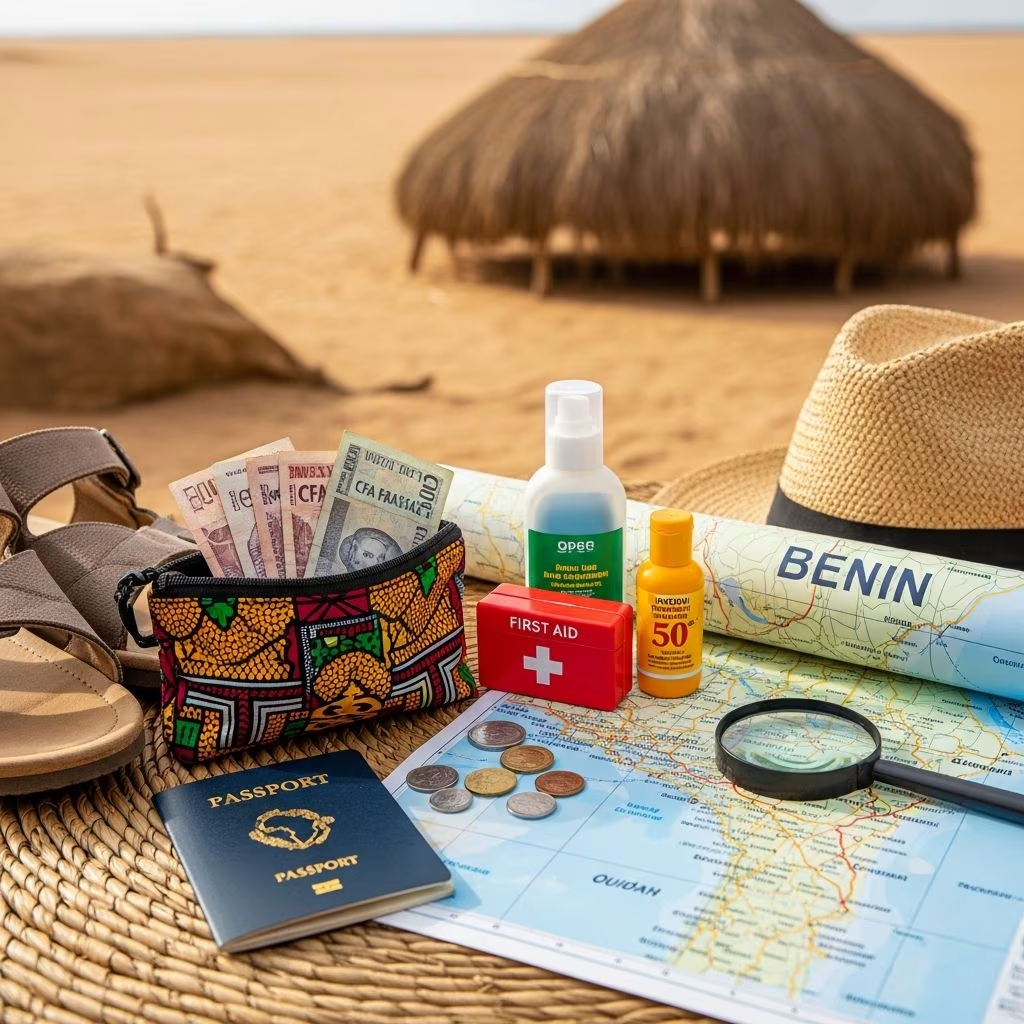
Benin stands as one of West Africa’s most compelling destinations, offering visitors a unique blend of spiritual heritage, historical significance, and natural wonders. The small but culturally rich nation attracts travelers seeking authentic experiences far removed from conventional tourist circuits. However, successful travel to this West African jewel requires thoughtful preparation and understanding of specific entry requirements and local conditions. This comprehensive guide addresses the essential considerations that will transform your Benin journey from a casual vacation into a meaningful exploration of this fascinating country.
Understanding Documentation and Entry Requirements
Before booking your flights to Benin, it is crucial to address the foundational legal requirements for entry. Documentation standards determine whether your trip begins smoothly or encounters unexpected complications at immigration checkpoints.
Visa Procedures and Timeline
Most international travelers require a visa to enter Benin, with the exception of citizens from ECOWAS member nations who enjoy simplified entry protocols. The Beninese government offers multiple visa categories tailored to different travel purposes. Tourist visas come in three primary options: a single-entry 30-day visa, a multiple-entry 30-day visa, and a multiple-entry 90-day visa. Business travelers and those with specific professional purposes can pursue alternative visa categories designed for longer engagements with Beninese institutions and enterprises.
A critical point that cannot be overstated is that visas are not available upon arrival at Benin’s airports or border crossings. This means you must complete your visa application well before your departure date. Processing times can vary depending on your location and the consulate or embassy handling your application. Planning to submit your visa application at least six to eight weeks before your intended travel date provides a comfortable margin for processing and potential complications. Applying early eliminates the stress of last-minute delays and ensures you can proceed with confidence once you arrive in Cotonou or other entry points.
Vaccination Requirements as Entry Conditions
Perhaps the most non-negotiable requirement for Benin travel is proof of yellow fever vaccination. This vaccination is mandatory, and border officials prioritize verification of this certificate above virtually all other documentation. Officials at Cotonou Airport conduct health screening immediately upon arrival, often checking vaccination proof before passengers even proceed through standard passport control. Without this certificate, you will be refused entry into the country, regardless of other preparations or circumstances.
Beyond yellow fever, while not legally mandated for entry, several additional vaccinations are strongly recommended by health authorities. Hepatitis A and B, typhoid, rabies, and meningitis vaccinations provide valuable protection against diseases present in the region. Schedule your vaccination appointments at a travel medicine clinic at least four to six weeks before your departure, as some vaccines require multiple doses administered at specific intervals. This advance planning ensures your immune system has adequate time to build protection before you encounter these pathogens.
Seasonal Considerations and Weather Planning
Benin’s tropical climate presents dramatically different conditions throughout the year, making seasonal timing a significant factor in travel satisfaction and comfort.
Optimal Travel Windows
The most favorable period for visiting Benin extends from September through November, just as the region transitions into the dry season. During these months, temperatures remain more moderate than during other periods, and humidity levels are lower, making outdoor exploration substantially more comfortable. The landscape remains verdant from recent rains, creating visually stunning conditions for photography and sightseeing.
An alternative favorable window occurs from February through April, offering a second opportunity during the dry season. While temperatures climb higher during this period compared to the September-November window, the conditions remain manageable for most travelers. The trade-off involves accepting greater heat in exchange for guaranteed minimal rainfall and superior wildlife visibility in natural reserves.
The high season spanning January through May presents the most challenging climate conditions, with intense heat that can overwhelm travelers unaccustomed to equatorial temperatures. The combination of elevated temperatures and high humidity creates an environment that demands significant physical adjustment. Many visitors find exploration during these months exhausting and prefer avoiding this period when possible. The rainy season from June through August brings heavy precipitation that can impede travel, complicate road conditions, and reduce visibility for wildlife observation.
Financial Preparation and Currency Matters
Understanding Benin’s financial infrastructure and payment systems prevents numerous inconveniences during your stay.
Cash Economy Realities
Benin operates substantially as a cash-based economy, with credit card infrastructure limited primarily to major hotels and tourist-focused establishments in the largest cities. This reality necessitates carrying adequate cash reserves throughout your journey. ATMs exist in Cotonou and larger urban centers, but their availability becomes increasingly sparse as you venture into regional areas or smaller towns. Planning to withdraw sufficient currency upon arrival ensures you maintain purchasing power without depending on potentially unreliable ATM access.
The West African CFA franc (XOF) serves as Benin’s official currency. Exchange rates fluctuate regularly, so checking current rates immediately before your trip provides accurate budgeting figures. Exchanging a portion of your funds at your origin country’s airport or financial institutions offers security compared to exchanging all currency upon arrival in Benin. However, rates at Cotonou’s airport facilities are typically competitive, allowing for reasonable exchange transactions immediately upon landing.
Culinary Experiences and Local Gastronomy
Food represents far more than sustenance in Benin; it embodies cultural traditions and offers direct engagement with local communities.
Regional Dishes and Specialties
Beninese cuisine shares common West African dishes that have become familiar to regional travelers. Fufu, jollof rice, plantain preparations, peanut soup, and fresh grilled fish appear consistently on menus throughout the country. These foundational dishes reflect both nutritional necessity and culinary tradition. However, Benin offers distinctive specialties that differentiate it from neighboring nations.
Wagashi, a traditional cheese produced by Fulani communities, represents a unique regional delicacy worthy of seeking out. This cheese offers flavor profiles distinct from European varieties and reflects Fulani pastoral traditions preserved across centuries. Coastal regions provide access to fresh coconut juice extracted directly from trees flourishing along Benin’s Atlantic shoreline. The combination of natural sweetness and refreshing properties makes this beverage particularly satisfying during warm afternoon hours spent exploring beach communities.
Adventurous eaters should approach street food with reasonable precautions similar to those taken in any developing nation. Foods prepared at established markets and by vendors with consistent customer bases typically pose minimal risk when consumed fresh and hot.
Cultural Understanding and Spiritual Traditions
Benin’s cultural landscape differs markedly from Western visitor expectations, particularly regarding spiritual practices that form the foundation of daily life.
Vodun as Living Religion
Vodun, often misrepresented in Western popular culture, represents the authentic spiritual tradition practiced by approximately 20 percent of Benin’s population. This faith system involves genuine spiritual practices, healing methodologies, and communal ceremonies rather than the Hollywood caricatures of pins and dolls that have permeated Western imagination. Visitors should approach this religion with respect and intellectual curiosity, recognizing it as a legitimate spiritual path worthy of serious engagement.
The term “fetish,” historically used to describe Vodun spiritual objects, is increasingly considered pejorative by practitioners who prefer the term “divinities” to describe these sacred elements. These divinities appear throughout the landscape, sometimes visible on roadsides or near pathways, representing spiritual presences integrated into daily Beninese life. Understanding this terminology reflects respect for cultural practitioners and their traditions.
Specific spiritual figures figure prominently in Beninese cultural practice. Zangbetos function as night watchmen with spiritual dimensions to their role, while Egunguns represent ancestral spirits that communicate directly with the living through human intermediaries. These traditions reflect sophisticated cosmological systems developed over centuries, not primitive superstitions. Travelers interested in genuine spiritual exploration should seek educational opportunities with practitioners rather than approaching these traditions as exotic curiosities.
Ethnic Diversity and Language Considerations
Benin encompasses approximately 42 distinct ethnic groups, each with unique cultural practices and historical narratives. The Fon people, most populous in the country, trace their heritage to the ancient Dahomey Kingdom and established major cities including Abomey and Ouidah. The Yoruba people maintain significant presence, having migrated from neighboring Nigeria. The Fulani communities occupy the Sahel regions and preserve pastoral traditions alongside their unique culinary heritage. The Tammari (also known as Somba) people distinguish themselves through their striking two-story fortified mud houses that reflect both architectural ingenuity and historical defensive needs.
French stands as the sole official language, a legacy of French colonial administration lasting from 1892 until 1960. While many citizens in tourist areas speak English, learning basic French phrases enhances communication and demonstrates cultural respect. The linguistic diversity means travelers should not expect English proficiency outside major tourist hubs, making guidebooks with translations or language applications valuable travel companions.
Safety Considerations and Regional Awareness
Benin generally ranks among West Africa’s safer destinations, but geographical and temporal considerations require awareness.
Security Recommendations
Major cities including Cotonou, Ouidah, Natitingou, and Savalou can be safely explored by visitors exercising standard precautions. Urban areas warrant standard city safety practices, particularly after dark when petty crime increases as in most global cities. Tourist-focused activities and accommodations in these cities operate with established security infrastructure.
Pendjari National Park offers legitimate opportunities to observe West African lions and elephant populations in their natural habitats, presenting wildlife experiences unavailable in many regions. Visitors should utilize organized tours through established operators who provide experienced guides and appropriate safety protocols.
Certain regions require avoidance due to security concerns extending beyond standard urban precautions. Border areas with Burkina Faso, Niger, and Nigeria present elevated risks that warrant deliberate avoidance. These regions fall outside the standard tourist circuit and offer minimal tourism infrastructure. Before finalizing your travel itinerary, consulting your government’s current travel advisories provides updated information reflecting real-time security situations.
Historical Sites and Spiritual Journeys
Benin’s historical significance, particularly regarding its role in global slavery and its status as Vodun’s birthplace, means many sites carry profound emotional and educational weight.
Ouidah’s Complex Heritage
Ouidah represents Benin’s most historically charged destination, serving as a major slave port during the Atlantic slave trade while simultaneously functioning as Vodun’s spiritual center. The Door of No Return marks the departure point where enslaved Africans left their continent for forced transportation to the Americas, standing as a solemn memorial to this historical atrocity. This site demands respectful contemplation and acknowledgment of this history’s ongoing significance.
The Fetish Market offers opportunities to observe contemporary Vodun spiritual practices, though visitors should approach this market as educational experience rather than entertainment venue. The Sacred Forest of Kpasse contains statues representing various divinities and reflects active spiritual practice. The Temple of Sacred Pythons preserves a living tradition where specific snake species receive veneration within a temple setting, representing religious practice that has endured for generations.
Abomey preserves architectural and artistic evidence of the Dahomey Kingdom’s historical significance, while Porto-Novo reflects Afro-Brazilian heritage through its colonial architecture and cultural institutions. These cities offer layered historical understanding that moves beyond simplistic tourist consumption toward genuine engagement with Beninese identity formation.
Practical Considerations and Final Preparations
| Preparation Category | Key Actions | Timeline |
|---|---|---|
| Documentation | Apply for visa; verify passport validity (6+ months) | 8-10 weeks before travel |
| Health | Complete yellow fever vaccination; schedule additional vaccines; consult travel medicine clinic | 6-8 weeks before travel |
| Financial | Exchange currency; notify bank of travel dates; research ATM locations | 2-3 weeks before travel |
| Research | Learn basic French phrases; review current events; read travel guides; check government advisories | 4-6 weeks before travel |
| Packing | Prepare for tropical climate; include sun protection; pack modest clothing for cultural sites | 1-2 weeks before travel |
Beyond formal requirements, meaningful preparation includes cultural orientation. Reading about Beninese history, listening to traditional music, and understanding the country’s role in West African politics enriches your experience substantially. This intellectual preparation transforms you from a casual tourist into an engaged visitor capable of appreciating nuances that purely logistical travelers miss.
Physical preparation matters equally, particularly regarding your tolerance for heat and humidity. If you originate from temperate climates, your body requires adjustment time. Arriving a day early in a coastal city allows acclimatization before undertaking extensive exploration or traveling inland to Pendjari National Park or northern regions.
Conclusion: Beginning Your Beninese Adventure
Benin rewards thorough preparation with experiences that transcend typical tourism. The combination of spiritual authenticity, historical significance, cultural diversity, and warm hospitality from local communities creates travel memories of exceptional depth. By addressing documentation requirements early, understanding health necessities, planning around seasonal variations, and approaching local culture with genuine respect, you establish conditions for meaningful engagement with this West African nation. The investment in preparation translates directly into travel satisfaction and the ability to move through Benin with confidence and cultural sensitivity.
References
- Benin Travel Guide — Responsible Vacation. Accessed April 2026. https://www.responsiblevacation.com/vacations/benin/travel-guide
- 11 Things to Know Before Traveling to Benin — Lonely Planet. https://www.lonelyplanet.com/articles/things-to-know-before-traveling-to-benin
- Benin: Know Before You Go – Visas, Travel Tips, and Advice — Beyond Babeesh. https://beyondbabeesh.com/benin-travel-tips-visa-advice/
- Benin Bound? Travel Tips to Know Before You Go — G Adventures. https://www.gadventures.com/blog/is-benin-safe/
- Benin Traveler Information — AARDY.com. https://www.aardy.com/blog/benin-traveler-information/

