

 Travel Essentials
 Travel Essentials

Explore Benin with kids through stunning beaches, wildlife safaris, stilt villages, and rich cultural heritage. Learn best destinations, travel tips, and age-appropriate activities.
 Travel Essentials
West Africa offers remarkable destinations for families seeking authentic cultural experiences combined with natural wonders, and Benin stands out as an excellent choice for parents willing to venture beyond traditional tourist circuits. This compact nation delivers an impressive array of attractions that appeal to children of various ages, from pristine coastal landscapes to remarkable wildlife reserves and living cultural traditions that captivate young minds. With proper preparation and realistic expectations, families can create lasting memories while exposing their children to diverse environments and communities.
Benin distinguishes itself as a family-friendly destination through its combination of manageable geography, year-round favorable climate, and diverse attractions concentrated within reasonable distances. Unlike sprawling African nations requiring extensive travel between sites, Benin’s compact size means families can experience multiple highlights without exhausting road time that typically challenges younger passengers. The country’s tropical climate provides warm, enjoyable weather throughout the year, allowing families to plan trips according to their preferences rather than restrictive seasonal windows.
The nation’s tourist infrastructure has adapted to accommodate family groups, with accommodations ranging from comfortable mid-range options to upscale resorts offering amenities that ensure children’s comfort during extended stays. Rather than pursuing budget travel approaches that often compromise on cleanliness and safety standards, families benefit significantly from modest investment in reliable accommodations, established restaurants, and organized tours operated by experienced guides familiar with child safety considerations.
Benin’s relatively undeveloped tourism sector means beaches and natural attractions remain refreshingly uncrowded compared to established African destinations. Families often find themselves enjoying popular sites with minimal crowds, providing peaceful experiences and opportunities for authentic interactions with local communities without navigating tourist masses.
While Benin welcomes visitors of all ages, the country genuinely appeals to families with children aged five and above. Younger children benefit from portable strollers, as infrastructure in rural areas and villages lacks paved surfaces and maintained walkways. Parents managing toddlers and infants should prioritize coastal areas and established cities where medical facilities and familiar food options exist.
School-age children between five and twelve typically thrive in Benin’s environment, developing genuine curiosity about unfamiliar landscapes, wildlife, and cultural practices. This age group possesses sufficient mobility for moderate walking and boat travel while maintaining interest in educational activities like wildlife observation and historical sites. Teenagers find Benin’s cultural attractions and adventurous experiences particularly engaging, especially when exploring vodou heritage sites and participating in wildlife observation activities.
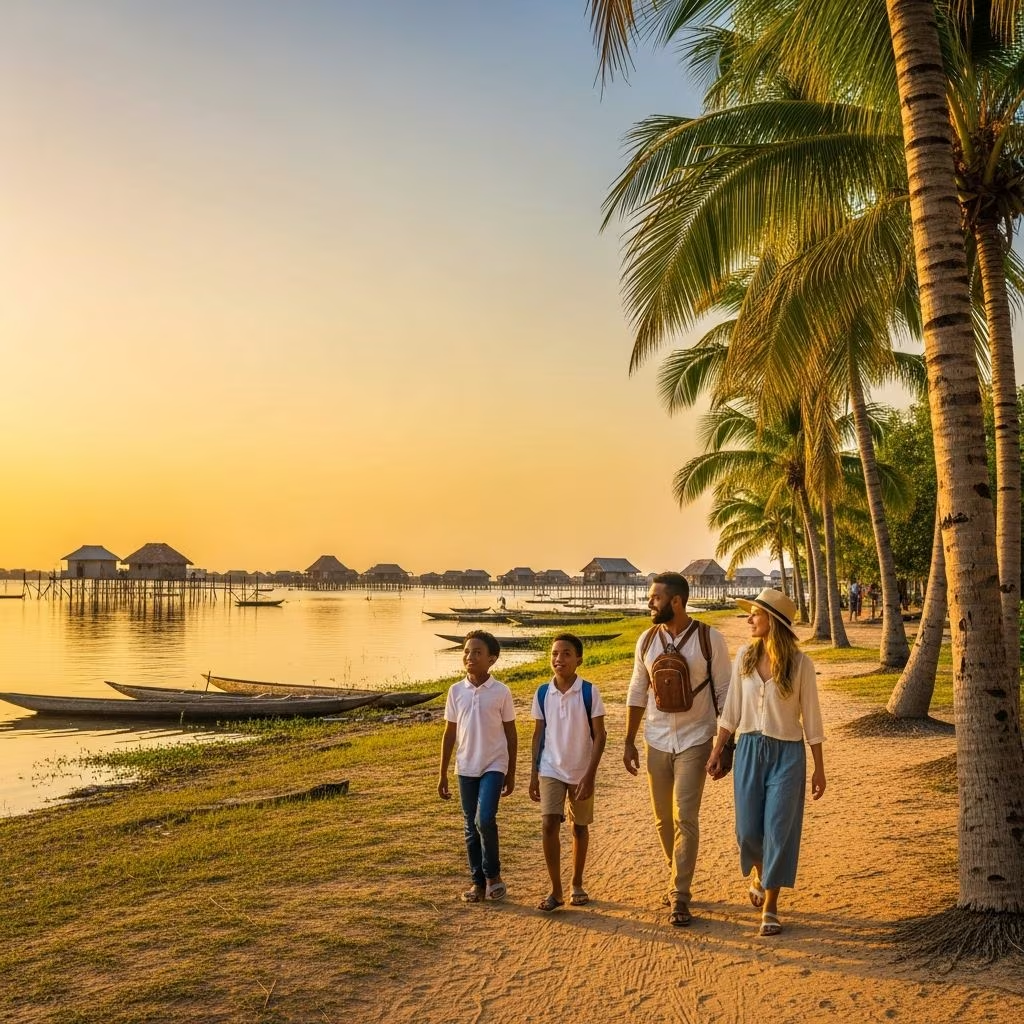
Located merely nine kilometers from Cotonou, Benin’s largest city, Ganvie represents one of West Africa’s most extraordinary cultural experiences and warrants position as the top family destination in the country. This remarkable stilt village, often compared to Venice, hosts approximately 20,000 residents whose ancestors fled slavery by establishing settlements on Lake Nokoué. The village opens directly to visitors without gates or formal entry procedures, allowing families to explore water lanes and observe traditional fishing practices at their own pace.
Children particularly respond to the visual spectacle of hundreds of homes constructed entirely over water, connected by wooden bridges and navigated by colorful pirogues (traditional boats). Local fishermen welcome family participation in learning traditional fishing techniques, transforming activities into educational experiences about sustainable livelihoods and cultural continuity. For ornithology-minded families, Lake Nokoué supports diverse bird populations including African Openbills and White Crested Herons, providing rewarding wildlife observation opportunities.
The village environment offers a sensory contrast to urban chaos, with evening temperatures dropping noticeably and lake breezes creating peaceful atmospheres distinct from mainland towns. A half-day visit suffices for families with younger children, though enthusiasts might extend exploration to overnight accommodations offering authentic experiences.
For families prioritizing relaxation over intensive sightseeing, Grand Popo delivers pristine beaches, manageable infrastructure, and opportunities for cultural engagement without overwhelming sensory stimulation. This coastal destination functions as an ideal base for decompressing during extended Benin visits, balancing activity with restorative beach time critical for family satisfaction.
The optimal visiting window spans February through April and September through November, when weather conditions prove most comfortable, accommodations offer better value, and local communities are more accessible for meaningful interactions. During these periods, fewer tourists mean families enjoy beaches with minimal crowds, allowing children freedom for water activities and beach exploration.
Bouche du Roy, where local rivers merge with ocean currents, offers unique geographical features and opportunities for observing coastal ecosystems. Lac Ahémè provides cultural context unavailable at typical beach destinations, as families can observe traditional salt farming methods practiced by Beninese women, learning about agricultural heritage and sustainable practices.
Encompassing 2,755 square kilometers and designated as a UNESCO World Heritage Site, Pendjari National Park delivers authentic safari experiences rivaling more famous African reserves while remaining significantly less crowded. The park functions as West Africa’s premier wildlife destination, hosting lions, hippopotamuses, elephants, water buffalo, and numerous reptile species in natural habitats.
Essential logistics require advance planning: families should arrange professional guides through hotels or established travel companies in Porto Novo or Cotonou rather than attempting to hire guides at park entrances. Four-wheel-drive vehicle rental through tour operators ensures comfortable family transportation across challenging terrain while providing experienced drivers knowledgeable about wildlife behavior and park geography.
Successful safari experiences with children demand practical preparation including protective headwear, sunscreen application, abundant drinking water, and portable snacks sustaining energy during extended observation periods. Early morning and late afternoon drives prove most productive for wildlife viewing when animals are most active, though schedules should accommodate younger children’s rest needs and attention spans.
Teenagers demonstrate particular interest in Ouidah, recognized as vodou’s spiritual birthplace and offering educational opportunities regarding African spiritual traditions and colonial history. The Temple of Pythons presents a striking visual experience where sacred serpents are maintained for religious ceremonies, providing memorable yet somewhat intense encounters suitable for older children with mature understanding of cultural practices.
The Musée de la Fondation Zinso contextualizes colonial history, slavery’s devastating impact, and Benin’s cultural resilience through exhibits and artifacts that transform abstract historical concepts into tangible human experiences. This intellectual approach suits teenagers capable of processing complex historical narratives involving difficult subjects.
While bustling urban environments can overwhelm families with younger children, these cities offer worthwhile explorations when approached strategically with older kids and teenagers. Cotonou’s Grand Marché du Dantokpa and Artisanal Centre provide shopping opportunities for authentic Beninese crafts and souvenirs beyond typical tourist commercialism. The Jardin Place Jean Bayol in Porto-Novo showcases impressive colonial-era gardens featuring statuary and horticultural design that appeals to visitors interested in landscape architecture.
Fidjrosse Beach in the capital region functions as a social space where locals gather, vendors sell authentic food offerings, and families can interact with community members while enjoying swimming and relaxation. These informal settings often produce more meaningful cultural exchanges than structured tourist activities.
Families traveling to Benin should consult medical professionals regarding vaccinations, malaria prevention medications appropriate for children’s ages and weights, and travel insurance provisions covering emergency medical evacuation. Established urban accommodations typically offer clean water, reliable sanitation, and modern medical facilities, though remote areas present greater challenges requiring professional medical consultation before travel.
Rather than pursuing budget-focused travel compromising on comfort and safety, families benefit significantly from selecting mid-range establishments offering reliable amenities, professional staff, and established safety records. Quality accommodations ensure consistent access to clean bathrooms, potable water, and prepared meals reducing exposure to foodborne illnesses affecting children’s wellbeing during travel.
Private vehicle hire with experienced drivers provides superior flexibility and safety compared to public transportation for families managing multiple passengers and baggage. Travel companies and hotels facilitate reliable arrangements ensuring properly maintained vehicles and vetted drivers familiar with family travel requirements.
| Season | Months | Weather Characteristics | Family Suitability |
|---|---|---|---|
| Dry Season | November-March | Lower humidity, minimal rainfall, pleasant temperatures | Excellent for all activities and age groups |
| Transition | April-May, September-October | Moderate temperatures, occasional rain, fewer tourists | Good for families; better accommodation prices |
| Rainy Season | June-August | High humidity, frequent rainfall, challenging roads | Possible but less ideal for young children |
Benin maintains a reputation as a relatively safe destination for family travel compared to certain African nations. Standard travel precautions including awareness of surroundings, avoiding isolated areas after dark, and securing valuables remain appropriate. Professional tour operators and established accommodations maintain family-oriented security protocols.
French functions as Benin’s official language, with English spoken primarily in tourist establishments. Teaching children basic French phrases enhances travel experiences and facilitates interactions with locals. Many tour guides and hotel staff speak English, reducing language barriers for English-speaking families.
Ten to fourteen days allows comprehensive exploration including Cotonou, Ganvie, Pendjari National Park, and cultural sites without excessive travel fatigue. Shorter visits concentrating on two or three primary destinations remain satisfying for families with limited vacation schedules.
Mid-range family travel investing in quality accommodations, professional guides, and reliable transportation typically costs $100-200 per person daily including all major expenses. Budget travel pursuing minimal accommodation and transport expenses may reduce costs but compromises safety and comfort critical for family satisfaction.
While challenging roads and high humidity characterize rainy months, family travel remains possible with adjusted activity expectations and willingness to navigate temporary transportation disruptions. Lower tourist volumes mean better accommodation availability and pricing during these periods.
Benin presents families with opportunities for authentic cultural engagement, wildlife observation, and natural exploration rarely available in overcrowded destinations. By approaching travel with realistic expectations, prioritizing family comfort through practical accommodations, and organizing activities suited to children’s ages and interests, parents create experiences transcending typical vacation satisfaction. The nation’s remarkable diversity—from floating villages to wildlife reserves, from coastal relaxation to spiritual heritage sites—ensures every family member discovers elements resonating with their interests, generating conversations and memories sustaining long after journeys conclude.
