

 Travel Essentials
 Travel Essentials

Uncover the charm of Bergamo and Brescia, former Italian Capitals of Culture, featuring UNESCO walls, Roman ruins, art galleries, and a new connecting path for hikers and cyclists.
 Travel Essentials
Perched in the heart of Lombardy, Bergamo and Brescia offer travelers an authentic taste of Italy’s rich heritage. These neighboring cities, once named joint Italian Capitals of Culture, blend medieval charm, Roman antiquity, and Renaissance splendor into compact, walkable destinations perfect for history buffs, art enthusiasts, and food lovers alike.
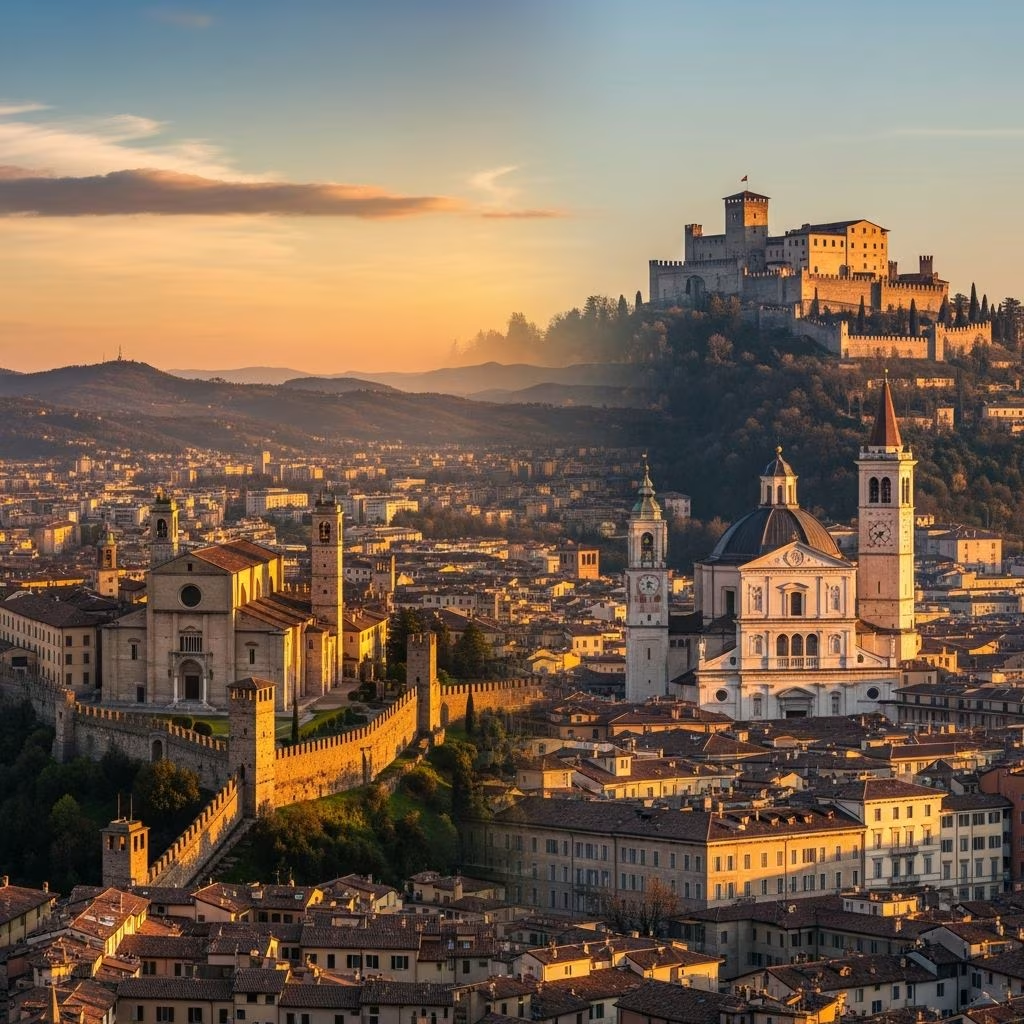
Bergamo captivates with its striking division into two distinct realms: the bustling Città Bassa below and the enchanting Città Alta above. This vertical layout creates a unique urban experience, where modern conveniences meet preserved medieval splendor.
The lower town, Città Bassa, pulses with contemporary energy. Wide boulevards line with shops, cafes, and sleek museums, making it an ideal base for arrivals. From here, visitors ascend to Città Alta via a swift funicular ride, costing just €1.30 per trip or €4 for a day pass. This quick journey reveals panoramic views of rolling hills and distant Alps.
Atop the hill, Città Alta unfolds as a living museum encircled by robust 16th-century Venetian walls—a UNESCO World Heritage site spanning Lombardy. These fortifications, over 5 kilometers long, offer elevated walkways with sweeping vistas, especially at sunset when the city glows golden.
Art seekers should detour to the revitalized Accademia Carrara, showcasing masterpieces by Botticelli, Raphael, and Titian in a newly renovated space. Nearby, the Gamec gallery presents modern works, including thought-provoking installations on technology and space by artists like Yoko Ono.
Brescia, often overshadowed by Milan, reveals itself as Northern Italy’s largest archaeological hub. Its historic core invites exploration on foot, weaving through eras from Roman forums to Renaissance piazzas.
Begin at Piazza del Foro, the ancient republic’s political nerve center. Here, the well-preserved Roman Theatre seats 15,000 in tiered stone, while the Capitolium Temple boasts mosaic floors, frescoes, and a reconstructed Winged Victory statue from the 1st century. A climate-controlled underground chamber precedes entry, preserving these treasures.
The UNESCO-listed Santa Giulia Museum complex stands as Brescia’s crown jewel. Spanning 13th to 18th centuries, it displays Longobard artifacts, medieval frescoes, and Renaissance sculptures across monastic buildings. Seasonal exhibits enhance its appeal.
Crowning the Cidneo Hill, Brescia Castle houses museums on Risorgimento history and wartime artifacts, with ramparts offering city panoramas. The Mille Miglia Museum nearby celebrates Italy’s legendary vintage car race with gleaming exhibits.
| Site | Era | Highlight |
|---|---|---|
| Capitolium Temple | Roman | Mosaics & Victory Statue |
| Santa Giulia | Medieval-Renaissance | UNESCO Artifacts |
| Duomo Vecchio | 11th Century | Octagonal Dome |
| Cidneo Castle | Medieval | Panoramic Views |
Linking these cities, the 80-mile Cammino Bergamo-Brescia trail opened as a hallmark of their cultural year. This six-day, eight-stage hike suits all levels, traversing hills, villages, Franciacorta wine roads, and two regional parks. Art installations dot the route, turning it into an outdoor gallery via ancient paths like Via Valeriana.
Cyclists and casual walkers find gentle terrain, with 34 municipalities en route. Spot UNESCO sites at endpoints: Bergamo’s walls and Brescia’s Santa Giulia. Trains provide a swift alternative, linking centers in under an hour for €5.
No visit skips the table. Bergamo shines with polenta e osei—golden cornmeal with bird-shaped pastries—and casoncelli pasta stuffed with cheese and pears. Brescia pairs stracchino cheese with handmade salami.
Franciacorta, nearby, rivals Champagne with metodo classico sparkling wines from local vineyards. Savor at agriturismi along the trail, where tastings complement hikes.
Both cities cradle saints: Pope John XXIII from Sotto il Monte near Bergamo, Pope Paul VI from Concesio by Brescia. Pilgrimage paths trace their lives, blending faith with scenery.
Bergamo’s Duomo and Brescia’s Renaissance Cathedral host ornate masses, their domes echoing centuries of devotion.
Timing enhances visits. Bergamo’s Donizetti Opera Festival fills summer nights with arias in piazzas. Brescia’s Teatro Grande hosts operas, while Mille Miglia revs engines annually. Year-round, markets and exhibits from the cultural program continue.
Reach via Milan trains (30-60 minutes). Stay in Città Alta boutique hotels or Bassa modern stays. Walk everywhere; funiculars and buses aid. Budget €100-150 daily for meals, sites, transit.
Three days ideal: one per city, one for the trail or joint sites.
Spring-fall for festivals; avoid peak August heat.
Yes—funiculars, walls walks, interactive museums engage all ages.
Abundant: polenta, cheeses, risottos cater well.
Funiculars and lifts help; cobbles challenge wheels in upper areas.
