

 Travel Essentials
 Travel Essentials

Your complete 2026 Berlin travel guide covering neighborhoods, attractions, itineraries, dining, and practical tips for an unforgettable German capital experience.
 Travel Essentials
Berlin stands as one of Europe’s most compelling destinations, a city where architectural grandeur meets street-level authenticity. Spanning 892 square kilometers—nine times larger than Paris—the German capital presents a unique urban experience shaped by its divided past and vibrant present. For travelers planning a 2026 visit, understanding how to navigate this expansive metropolis transforms a sightseeing trip into a meaningful cultural immersion.
The city’s physical layout tells the story of modern Europe. Berlin’s eastern districts, including Mitte, Prenzlauer Berg, and Friedrichshain, showcase the raw, artistic aesthetic of former East Berlin with alternative galleries, street art, and bohemian energy. Meanwhile, western neighborhoods like Charlottenburg, Schöneberg, and Tiergarten reflect a more refined character, featuring classical architecture and upscale establishments. This geographical duality allows visitors to experience multiple urban identities within a single destination.
The efficient public transportation system—comprising U-Bahn subway trains and trams—connects major attractions within 15 to 30 minutes, making even Berlin’s considerable size manageable for travelers. Most visitors find that staying centrally during their first visit maximizes convenience and minimizes travel time between attractions.
Mitte: The Historical Core
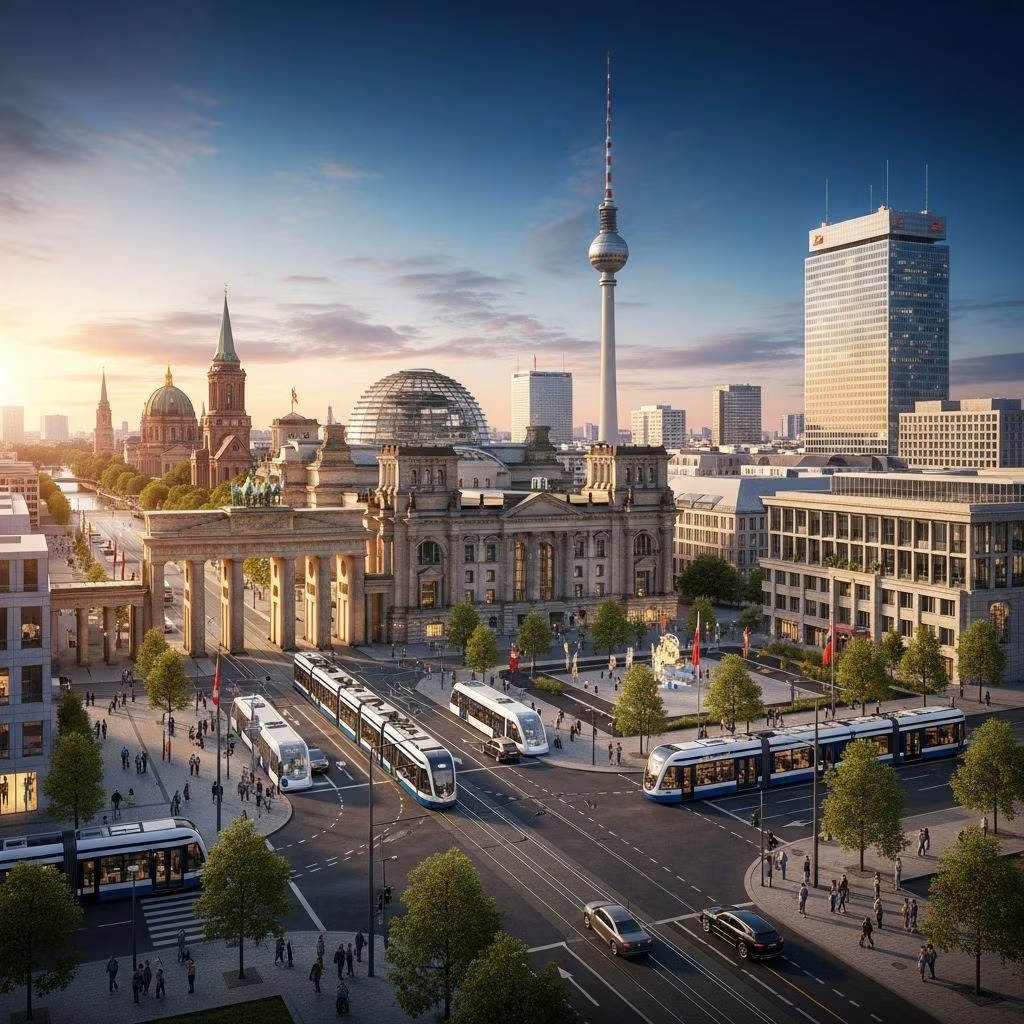
Mitte occupies Berlin’s historical center, encompassing Museum Island, the Brandenburg Gate, the Reichstag, and the iconic Unter den Linden boulevard. This zone concentrates the highest density of major historical attractions but reflects premium pricing, with hotel rates ranging from €180 to €450 nightly and restaurant prices skewing toward the touristy end of the spectrum. For first-time visitors planning intensive sightseeing, Mitte provides unbeatable convenience, with most major sites within 15-minute walking distance.
East Berlin’s Alternative Districts
Prenzlauer Berg and Friedrichshain offer a contrasting experience, featuring vintage boutiques, independent cafes, and authentic street culture. These neighborhoods appeal to travelers seeking to engage with Berlin’s creative communities rather than following conventional tourist routes. Accommodation and dining costs run considerably lower than Mitte, making these areas attractive for budget-conscious visitors.
Western Berlin’s Refined Quarters
Charlottenburg and surrounding western districts provide a more polished experience, home to baroque palaces, classical museums, and established restaurants. These neighborhoods suit travelers preferring a less frenetic pace and more traditional European hospitality.
Historical Landmarks Requiring Dedicated Time
The Reichstag building stands as Berlin’s most symbolic structure, requiring advance reservation for 9 AM dome access. The 90-minute experience includes exploring the architectural symbolism, accessing rooftop terraces, and utilizing the audio guide explaining the glass dome’s significance. The nearby Brandenburg Gate offers photographic opportunities, though its location on a major boulevard means it functions more as a walking landmark than a destination warranting extended time.
The Memorial to the Murdered Jews of Europe and the Memorial to Homosexuals Persecuted Under Nazism demand emotional preparation and time for reflection. The underground Information Center at the Holocaust Memorial (free admission) provides essential historical context through survivor testimonies, family histories, and deportation documentation that deepens understanding of these somber sites.
Iconic Viewpoints and Neighborhoods
Tempelhofer Feld, a former airport runway converted to public space, offers an unobstructed horizon and becomes particularly spectacular at sunset. Visitors can pack beverages and snacks, settling in for an evening of watching light transform the city. Alternatively, riding the U-Bahn train line end-to-end provides an unconventional perspective on urban neighborhoods and local transportation culture.
The Landwehr Canal presents slow-paced afternoon wandering, while Viktoriapark rewards sunrise visitors with elevated vantage points and waterfall features. Kreuzberg’s bohemian character emerges during unhurried morning exploration, when neighborhood bakeries showcase fresh pastries before 9 AM.
Museum Island and Cultural Institutions
Museum Island concentrates five world-class museums within walking distance, justified by the €19 combination ticket. The Pergamon Museum merits four hours exploring architectural reconstructions, while the Bode Museum (two hours) specializes in Byzantine art and sculpture, and the Alte Nationalgalerie (two hours) features 19th-century European painting. Visitors maximizing museum time typically allocate full-day visits rather than attempting multiple museums during abbreviated hours.
WWII and Cold War History
Checkpoint Charlie, despite its touristy reputation, warrants brief visits for understanding Berlin’s division. The Kaiser Wilhelm Memorial Church’s jagged exterior creates a visceral reminder of wartime destruction. The Berlin Wall Memorial offers extensive exhibition space explaining the barrier’s construction, operation, and eventual dismantling. The East Side Gallery preserves the remaining wall section as an open-air art gallery, with murals from international artists transforming a Cold War symbol into contemporary cultural expression.
Anhalter Bahnhof represents a hidden historical gem—the remains of Berlin’s pre-war central railway station—revealing urban archaeology for history enthusiasts willing to venture beyond conventional tourist circuits.
Arts and Contemporary Culture
Modern art galleries populate Charlottenburg and the Mitte district, offering opportunities to engage with contemporary artistic practice. The city’s nightlife scene, centered around world-famous clubs like Berghain and Rosa Luxemburg Platz venues, defines Berlin’s cultural reputation. Oranienburger Strasse and Simon-Dach-Strasse concentrate bars and restaurants favoring casual people-watching and organic social interaction over structured dining experiences.
Curry 36 delivers authentic currywurst (€4-7), representing accessible authentic eating. Vietnamese District restaurants (€12-18) offer quality cuisine at moderate prices. Neighborhood bakeries before 9 AM showcase fresh pastries and local specialties at minimal cost. Teledisko, a vintage phone booth venue with neon aesthetics, provides unique musical entertainment combining nostalgic atmospherics with contemporary sound systems.
The flea market at Mauerpark (Sundays) combines vintage shopping with outdoor karaoke, offering simultaneous local entertainment and consumer experiences. This gathering attracts both residents and visitors, providing authentic neighborhood culture observation.
Three-Day Intensive Focus
Five-Day Expanded Schedule
Days 1-3 follow the intensive framework above, with Day 4 dedicated to either extended Museum Island exploration or a Potsdam day trip featuring Friedrich the Great’s palaces and gardens. Day 5 allows neighborhood-specific immersion, visiting either western Charlottenburg-surrounding districts or eastern artistic neighborhoods depending on initial preference.
Berlin maintains status as one of Europe’s most affordable capital cities. Budget-conscious daily costs range €80-120 per person, mid-range travelers typically spend €120-200 daily, while luxury visitors budget €200+ per day. Hotel accommodation represents the largest expense variable: budget hostels (€20-35), mid-range hotels (€80-150), and premium establishments (€180-450). Museum combination tickets (€19) offer excellent value compared to individual entry fees. Public transportation day passes (€10-15) provide unlimited U-Bahn and tram access, eliminating ride-by-ride payment friction.
The U-Bahn subway and tram networks eliminate dependence on taxis or ride-sharing services. Free walking tours represent valuable investment—experienced guides provide historical narratives, street-level perspectives, and local recommendations that standard guidebooks cannot replicate. David Hasselhoff’s unexpected cult status in Berlin exemplifies the type of cultural nuance tour guides reveal through lived experience rather than written materials.
Boat tours along the Spree River provide entirely different urban perspectives, transforming Berlin’s appearance from water-level vantage. The calm pace accommodates foot-weary travelers while revealing architectural and landscape dimensions invisible from ground level.
Summer months attract maximum tourist crowds while offering extended daylight for exploration and outdoor activities. Shoulder seasons (spring and autumn) provide moderate weather and reduced tourism density. Winter visits require cold-weather preparation but offer fewer crowds and Christmas market atmospherics during December. Sunday Mauerpark flea market and outdoor karaoke occur year-round, though summer attendance substantially exceeds winter participation.
Street scams target distracted tourists in high-density areas; maintaining awareness of belongings and avoiding obvious displays of wealth mitigates risk. Berlin’s neighborhoods generally reflect low violent crime rates, though visitor situational awareness remains prudent. Public transportation operates 24 hours on weekends, supporting late-night activity participation.
Berlin’s contrasts—between grand historical monuments and street-level artistic expression, between western polish and eastern rawness, between Cold War memorials and contemporary clubs—define its appeal. Successful visits balance structured sightseeing with organic neighborhood exploration, historical education with cultural participation, and tourist highlights with local discovery.
Whether planning a focused three-day historical tour or an extended week-long cultural immersion, understanding Berlin’s unique urban structure and planning logistics ensures travelers maximize their time in this endlessly fascinating capital.
