


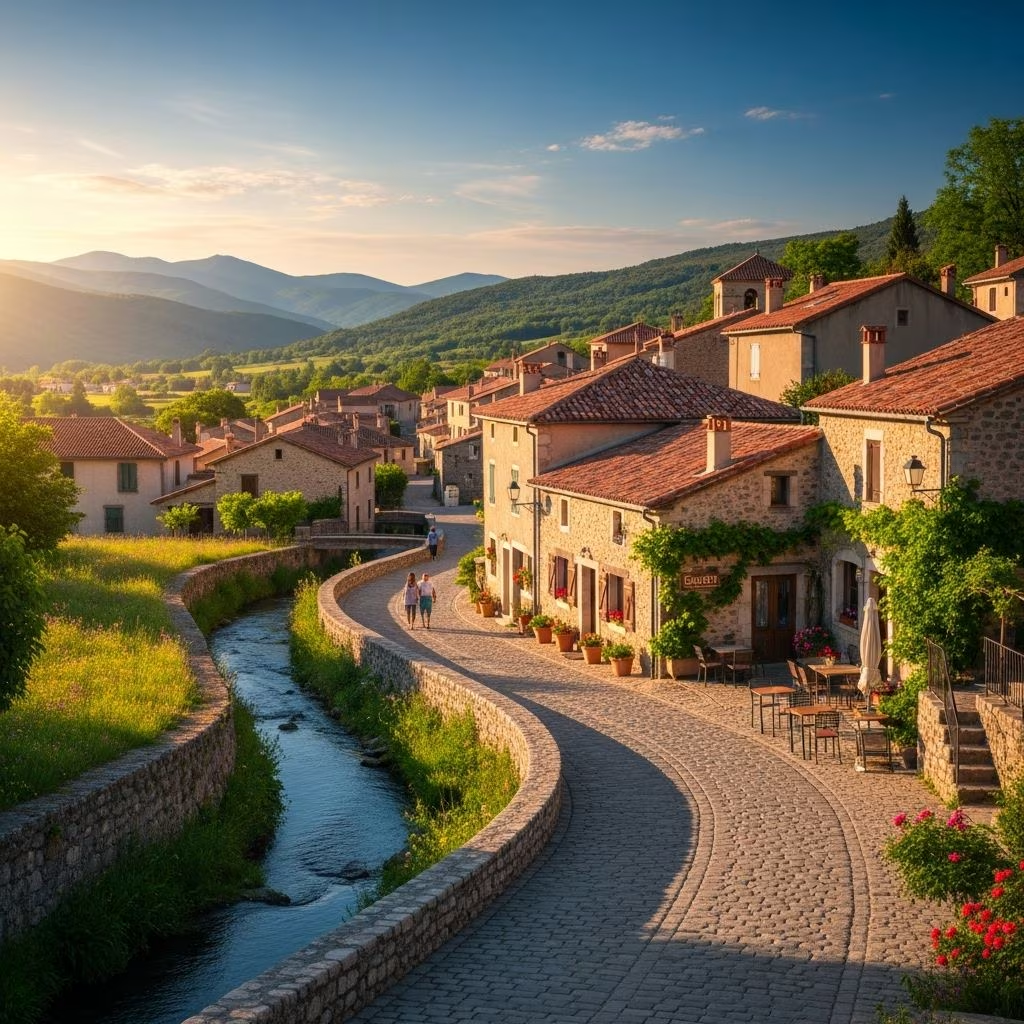
European travel has long captured the imagination of adventurers and culture enthusiasts worldwide. However, the surge in tourism to iconic destinations like Paris, Rome, and Barcelona has transformed these cities into crowded, expensive hubs that often leave visitors disappointed and financially strained. The good news is that Europe harbors numerous exceptional alternatives that deliver the same cultural richness, architectural splendor, and gastronomic delights at a fraction of the cost. These emerging destinations provide travelers with opportunities to experience authentic European life while maintaining reasonable budgets and enjoying significantly fewer crowds.
Why Eastern European Cities Are Changing the Travel Landscape
The resurgence of Eastern European cities as premier travel destinations represents a significant shift in how travelers approach European vacations. Countries in Central and Eastern Europe have invested heavily in heritage preservation and tourism infrastructure, making them increasingly accessible to international visitors. These regions offer remarkable value propositions without compromising on quality experiences. From medieval old towns to thermal baths, vibrant cultural scenes to exceptional cuisine, Eastern European cities challenge the assumption that authentic European experiences must come with premium price tags.
The affordability extends across all aspects of travel. Accommodations range from budget-friendly hostels to boutique hotels, meals at local restaurants cost a fraction of their Western European equivalents, and attractions often remain free or charge minimal entry fees. This economic advantage allows travelers to extend their stays, explore more thoroughly, and engage more meaningfully with local communities.
Prague and Budapest: The Eastern European Classics Redefined
Prague, Czech Republic, continues to establish itself as the quintessential Eastern European destination. The city’s Gothic spires, Charles Bridge, and historic squares provide an almost fairytale setting that rivals any Western European capital. What distinguishes Prague from its pricier counterparts is the exceptional affordability combined with authentic charm. Visitors can explore centuries-old Jewish quarters, wander through baroque-laden neighborhoods, and sample traditional Czech beer without depleting their travel budgets.
Budapest represents another transformative experience that justifies its reputation as one of Europe’s most underrated capitals. The city’s thermal bath culture offers a uniquely Hungarian leisure experience unavailable in other European destinations. The Danube River provides scenic backdrop for exploring both Buda and Pest sides, each with distinct architectural styles and cultural significance. Weekend getaways to Budapest allow adequate time to experience the city’s museums, ruin bars, and culinary scene without requiring extended vacation time.
Both cities share the advantage of being significantly more walkable than many Western European capitals, reducing transportation costs while encouraging organic discovery of neighborhoods and attractions.
The Baltic Emerging Market: Latvia and Beyond
The Baltic nations represent Europe’s final frontier for budget-conscious travelers seeking unexploited cultural treasures. Riga, Latvia’s capital, exemplifies this potential with its stunning Art Nouveau architecture, historic Old Town, and lively cultural scene. The city’s medieval core contrasts beautifully with its Soviet-era districts, creating layers of history visible in the urban landscape. Evening entertainment thrives in the city’s nightlife venues, where local beverages cost a mere fraction of Western European equivalents.
The walkability of Baltic cities extends to their neighboring towns and countryside, making day excursions feasible without expensive transportation. Tourism infrastructure continues developing while maintaining authentic character, suggesting a narrow window for travelers seeking experiences before mainstream tourism inevitably transforms these destinations.
Balkans: Unveiling Southern European Alternatives
The Balkans offer compelling alternatives to Croatia’s crowded Adriatic coast and Italy’s overwhelming tourist season. Sarajevo, Bosnia and Herzegovina, represents one of the continent’s most fascinating yet undervisited capitals. The city’s complex history, evident in its architectural fusion of Ottoman, Austro-Hungarian, and modern influences, creates an intellectually stimulating travel experience. The surrounding mountain regions provide outdoor recreation opportunities for hiking enthusiasts.
The geographic isolation of Sarajevo from major cruise ship routes protects it from the day-tripper phenomenon that transforms many Mediterranean towns into temporary tourist encampments. This distance translates directly into authenticity and affordability, allowing visitors to engage with genuine local culture rather than tourism industry performance.
Zagreb, Croatia’s capital, provides another Balkan option that receives significant fewer visitors than coastal regions. The city’s museums, theaters, and historic squares reflect Central European cultural traditions distinct from its Adriatic counterpart. Accommodation and dining costs remain reasonable compared to Croatian coastal destinations.
Central European Sophistication: Bratislava and Regional Hubs
Bratislava, Slovakia, occupies a unique position as a conveniently located destination frequently overlooked by travelers focused on Vienna and Budapest. Positioned between these two renowned capitals, Bratislava benefits from spillover tourism while maintaining distinctly lower prices. The city’s walkable old town features manageable attractions including hilltop castles and baroque architecture accessible without extensive transportation requirements.
The strategic location makes Bratislava ideal for travelers combining multiple Central European destinations. River cruises frequently include Bratislava stops, though these represent organized tour groups rather than independent travelers, maintaining a more relaxed atmosphere away from cruise ship hours. Local establishments cater to residents rather than tourists, preserving authentic dining and entertainment experiences.
Southern Spanish Regions and Italy’s Lesser-Known Alternatives
While Spain and Italy remain popular destinations, strategic selection of regions can significantly reduce costs while avoiding summer crowds. Central Spanish regions including Extremadura and Castilla-La Mancha offer remarkable cultural heritage with minimal tourism infrastructure. These regions showcase authentic Spanish village life, traditional architecture, and regional cuisine unchanged by tourism commercialization.
Italy extends beyond Cinque Terre and Amalfi Coast. Porto Venere and nearby La Spezia provide Mediterranean experiences with Ligurian coastal beauty minus the extraordinary expense and overwhelming crowds. The proximity to Italian Riviera attractions remains convenient while accommodations cost substantially less than famous coastal villages.
Poland’s Cultural and Economic Appeal
Krakow, Poland, emerges as a particularly compelling destination for travelers seeking cultural depth and exceptional value. The city’s preserved medieval old town provides architectural richness rivaling far more expensive Western European destinations. Proximity to historical sites including Auschwitz adds educational dimension to visits. Accommodation costs remain remarkably affordable even in prime locations, with quality central hotels and apartments available at rates substantially below Western European equivalents.
The city’s cultural scene—including museums, galleries, and performing arts venues—operates at prices making cultural engagement accessible to budget travelers. Local cuisine reflects Central European traditions distinct from Western European offerings while remaining exceptionally affordable.
Accommodations and Dining: The Budget Reality
One of travel’s most significant cost components—accommodation—demonstrates how dramatically prices vary across European destinations. Budget hotels in Eastern European cities frequently cost €40-60 nightly, while comparable facilities in Paris or London exceed €150-200. This differential allows budget travelers to upgrade accommodation quality substantially or extend their trips considerably.
Dining economics reflect similar patterns. Three-course meals in Bratislava cost approximately €30-50 for two people compared to €80-120 for comparable dining in Western European capitals. Local beverages cost €2-4 for wine and €2-2.50 for beer, representing remarkable value compared to Western European bars.
| Destination | Budget Hotel/Night | Mid-Range Hotel/Night | 3-Course Meal (2 people) | Local Beer |
|---|---|---|---|---|
| Prague, Czech Republic | €40-60 | €80-120 | €25-40 | €2-3 |
| Budapest, Hungary | €35-55 | €70-100 | €20-35 | €2-2.50 |
| Bratislava, Slovakia | €40+ | €100+ | €30-50 | €2.50 |
| Krakow, Poland | €30-50 | €60-80 | €18-30 | €1.50-2.50 |
| Riga, Latvia | €35-50 | €75-110 | €22-38 | €2-3 |
Seasonal Considerations and Timing Strategies
Shoulder seasons—spring and fall—offer optimal combinations of pleasant weather, manageable crowds, and reasonable accommodation pricing. Summer transforms many European destinations into overcrowded commercial zones with inflated prices reflecting peak demand. Spring provides fresh weather and blooming landscapes, while autumn delivers comfortable temperatures and harvest-related cultural activities without summer’s intensity.
Eastern European destinations maintain value advantages year-round, though winter visits require cold-weather preparation. Cultural attractions remain accessible throughout winter, and holiday markets provide festive December experiences without the summer crush.
Transportation Networks and Regional Connectivity
The extensive network of budget airlines, regional trains, and coach services enables affordable movement between destinations. These hidden gem cities frequently serve as regional hubs rather than tourism poles, meaning transportation from international airports remains reasonably priced. Train systems connecting Eastern and Central European cities encourage multi-city itineraries without extraordinary expense.
Frequently Asked Questions
What makes these destinations more affordable than traditional European capitals?
Lower cost-of-living economies, reduced tourism demand compared to famous destinations, and developing tourism industries create significantly lower prices for accommodations, dining, and attractions. These cities prioritize local residents’ economic needs rather than tourism industry profit maximization.
Do lesser-known European cities offer cultural experiences comparable to famous destinations?
Yes. Many hidden gem cities possess rich historical backgrounds, exceptional architecture, world-class museums, and vibrant cultural scenes rivaling famous destinations. The primary difference is tourist volume rather than cultural substance.
Is safety a concern when visiting Eastern European destinations?
Eastern European cities maintain comparable or superior safety profiles compared to major Western European capitals. Tourism infrastructure development includes professional hospitality services and established visitor support systems.
When should travelers visit these destinations to avoid crowds while accessing good weather?
May-June and September-October provide optimal conditions combining pleasant weather with manageable tourism volumes. These shoulder seasons avoid summer’s intensity while maintaining comfortable travel conditions.
Can budget travelers access quality accommodations in these cities?
Absolutely. Even budget travelers can secure clean, comfortable accommodations in central locations at reasonable rates. Quality hostels, guesthouses, and affordable hotels exist throughout Eastern European cities, often exceeding quality standards expected at equivalent prices in Western Europe.
References
- 20 Cheap European City Breaks for an Affordable Getaway — The Travel Expert. Accessed April 2026. https://thetravelexpert.ie/europe/top-20-cheap-european-city-breaks-for-an-affordable-getaway/
- Top Europe Destinations for Summer (For Affordable Prices and Fewer Crowds) — Kayla Wordsmith. 2024. https://kaylawordsmith.com/2024/07/my-top-europe-destinations-for-summer-for-affordable-prices-and-fewer-crowds/
- 10 Cheap Places in Europe in Summer You Didn’t Think About — Road is Calling. Accessed April 2026. https://www.roadiscalling.com/cheap-places-to-travel-in-europe-in-summer/
- The Cheapest City Breaks in Europe for 2026 – Ranked — Time Out. 2026. https://www.timeout.com/europe/things-to-do/best-cheapest-cities-to-visit-in-europe-on-a-budget

