


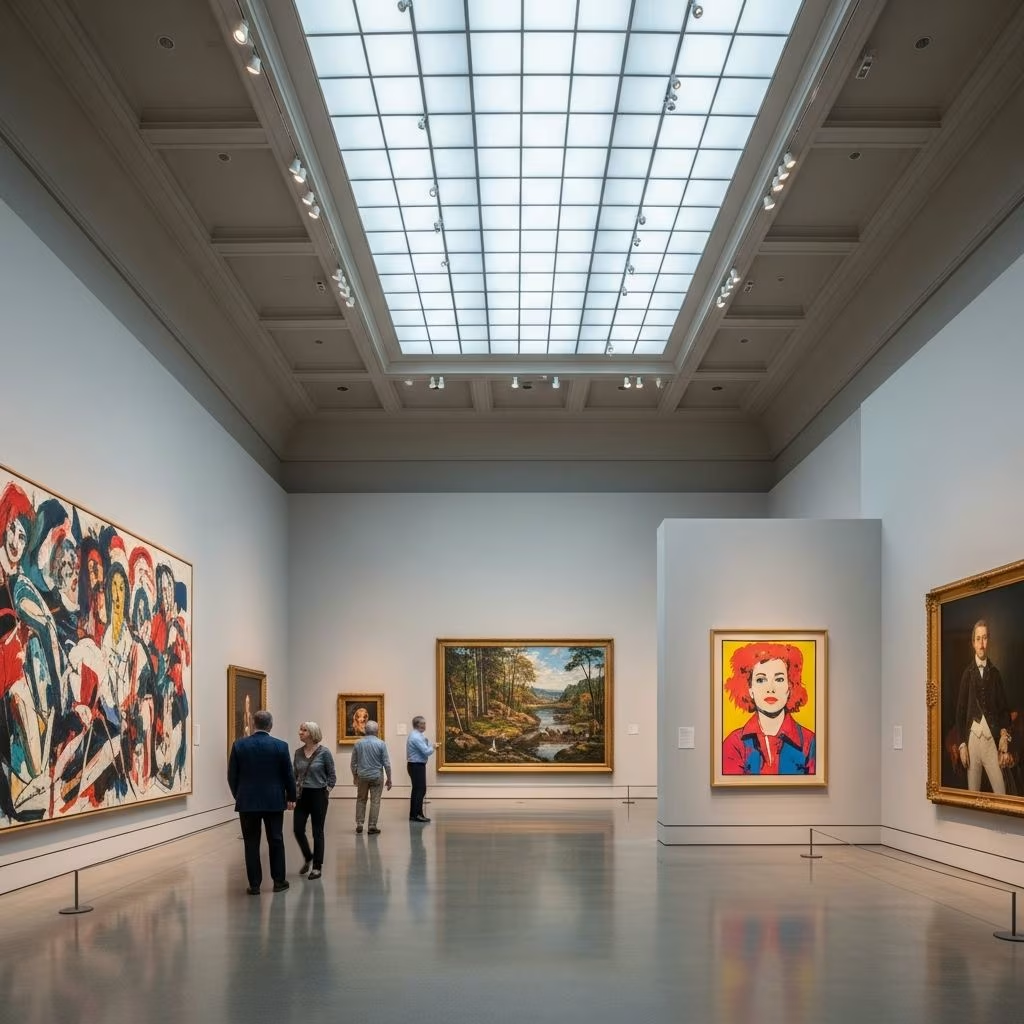
The United States is home to an extraordinary network of museums dedicated to preserving and showcasing the nation’s rich artistic heritage. These institutions represent more than two centuries of cultural achievement, displaying works that reflect America’s diverse communities, evolving values, and innovative artistic movements. From monumental galleries in major metropolitan areas to specialized museums in smaller cities, each institution offers unique perspectives on how artists have interpreted and shaped the American experience.
The Comprehensive National Treasure in Washington
Located at the heart of the nation’s capital, one museum stands as America’s foundational repository for artistic expression spanning the colonial era through contemporary times. This institution houses one of the world’s most extensive and inclusive collections of American art, representing contributions from more than 7,000 artists throughout the nation’s history. The museum’s significance lies not merely in its size but in its commitment to representing the full spectrum of American creative voices, including perspectives historically marginalized in mainstream art discourse.
The collection encompasses exceptional holdings across multiple artistic periods and styles. Visitors encounter masterworks of American Impressionism, a comprehensive assemblage of Gilded Age achievements, and the largest collection of New Deal art in existence. This breadth ensures that viewers gain comprehensive understanding of how artistic expression evolved alongside the nation’s social, political, and economic transformations.
Beyond the main galleries, the institution operates a visible art storage facility featuring a three-story skylight space where thousands of additional works from the permanent collection remain accessible for scholarly research and public viewing. This innovative approach to art preservation allows curators to display substantially more artworks than traditional gallery configurations permit. The organization also maintains extensive online research databases containing more than 500,000 records, enabling global audiences to explore and study American artistic production.
Contemporary Vision in Urban Manhattan
In New York City, a prominent museum dedicated exclusively to modern and contemporary American artistic achievement occupies a distinctive architectural space. Designed by renowned architect Renzo Piano, this institution’s soaring industrial complex provides an innovative setting for experiencing works by more than 3,600 American artists. The permanent collection emphasizes how American cultural identity has developed through artistic innovation, featuring iconic pieces that helped define modernism and subsequent movements.
What distinguishes this museum from many other contemporary art institutions is its deliberate focus on living artists. While many museums concentrate primarily on historical figures and established masters, this venue actively promotes emerging and established contemporary practitioners, offering viewers insight into current artistic conversations and innovative approaches challenging established conventions. This commitment to living artists ensures the museum remains a dynamic space reflecting ongoing cultural dialogue rather than a static repository of historical achievement.
Celebrating Indigenous Artistic Traditions in the Southwest
Located in Phoenix, Arizona, a specialized museum founded in 1929 operates with a mission fundamentally different from comprehensive general art institutions. This venue focuses exclusively on preserving and promoting the artistic and cultural heritage of Arizona’s Native American communities and the broader Southwest region. The museum collaborates directly with indigenous peoples to ensure authentic representation and appropriate contextualization of traditional and contemporary Native artistic expression.
The collection encompasses both traditional artifacts reflecting centuries of indigenous craftsmanship and contemporary creations by modern Native artists. This dual focus acknowledges that Native American artistic traditions remain living practices rather than historical phenomena confined to museums. By presenting work created across different time periods and stylistic approaches, the museum demonstrates the continuity and evolution of indigenous artistic expression within evolving cultural contexts.
Regional Perspectives: Southern Artistic Traditions
In Augusta, Georgia, a museum dedicated to exploring the American South through visual art provides nuanced perspectives on a region with complicated historical narratives. Containing more than 5,000 items spanning two centuries, the collection deliberately addresses the complexity of Southern cultural identity through artistic representation. The holdings include diverse visual documents: portraits of wealthy 19th-century plantation owners, depictions of slavery and its devastating consequences, and representations of sacred religious gatherings central to regional spiritual life.
This approach to regional art collection differs from institutions that present American art as a unified national narrative. Instead, the museum acknowledges that distinctive regional artistic traditions emerged from particular geographical, historical, and social circumstances. By displaying art explicitly created within or about the American South, the institution enables visitors to understand how specific regions developed distinctive artistic identities reflecting local experiences and concerns.
Specializing in Pop Art and Mid-Century Innovation
Pittsburgh’s seven-floor museum dedicated to a single artist’s legacy represents an alternative institutional model for presenting American art. This comprehensive venue showcases the extensive output of an artist widely considered one of the most influential creative figures of the twentieth century, whose pop-art innovations fundamentally transformed how contemporary art engaged with consumer culture, mass production, and commercial imagery. The museum’s scale and depth enable visitors to trace artistic development across decades and explore how the artist’s distinctive vision evolved and influenced subsequent creative movements.
Institutions dedicated to individual artists’ legacies provide opportunities for intensive study unavailable in broader survey museums. Visitors can observe thematic development, technical experimentation, and changing approaches across extended careers. This model complements rather than competes with comprehensive museums, offering specialized understanding for those seeking deeper engagement with particular artistic figures.
Celebrating Commercial Illustration as Fine Art
In Newport, Rhode Island, a museum dedicated to twentieth-century American illustration presents a distinctive curatorial argument: that artistic work created for commercial purposes—magazines, newspapers, and advertisements—constitutes legitimate and historically significant fine art deserving institutional recognition and preservation. Located within a Gilded Age mansion on historic Bellevue Avenue, the museum’s architectural setting itself conveys meaning about artistic value and cultural prestige.
The collection features works by illustrators whose names may not appear in conventional art history narratives but whose visual creations shaped how millions of Americans encountered visual culture and advertising imagery throughout the twentieth century. By presenting commercial illustration within fine art institutional contexts, the museum challenges conventional boundaries separating commercial from fine art, acknowledging that such distinctions often reflect social hierarchies rather than objective aesthetic categories.
Western Art and Frontier Mythology in Regional Context
Located in Cartersville, Georgia, an institution houses the world’s largest collection of Western art, featuring nineteenth-century works depicting Native Americans, cowboys, and red-rock landscapes. The museum’s geographical location within the American South appears counterintuitive but proves deeply meaningful. For regional populations during the era of Western expansion, artistic depictions of frontier life represented primary sources of visual information about territories and peoples existing beyond local experience. The museum’s presence in the South acknowledges how Western imagery profoundly influenced national imagination and regional identity formation during the period of continental expansion.
Diverse Institutional Models and Accessibility
American art museums employ various organizational and operational strategies reflecting different institutional missions and community commitments:
- Comprehensive national museums: Maintain extensive collections spanning all American artistic periods and styles, requiring substantial resources and institutional infrastructure to preserve and display holdings responsibly.
- Specialized regional museums: Focus on particular geographic areas or cultural communities, providing depth unavailable in broader institutions while acknowledging that distinctive regional artistic traditions merit serious scholarly attention.
- Artist-focused venues: Dedicate institutional resources to particular artists’ bodies of work, enabling intensive study and contextualization impossible in survey museums.
- Community-engaged institutions: Prioritize ongoing collaboration with cultural communities whose artistic traditions they preserve, ensuring authentic representation rather than external interpretation.
- Thematic specialists: Concentrate on particular artistic forms or mediums, such as illustration, establishing that diverse creative practices deserve recognition as legitimate art forms.
Planning Your Museum Visits
Visitors planning American art museum experiences should consider several practical factors. Many major institutions offer free or pay-what-you-wish admission, removing financial barriers to cultural access. Most museums maintain expanded evening hours on certain weekdays, accommodating working visitors unable to visit during standard daytime operating schedules. Museums increasingly offer virtual exhibitions and online collection databases, enabling remote exploration before planning in-person visits.
Geographic proximity shapes practical visit planning. Washington, D.C. visitors can access multiple connected institutions within walking distance, including the primary American art museum, a companion portrait gallery, and affiliated satellite locations. New York City concentrates numerous American art museums within accessible distances, enabling comprehensive cultural itineraries. Visitors to smaller cities may need to allocate dedicated travel time to specialized institutions but often discover less crowded environments enabling sustained engagement with collections.
Understanding American Artistic Achievement
American artistic traditions reflect the nation’s diversity, contradictions, and evolving values. Museums dedicated to these traditions perform essential cultural work: preserving fragile artworks for future generations, establishing contexts enabling meaningful interpretation, and challenging visitors to consider how artists have engaged with American identity and experience across centuries of historical change.
Whether visiting comprehensive national institutions or specialized regional museums, viewers encounter evidence of remarkable creative achievement. From indigenous artistic traditions continuing for centuries to contemporary innovations challenging established conventions, American art institutions document how individuals from diverse backgrounds have expressed vision, questioned assumptions, and contributed to ongoing conversations about what it means to be American.
References
- The best museums for American art in the US — Lonely Planet. Accessed April 22, 2026. https://www.lonelyplanet.com/articles/best-museums-for-american-art
- Visit SAAM — Smithsonian American Art Museum. Accessed April 22, 2026. https://americanart.si.edu/visit/saam
- Smithsonian American Art Museum and its Renwick Gallery — Smithsonian Institution. Accessed April 22, 2026. https://www.si.edu/about/american-art-museum

