

 Travel Essentials
 Travel Essentials

Explore Mexico's diverse ancient ruins beyond the famous ones, including Palenque, Teotihuacan, Monte Alban, and coastal gems like Tulum, revealing architectural marvels and cultural legacies.
 Travel Essentials
Mexico boasts an unparalleled collection of ancient ruins that stand as testaments to the ingenuity of Mesoamerican civilizations. These sites, ranging from sprawling urban complexes to cliffside fortresses, provide windows into the lives, beliefs, and achievements of the Maya, Zapotec, and Teotihuacan peoples. While iconic locations draw crowds, lesser-known treasures offer equally captivating experiences amid lush jungles, arid plains, and coastal vistas.
The ancient ruins scattered across Mexico represent over 2,000 years of human innovation. Civilizations like the Maya flourished from around 2000 BCE to the Spanish conquest in the 16th century, constructing monumental architecture aligned with celestial events. These sites were not mere settlements but ceremonial centers, trade hubs, and astronomical observatories. Today, they attract millions, blending history with natural beauty for immersive exploration.
Visiting these ruins reveals sophisticated engineering, such as advanced water management systems and precise calendars. Many structures feature intricate carvings depicting gods, rulers, and rituals, decoded through hieroglyphs that have unlocked Mayan history. Mexico’s National Institute of Anthropology and History (INAH) oversees preservation, ensuring these legacies endure for future generations.
Chichén Itzá, a UNESCO World Heritage Site in Yucatán, exemplifies Mayan-Toltec fusion. Dominated by El Castillo, a 30-meter pyramid dedicated to Kukulkan, the site spans 6 square miles with over 20 structures. The Great Ball Court, the largest of its kind, measures 168 meters long and features acoustics that amplify whispers across its expanse. During equinoxes, shadows form a serpent descending the pyramid’s steps, a feat of solar alignment.
Near Mexico City, Teotihuacán rises as the largest pre-Columbian city in the Americas, covering 20 square kilometers. Its Pyramid of the Sun, at 65 meters tall, and Pyramid of the Moon anchor the Avenue of the Dead. Built by an unknown culture around 100 BCE, the city supported 125,000 residents at its peak. Murals depict deities and daily life, hinting at a theocratic society.
| Site | Main Pyramid Height | Peak Population | UNESCO Status |
|---|---|---|---|
| Chichén Itzá | 30m (El Castillo) | ~50,000 | Yes |
| Teotihuacán | 65m (Sun Pyramid) | ~125,000 | Yes |
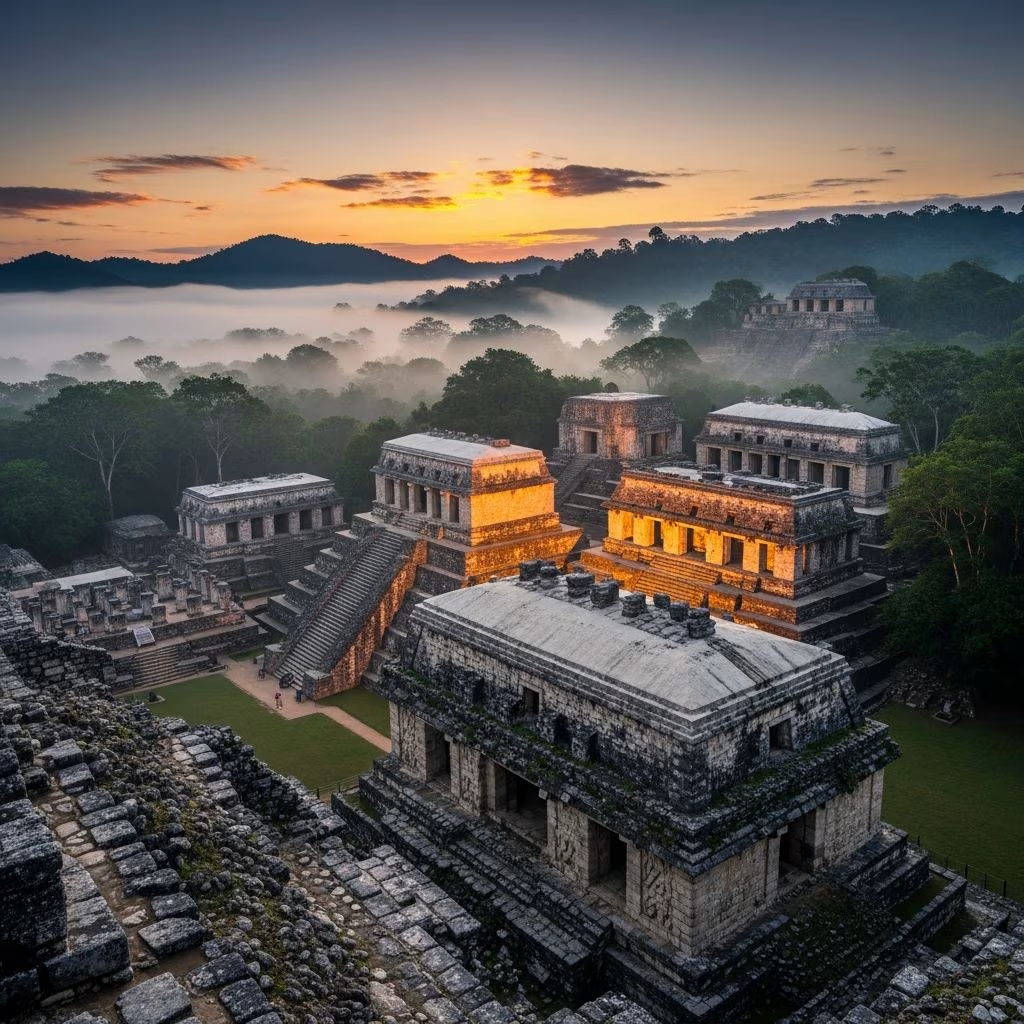
Deep in Chiapas’ Lacandon Jungle, Palenque captivates with its elegant architecture emerging from misty foliage. Flourishing from 226-799 CE under rulers like Pakal the Great, the site includes the Temple of the Inscriptions, housing his sarcophagus with the longest Mayan glyph text. Howler monkeys echo through 500 surviving structures amid 34 temples. Nearby, Toniná and Yaxchilán offer additional jungle adventures with pyramid climbs and river settings.
Edzná in Campeche showcases a five-story palace and advanced reservoirs sustaining 25,000 inhabitants. Its Great Acropolis provides jungle panoramas, making it ideal for serene visits away from tourist throngs.
Tulum perches dramatically on Caribbean cliffs, a walled Mayan port from 1200-1500 CE. El Castillo overlooks turquoise waters, with the Temple of the Descending God featuring unique iconography. Swim at the beach post-tour for a refreshing contrast to stone exploration.
Nearby, Cobá’s 40-meter Nohoch Mul pyramid allows climbs rewarding with canopy views. Spanning 70 square kilometers, it features sacbe (raised roads) linking sites. Uxmal in the Puuc region dazzles with the Pyramid of the Magician’s rounded contours and rain-god masks, reflecting architectural harmony with nature.
Lesser-visited Xcambó near Progreso reveals salt-trade pyramids amid ongoing excavations. Xel-Há offers shaded paths to a cenote and structures from 300-600 CE.
Perched 400 meters above Oaxaca Valley, Monte Albán was the Zapotec capital from 500 BCE-800 CE, housing 30,000. Its Main Plaza includes a ball court, observatory (Building J with conquest slabs), and Danzantes reliefs of contorted figures. A Spanish church incorporates reused stones, bridging eras. Accessible by short bus from Oaxaca City, it’s perfect for half-day trips.
Calakmul in Campeche’s biosphere reserve rivals Tikal with 6,700 structures, including two towering pyramids amid jaguar habitats. Kohunlich and Dzibanché in Quintana Roo feature masked stelae and jungle paths. Muyil’s cenote-descending sacbe links pyramids to lagoons, ideal for nature-history blends.
| Site | Location | Unique Feature |
|---|---|---|
| Calakmul | Campeche | Twin 45m pyramids |
| Muyil | Quintana Roo | Cenote sacbe |
| Xcambó | Yucatán | Salt trade pyramids |
Combine sites via themed itineraries: Yucatán loop (Chichén Itzá, Uxmal, Tulum); Chiapas jungle trek (Palenque, Yaxchilán); Central pyramids (Teotihuacán, Monte Albán). Book INAH tickets online; guided tours enhance glyph interpretations. Respect no-climb rules, wear sturdy shoes, and use sunscreen. Best seasons avoid rainy summers.
Sustainable travel: Stick to paths, avoid touching carvings, support local communities through eco-lodges.
Teotihuacán or Chichén Itzá for accessibility and grandeur, with easy day trips from major cities.
Most prohibit climbing for safety and preservation; exceptions like Cobá’s Nohoch Mul remain.
Uxmal or Edzná offer similar splendor without Chichén Itzá’s masses.
Yes, Tulum and Xel-Há combine ruins with swimming opportunities.
Fly to Tuxtla Gutiérrez, then bus or tour; rent cars cautiously due to jungle roads.
These ruins face threats from tourism, climate, and looting. INAH’s efforts, including laser scanning, digitize sites for study. Visitors contribute by following guidelines, fostering appreciation for cultures that mastered astronomy, agriculture, and art without metal tools or wheels.
From Teotihuacán’s urban sprawl to Palenque’s ethereal temples, Mexico’s ancient sites invite profound connections to humanity’s past. Plan your journey to witness these enduring wonders.
